Subverting imperial greenwashing

by Vijay Kolinjivadi

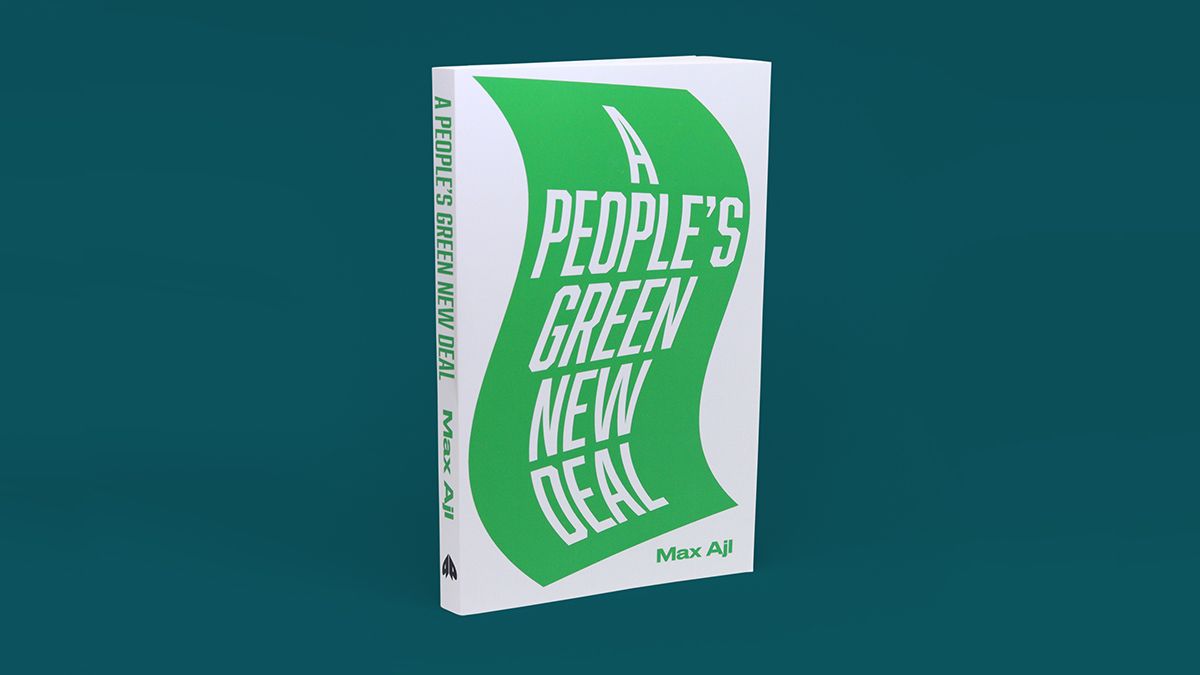
Max Ajl’s recent book published this year by Pluto Press, entitled A People’s Green New Deal, is a welcome and important contribution to an increasingly crowded and confused conversation on “green” futures. In the industrialized countries of the Global North, especially the USA, the European Union, Canada, and Australia, governments, social movements, and everything in between have proposed “Green Deals” of varying demands, generating much confusion as to what each of them stand for and the types of interests that underpin them. Ajl’s book places particular attention on the prospects of a US Green New Deal; as the US economy directly infiltrates nations and social classes around the world with its military, petrodollars, and monopolies, what it decides to do in the name of “greening” will have profound implications on the rest of the world under the current order.

The book offers a refreshing analysis, grounded in an ecosocialist lens for a global anti-imperialist class struggle. In doing so, it distinguishes itself from the distractions of rhetoric loosely being advanced under an amorphous “Green New Deal”. Ajl details these distracting narratives as they range from: a) liberal progressives and social democrats using all the right words but ultimately compromising to the interests of capital by advocating things like “greening” the US military; b) techno-modernist socialism unhinged from basic understandings of ecology while continuing to depend on exploitation of a Third World (e.g. “fully-automated luxury communism”); c) Euro-centric working-class solidarities for “greening” in the industrial core that conveniently ignore precarious and racialized labor forces both within and beyond the “Global North” (e.g. “Ecological Politics for the Working Class”); d) global veganism and half-earth nature conservation that have no qualms about embracing colonial logics against non-Western ideologies and affinities, and e) status-quo United Nations and World Bank-speak in support of the “Sustainable Development Goals”, furthering the myth of “green growth” and paying for nature’s “services”, which have thus far done little to halt or have even reinforced global inequalities and hastened ecological collapse. Of course, these narratives are not mutually exclusive, but hybridize into different shades. Common to all however are the silences in demanding climate reparations for historically uneven ecological exchange in which imperialist colonizers of Europe and North America looted the resources and life-energies of billions of people and displaced and shackled hundreds of millions in the Global South as a cheap laboring force to keep prices low and speculative finance afloat. It is this oppressive unequal ecological exchange that makes it possible for countries like Switzerland and Belgium to be considered chocolate connoisseurs, for the United States to foster and produce “innovative” tech hubs like Silicon Valleys that produce tax-evading billionaires, and for cities across Scandinavia, Canada, and Australia to be consistently distinguished with high standards of living.

There can be no such thing as an ecologically-conscious future unless it involves popular control over time, territory, and ways of living.

Put simply, there can be no such thing as an ecologically-conscious future unless it involves popular control over time, territory, and ways of living that Indigenous people, pastoralists, campesinxs, and artisans around the world demand as restitution for historical and repeated assaults on their autonomy. In this review, I assemble a series of quotations from the book under broad themes that highlight a few key take-away messages as well as an invitation to further dive into the details by reading the book. I conclude with some issues I felt the book left the reader to ponder.

Main take-aways

To control industrialization does not mean to eliminate industrialization, let alone modern social life with complex forms of economic interchange and interdependence. It means understanding how on the one hand, the North is gratuitously over-industrialized, and not to the benefit of working-class life. And it means accepting how much northern industrial capital, and the consumption which it encourages, rests on de-development or underdevelopment of the South.”

What is missing in the First World left is not an abstract commitment to solidarity and partnership but a committed internationalism which takes the anti-systemic struggles of the periphery as the fundamental departure point for solidarity…thus climate debt or ecological debt must be a fundamental part of any serious green transition.”

If capital is under pressure from social movements or political parties and needs to find a way to give something away to domestic middle classes, that something has to come from somewhere (my emphasis added). And that somewhere will be those not included in the social and political struggles: in other words, the South.

Ajl’s work offers a reality check reminding us that the influence of ecosocialism in contemporary global politics is at a historical low and indeed superseded by the more organized forces around pro-capitalist and techno-futurist versions of eco-fascism. The (often failed) electoral politics ambitions of recent legislators like Bernie Sanders in the US, Jean-Luc Mélenchon in France, and Jeremy Corbyn in the UK should not distract us from this reality. He also emphasizes the utter importance of placing agrarian reform for agroecology and peasant sovereignty at the core of what an anti-imperialist ecosocialism would require.

Modern industrial agriculture does not feed the world; it is incredibly wasteful and takes the capacity to produce food away from people who understand their territory the best. Instead, it forces everyone to be market consumers of pesticide-ladened and chemical fertilizer pumped monocultures that generate mass death of pollinators, birds, and soil life. It also heightens the risk of animal-human transfers of new epidemic diseases that lead to potential pandemics. With industrial agriculture, being fed is no longer something that every human deserves but something that reflects purchasing power and the capacity to absorb rising costs of food . These values neatly follow racial and class lines, with the vast majority of people unable to afford healthy and sustainable food production systems as these are re-branded into market consumption as “artisanal”, “organic”, or “heirloom”. Perhaps worst of all is the way modern industrial agriculture mines arable soils, stealing time, land, and knowledge from human societies and rendering current and future generations bereft of food-producing potential.

Why an internationalist, anti-imperialist politics is what being ecological should refer to

Colonialism itself is not over. As formal and legal decolonization gave way to neocolonialism, nations lost control over their economic sovereignty, the pot of gold they had hoped to find at the end of national liberation…Indeed, even during the brilliant noon of decolonization from 1947 to 1980, farmlands, forests, banks, currencies, factories, salt iron mines, quarries, and oil fields remained in the hands of the colonizers. Almost never was decolonization so successful as to allow peoples to fully determine their own histories, even within their own nation-states…the climate crisis is basically the child of northern imperialism, pure and simple.

Ajl reminds readers that it is impossible for the global ecological breakdown that we witness today, such as CO2 levels reaching their highest levels in 3 million years, to have occurred without past and present (and expected future) dehumanization of black, brown, and Indigenous people. It is consequently impossible and counterproductive to treat ecological crises like climate change as separate from those that perpetuate settler colonial land grabs, class divisions, and a military industrial complex. Tackling ecological crises requires structural transformation rejecting a militarized global police force (e.g. the US military) that justifies war-profiteering over the lives of Yemenis and Palestinians in the name of free markets.

Why other Green New Deal proposals based on “green” social democracy or domestic “green” Keynesianism are fundamentally flawed

There are four problems with green social democracy. First, it is not achievable through current strategies. Two, even if it were possible, it would be imperialist and rest on devastating the South. Third, it is being marketed as something it is not: namely, eco-socialism … and four, it limits our political imaginations.”

This does not mean it is bad to have anti-racist green left-liberals in office. It means that they will not implement eco-socialism unless massive movements and parties outside the state, and worldwide, are fighting for actual eco-socialism – which Ocasio-Cortez, 350.org, and the Sunrise Movement are not.”

Ajl historically contextualizes “green social democracy” as Keynesian concessions to labour that worked to stave off the spread of communism in the post-war era and were ultimately intended to reinforce capital accumulation. He highlights precisely why left-liberal politicians and journalists confound the terms of debate by ignoring this history. Instead, “green social democrats” tiptoe around very real uneven ecological exchange while superficially signalling support (largely by recourse to electoral politics) to anti-imperialist social movements and Indigenous demands around the world.

“Greening” as securitizing capitalism

Green Social Control aims to preserve the essence of capitalism while shifting to a greener model in order to sidestep the worst consequences of the climate crisis. [It] is a decision to avoid reparations [and] a blueprint for world management in which imperial loot remains in the North.”  

In relation to the confusing politics of Green Keynesianism as described above, a People’s Green New Deal explicitly rejects “green social control” or any eco-friendly attempt to maintain capitalism intact while deflecting or dismissing conversations around climate reparations for colonial violence and theft. Securing capitalism through greening takes the form of carbon offset purchases, eco-certification schemes, industrial and high-tech precision agriculture, “nature-based solution” projects and ecosystem service policies and others that co-opt intimate ecological relations as alienable forces of production.

On (green) technology

Those who argue in an absolute way for technology’s categorical social neutrality, especially from the left, forge one of the most dangerous, subtle, and effective instruments of ideological counterinsurgency: they accept the myth of progress and confuse opposition to the capitalist agenda. And this is dangerous, because capitalists do not choose technology willy-nilly, but in order to maximise power, as has been shown time and again by critical historians of technology.”

Amazon relies on a certain way of organizing the human relationship with the environment. Each item for sale on Amazon’s website, its energy-guzzling “cloud” data servers, its gossamer logistical systems which enable same-day delivery, is tied with a million threads to use of carbon sinks and the atmospheric space for CO2 emissions. These occur without the permission of humanity.”

To meet UK electric car targets in 30 years, the (British) Isles would need twice current world annual production of cobalt. It would swallow up current world production of neodymium, gobble three-fourths of world lithium production and at least half the world’s copper. If mileage did not shrink, to charge that monster fleet an additional 20% of current UK-generated electricity would be needed …. Cobalt, one necessary mineral, is kept cheap by a half century of neo-colonial massacre in the Congo, and lithium extraction turns on the mangling of Latin American water tables. Even now Microsoft, Tesla, and Dell are being sued for being party to child labor in the Congo mines that supply material for the batteries that keep their doodads cheap and briskly selling.”

Ajl emphasizes that technological futurism cannot be discussed in isolation from the interests and voices that fund and imagine it. Popular control of knowledge and deliberation of its impacts is dismissed in favor of techno-utopias dreamed up through visions of human exploitation, despite the window dressing of “fully-automated communism” or (white) working-class ecological politics. Technology, no matter how “green,” is therefore always political.

On the colonial violence of suggesting “global veganism”

Plant or culture-based meats … now rely on tremendous inputs of energy, and according to lifecycle assessments, may be more carbon-intensive than cows.” … “We have to keep in mind that the problem is not meat, but certain kinds of meat production: capitalist concentrated animal feeding operations.”

The demand that meat-eating cease … creates northern consensus around encouraging, coercively or otherwise, transformations of how people live. It also creates a justification for unnatural ‘climate solutions’ based around biofuels and bioenergy or ‘afforestation’ based on trash-tree plantations which will allow the great petroleum corporations to keep burning their assets, to great profit. And it will be the poor who will suffer.

A People’s Green New Deal would never impose universal cultural blueprints. It would not continue imposing imaginaries of human-nature relations from entitled Northern countries onto all people of the world through strategies like “compulsory global veganism” or “half-earth” conservation. Such tactics would scream colonialism and border on eco-fascism.

A People’s Green New Deal would never impose universal cultural blueprints.

On ways forward

Although we should embrace scientific advance in healthcare, from regrowing knee cartilage to organ transplants, the obstacle to world-class worldwide universal healthcare is not technological. It’s social. It demands a social revolution to shatter the capitalist organization of healthcare and to restructure it as primarily care-centered, preventative, and decentralized.

If social wealth is generally allocated based on labor inputs, relatively labor-intensive agroecology will receive more compensation…Command measures ought to extend to phase-outs of industrial agriculture, which has no justification for existing, and wholesale shifts in research spending away from conventional agricultural research and towards agroecology.”

Land should be redistributed everywhere. Each country should have total control over the food import and export trade, so that food dumping is impossible. Communities rather than farms should be in control of water, seed, and eventually land. This is the agenda of food sovereignty.

Intra-urban transportation would occur on bicycles, electronic bicycles, and mass transit, from trolleys to trains, where possible. Private cars would be most often reserved for ambulances and emergency transport – the times and places where society can collectively decide to use the fruits of inherently damaging industrial production in order to protect and convenience human life.”

Shifting from brick cladding, vinyl windows, asphalt shingles, and fiberglass insulation to a wood-frame house which substitutes those other products with cedar shingles and siding, wood windows, and insulation made from cellulose can convert such a home into a net absorber of CO2 emissions provided that when the house is demolished, the material is recycled instead of entering a landfill.

A People’s Green New Deal devotes its second half to sketching alternatives to the ‘Green Deal’ idea that put power back into the hands of workers, recognizing crucially how the production of “green” means exploitation of people especially in the Global South. It proposes several key improvements in terms of worker-controlled production; quality and anti-imperialist healthcare; urban re-design; large-scale agrarian reform and the dismantling of agri-business; intra-regional and collectively-controlled transportation systems, and locally-appropriating siting and construction of widespread social housing among other strategies.

In reflection: Thinking with and beyond A People’s Green New Deal for anti-imperialist organizing

Ajl’s A People’s Green New Deal has enormous implications for many who have put their eggs in the basket of “green” environmental politics. It is a wake-up call (or perhaps a slap in the face) to eco-minded social democrats, left liberals, and Green Party followers in rich countries to reassess the colonial violence of their proposals. Ajl stresses that Green New Deals have failed to center the rising tide of dissent ranging from Indigenous sovereignty on Turtle Island to Palestine, to the abolition of systemic racism and carceral assaults as demanded by “Black Lives Matter”, to reproductive control over (femme) bodies, to material transfers of “Land Back” and ecological debt reparations. A People’s Green New Deal redefines (or perhaps defines more clearly) what a just transition implies. Thus far, it is only the degrowth movement in the Global North that makes advances to redirecting the violent processes of growth; though tweaking the machinery of “growth” requires an explicitly anti-imperialist emphasis. As Ajl makes resoundingly clear, “greening” must be redirected as an international class struggle and demand for Indigenous sovereignty. The only way to do this is to ensure transfer of wealth back to those it was stolen from in the form of payment of climate debt (and ecological debt more broadly).

It is a wake-up call (or perhaps a slap in the face) to eco-minded social democrats, left liberals, and Green Party followers in rich countries.

Yet, the means by which such a profound cultural shift can be accomplished leaves the reader somewhat wanting. Ajl notes that “being has a tendency to determine consciousness”, referring to the fact that Global North bodies are less likely to feel and experience the effects of imperialism due to the comforts that they’ve inherited and continue to obtain from an “imperial mode of living”. The problem is simple, yet difficult to overcome: the absence of crucial experience in the inherited comfort of middle-class bodies without which the true depth and nature of ecological crises as a class struggle is potentially not graspable nor perceivable. As Catherine Liu recently writes in Virtue Hoarders: The Case against the Professional Managerial Class, we left progressives in electoral politics, academia, journalism, and other facets of the creative sectors and knowledge economy refuse to talk about class or class consciousness in proposing solutions to things like social and ecological crises. As a result of repeatedly masking questions of our class status with deference to increased gender and racial identity politics and tolerance, the outcome over the past four decades has been an ultimate boon to neoliberal capitalism. Moreover, the perfectionist tendency to “be” and embody anti-oppressiveness as the key to social change excludes people that do not live up to a constructed (though often unspoken) ideal depicting a sort of commitment to struggle. It has also resulted in alienating allies for changing their minds or making mistakes. These legacies of a neoliberal era occur due to a deeply individualizing ethos of personal responsibility that permeates palpably in spaces of well-meaning self-identifying left progressives. The consequence has been the generation of new forms of leftist accommodation within liberal market economies around knowledge generation, and more detrimentally, a pernicious intransigence to truly organize in solidarity across class divides. The potential of engaging in anti-imperialist eco-socialist politics without falling into the trap of an identitarian bourgeois politics of anti-oppression Olympics needs careful attention yet is all too often brushed aside.

For others in less comfortable positions but who are able to get a foot in the door to the fabled “American”, “Canadian”, or “European” dream (even in the abject exploitation of their labor they may experience), the pressure to prove oneself as an entrepreneurial and well-behaved visible or cultural minority enormously sets back the possibility for working class solidarity. Given this gulf of class difference, through what cultural means can class convergence take form in practice? How might this arise? What will it take for comfortable, even anti-racist eco-minded liberal progressive Westerners (and other privileged groups elsewhere) to recognize that Indigenous sovereignty, Third World working class struggle, BIPOC (Black, Indigenous, and People of Colour) peoples’ dreams for the future, and religious caste oppression are not side objectives, but fundamental for reversing ecological breakdown, generating and resurrecting alternative relations and relationships into being?

Alternatively, why should “greening” strategies direct attention to comfortable middle class Westerners at all? Why even (re)center voices of those who can’t possibly understand the material and everyday violence inflicted on countless people? Would it not make more sense for this demographic to cede place entirely and listen (for a change) by following the lead of those who have been and continue to be violently erased in the name of colonizer ecology? If this latter, what might this look like? These are questions that are left open in trying to imagine a “People’s Green New Deal” in action. It is here where thinking about organizing for anti-imperialist solidarity in the context of generational imperial living could benefit from both class- and region-specific context. What can liberal progressive-minded people in North America learn about “greening” from racial, labour, and decolonial struggles in their own communities? How have middle classes in places like Chile and Ecuador amplified voices and contributed through meaningful rather than performative allyship in anti-imperialist struggles?

Why should “greening” strategies direct attention to comfortable middle class Westerners at all?

Ajl raises some relevant points on the question of national sovereignty from imperialist resource and labour grabs, to reclaim popular control over the means of governing and administering resources in a society, and the role of a national governing body as an appropriate jurisdiction to ensure climate and ecological debts are transferred and appropriately administered. At the same time, he rightly stresses the “hierarchical international system organized around nation states.” Here, some greater clarification is needed. Since demands for national sovereignty often work in parallel to demands around land rights within capitalist political and economic relations, similar questions arise. Both have to do with understanding sovereignty not as a codifiable “right” but as a legitimate relationship. On the one hand, recognition of land rights and nation states are necessary to reclaim autonomy over cultural and economic lifeways; while on the other hand, they reduce diverse political subjectivities and relationships of territory to that of land or “national identity” as an entity to possess and enclose, to erect exclusionary borders around, to ally with or war against. How can overtly or indirectly socialist-oriented governments like Bolivia, Venezuela, and now Chile (under newly-elected Gabriel Boric) effectively reclaim popular control when they are at the same time imbricated within capitalist global markets for primary resources? What unintended effects does the stickiness of globalized markets and their infiltration into anti-imperialist ecosocialist national projects engender? Furthermore, how might the ‘national question’ support Indigenous sovereignty and demands for “Land Back” in different parts of the world? The potentially messy confluence between national sovereignty and a broader vision for an anti-imperialist (and thus anti-capitalist) internationalism needs some fleshing out. What comes first, a popular struggle to demand a fully internationalist anti-capitalist and anti-imperialist world order or nation states etching out sovereign ecosocialist agendas within an ossified and violently militarized capitalist world order? A People’s Green New Deal would require further guidance as to which of these strategies comes first as well as how they might interact or counteract each other.

Finally, Ajl argues that casting a glance away from these questions and instead turning to what is “feasible” or “pragmatic,” as liberal progressive professional managerial classes in the Global North all too often do, effectively confirms that the exploitation of people and nature from a fabricated Third World is an unquestioned necessity. But the questions of how to combat the always-present penchant for pragmatism, even among comrades on the Left, as well as the unexpected outcomes of trying to realize idealized forms of popular sovereignty and control among extremely heterogeneous and internally fractured societies remain open ones. Greater clarity is needed on how anti-imperialist local direct action or municipalisms can better align with an anti-imperialist internationalism, while perhaps reducing the role of the nation state to facilitating this convergence process.

Ajl rightly emphasizes that the “Left” is by no means organized enough. It is clear that status quo establishment has a firm hand in the driver’s seat of a melting planet when tax-evading fortune-500 companies own more wealth than entire countries (with politicians blithely casting their glance away and indeed participating in tax evasion schemes themselves), when stock market bros capitalize upon sophisticated machine learning to squeeze profits from Wall Street, or when eco-fascist elements carry on the legacy of systemic and historical Eurocentric imperialism in “solutions” like replacing (certain) human populations with pristine wilderness. Dislodging this cabal of eco-modernists (regardless of their capitalist or socialist inclinations) through popular revolt has never been more urgent and yet seemingly so far away. A global “People’s Green New Deal” therefore demands that our ecological practice is anti-colonial and anti-imperialist or nothing at all.

I’d like to thank Rut Elliot Blomqvist for helpful suggestions and edits to this piece. Also, many thanks to Gert Van Hecken for comments on an earlier draft.

Vijay Kolinjivadi is a post-doctoral researcher at the University of Antwerp and writes about the politics and material contradictions of, and alternatives to, mainstream “greening” strategies. 
Blueprints for impossible futures

by Jesse Goldstein and Natalie Suzelis

Over the past two decades, a proliferation of “Green New Deal” literature has promoted various strategies for changing the structure of the global energy system to combat climate change.  While the term was first coined by the neoliberal economist Thomas Friedman, it has since been taken up by more progressive voices, from Keynesian social democrats to eco-socialists. Sadly, despite the promise of a new wave of climate-conscious legislation, from the European Green Deal and the UN Climate Agreement to the AOC-Markey legislation of 2019, each seems as unlikely as its predecessors to enact substantive change. At the recent COP 26 Climate Summit, for example, the United States failed to join 30 other nations in pledging to phase out sales of new gasoline and diesel-powered vehicles by 2040 worldwide. With the US federal government dominated by fossil-fuel friendly Democrats and climate-change denying Republicans, the chances of passing ambitious climate legislation appear bleak. In the absence of real political force, GND proposals often serve as blueprints that respond to a largely speculative question: what would we do if we were in a position of power to create meaningful, lasting, and necessary change? 

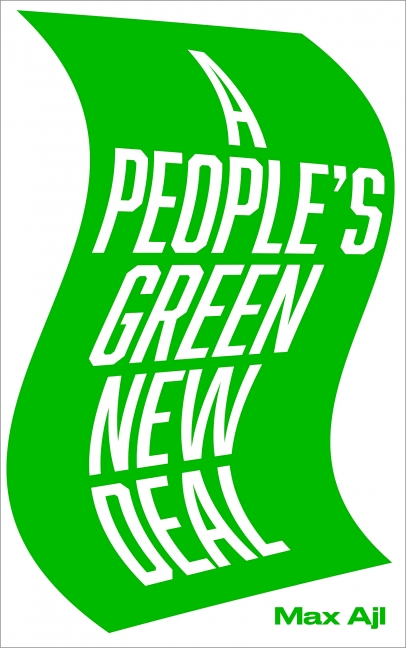
Instead of offering another blueprint for an impossible future, Max Ajl’s A People’s Green New Deal levels a critique at the genre itself, raising significant questions about the way that plans are proffered, and how most green futures implicitly accept the ongoing violence of capitalist imperialism. Ajl’s work engages critically with a wide spectrum of GND proposals, from policy documents like the European Commission and European Environmental Agency’s “European Green Deal” and Senator Ed Markey and Alexandria Ocasio-Cortez’s House Resolution 109 to Naomi Klein’s On Fire: The Burning Case for a Green New Deal and A Planet to Win: Why We Need a Green New Deal by Kate Aronoff, Alyssa Batistoni, Daniel Aldana Cohen, and Thea Riofrancos. Such proposals generally offer pragmatic solutions that work towards a “sustainable” future while remaining “realistic” enough to credibly promise to break through political impasse. The political and ecological horizons of these proposals may vary, but they all position themselves on the progressive edge of an electoral landscape that is – or so the story goes – slowly pushing in the direction of eco-social democracy. Yet eco-social democracy is, as Ajl reminds us, not the same as ecosocialism. Accordingly, Ajl offers a compellingly simple provocation: if all of these visions are impossible in the current political climate, why not fight for the more radical vision of the future that everyone on earth deserves?  

A People’s Green New Deal has given us an opportunity to think with Ajl about the current state of aspirational, state-centered green politics, and to reflect on the supposed “pragmatism that drives the most prominent GND legislative agendas. Ultimately, pragmatism is a question of political strategy: is it better (more pragmatic) to embrace a liberal social democratic horizon in order to build a base of support in the Northern core? Or is it better to push even harder from below and to the left, with visions centered by the climate politics of the Global South? Which people should the people’s climate movement mobilize, fight for, and center? If the answer is “everyone,” Ajl argues, then any blueprints for a “green future” must necessarily include the dismantling of uneven development, uneven exchange, and uneven climate catastrophe, full stop. Here we suspect that many of those whom Ajl targets for critique would agree, but the likely rejoinder is: how can we “push harder” if we have so little power in the first place? Again, the question comes down to strategy.

For Ajl, the problem with green social democracy is that it is at once impossible and boring.

Are left-leaning platforms that envision a socially and environmentally just Keynesianism a means of nudging the “Overton window” of sentiment in the global North away from self-serving, business-as-usual climate denialism? Are these truly, as their adherents seem to hope, the sorts of “non-reformist reforms” proposed by the French ecosocialist André Gorz? Or are they simply reformist reforms, meant to incrementally improve without fundamentally transforming underlying systems of power, privilege, extraction, and ecocide? Ajl squarely situates himself with the latter position. For Ajl, the problem with green social democracy is that it is at once impossible and boring. This kind of pragmatism limits our political imagination instead of opening up new horizons of possibility that galvanize real movement.

In order to build effective political support, GND advocates propose a “big tent strategy” based on the promise of green capitalism (promising “green jobs” and a boost to the economy).  This vision fails to challenge, or even name, the unevenness that is necessary to sustain what has been termed the “imperial mode of living” of resource-intensive consumerism for predominantly Global North inhabitants. The result is a politics of “non-disruptive disruptions” that looks to techno-fixes that promise to change everything without changing anything at all. Implicit in the big tent strategy is a promise that the Global North can continue to benefit from uneven exchange and development, but in greener and cleaner ways. Here, Ajl draws upon classic theorists of dependency like Samir Amin, Walter Rodney, Amílcar Cabral, Walter Mignolo, Ali Kadri, along with more recent theorists like Utsa and Prabhat Patnaik, in centering ideas of “colonial drain” and unequal environmental exchange. This body of work illuminates how the integration of formerly colonized countries into the global capitalist economy positions them as appendages to imperial countries like the United States and United Kingdom through a systematic and ongoing drain of surplus. Left to accommodate environmental and economic harms –– including waste, seepage, exploitation, and exhaustion –– these countries are inevitably left out of any “deal” marketed as green, progressive, or environmentally sustainable. (For more discussion of this intervention see “A People’s Green New Deal Symposium” including A People’s Green New Deal – An Exercise in Just Knowledge Production, by Aravind Sakshi, Beyond Green Restoration: An Eco-Socialist GND, by Güney Işıkara, and Debunking the “Eco-Fortress Nationalism” of the AOC/Markey Green New Deal, by Sheetal Chhabria.)

In addition to being consistently inadequate at addressing the causes of climate change, Ajl sees in this so-called pragmatism an implicit defense of the ways in which petrocultures have shaped consumer desires in the Global North. Pragmatism, he writes, is “the watchword of reaction and a talisman of oppression … a cipher for identifying sacrificial victims for a great society that is only capacious enough to hold so many” (12). The pragmatic stance says: we have to build a broad base of support amongst the Northern electorate for a domestic environmental agenda that would eventually trickle down to address the uneven exchanges of the global energy system. Directly challenging imperialist relations and privileges, however, is a non-starter in the halls of Northern power. This is precisely the problem that such pragmatism risks.

So what might this mean for another possible approach, or means of engaging with viable and necessary Green New Deals? If social democratic pragmatism is a problem, then what is a more effective path forward? A People’s Green New Deal argues that left climate politics would benefit from a more robust conjunctural analysis that remains attentive to the uneven positions that various movement actors find themselves occupying, and to develop revolutionary strategy accordingly. While we are not quite sure Ajl’s work delivers on this loftier challenge of revolutionary strategy (and here we point readers to our companion review by Vijay Kolinjivadi for some examples), he does provide some incredibly important pieces of a broader, conjunctural analysis, and how it might suggest important shifts in left climate politics. Although we feel that the question of revolutionary strategy – beyond rejecting big tent pragmatism and standing in solidarity with third world eco-socialism – stands to to be further elaborated, we focus on what the book successfully contributes to these discussions in what follows.

Social democratic pragmatism or climate imperialism?

Ajl’s critique of political pragmatism is leveled most sharply at advocates for social democratic GND agendas that operate within existing networks of power, influence, and money to promote certain green futures while sidelining others. He is unimpressed with how these proposals gesture to “frontline communities” (evidenced in even those most progressive of GND proposals) while leaving imperial relations unchallenged. As Ajl writes, “‘Frontline and vulnerable communities’ are not classes. They are clay-like concepts easily molded into the framework of capitalist diversity efforts… where they will be hardened into decoration on the imperial agenda” (83).  His major example, the HR-109 legislation introduced by AOC-Markey in 2019, expresses concern for the legislation’s impact upon frontline and vulnerable communities, but never extends an invitation to these communities to play any substantive role in planning and envisioning their own green futures. Such concern disregards self-determination and sovereignty for these communities.  

We need an internationalism built upon decentering the imperial core, not reconstituting its dominance in greener ways.

Against this “pragmatism,” a truly radical – or a Peoples’ – Green New Deal must be premised upon the dismantling of the U.S. military and must address the “sovereignty deficit” that has stripped peripheral nations of any meaningful sense of self-determination. Instead of a trickle-down internationalism, in which core nations provide new green technologies on their own terms (as we’ve seen with COVID vaccines), we need an internationalism built upon decentering the imperial core, not reconstituting its dominance in greener ways. This is why Ajl suggests a strategic engagement with calls for imperial countries in the Global North (chiefly the United States and the European Union) to take “personal responsibility” in paying back their global climate debt, which includes trillions upon trillions owed for the cheap extraction of energetic and material resources over the past several centuries. As Ajl writes, “it is not enough to acknowledge that the US is disproportionately culpable” if such an acknowledgement “isn’t followed up with explicit efforts to make good on climate debt” (85). Climate debt, ecological debt, and sovereignty debt – or as Ajl terms it, the “sovereignty deficit” – directly address the core problem of global capitalist extraction, and therefore the actual problems at the root of the climate catastrophe. 

Here Ajl draws something of a line in the sand, arguing that decarceration, decolonization, and abolition are foundational blocks of any viable “green” future. We take these as crucial provocations for the climate left: what does it mean to not simply support decarceration, decolonization, and abolition, but to weave these political horizons into the very fabric of our climate politics? This is precisely the point made by the Red Nation in their powerful rejoinder to GND politics. To put this into terms of revolutionary strategy: vague gestures of support for and deference to “front line communities” don’t build the popular sovereignty needed to empower the most important transformations that GNDs promise to achieve.     

Decolonization, decarceration, demilitarization, abolition – these are all big ideas that still need to be fleshed out with details, including the social and technological specifics of when, where, and how to move towards such liberatory horizons. In other words, what are the truly “non-reformist reforms” that take us down these paths, which might oppose an assimilitive reformism more likely to protect the status quo than to subvert it? These are large, movement-defining questions, and while Ajl helps frame their importance, he doesn’t evenly deliver on concrete visions moving towards their realization. However, where Ajl’s text – and overall work – most succeeds is in addressing the question of technology.

Agroecology: A sociotechnical blueprint against climate imperialism 

Throughout his “Planet of Fields” chapter, Ajl reminds us that agroecology is a technologically sophisticated way of repairing human and nonhuman relations. His insistence on emphasizing the technological sophistication and sufficiency of agroecology is precisely a gesture along these lines – and one that he expertly pulls off, here and throughout his work. This is where we think Ajl’s voice matters most in global climate debates. Agroecology is not just a make-do set of vernaculars for the periphery. It is a robust and diverse platform of land management and food production practices that can – in a much more “feasible” or “pragmatic” way – take us far down the path of environmental rationality on a planetary scale. It is not smart “for them.” It is just smart. It is smarter. It is the cutting edge.

Technological change is a pre-occupation of most GND visions and debates: should we go for solar, wind or nuclear power? Electric vehicles or clean biofuels? Not only are most debates within GND discourses centered on technology, they are often preoccupied with questions of energy production. Ajl strongly critiques the current discourse around energy transitions, which remain mired in what he labels “ecomodernism.” Ecomodernism is not Ajl’s term, but a platform with roots in ecological modernization theory that has been resuscitated by the Breakthrough Institute’s extended network. Such ecomodernists create a strawman opponent of an antiquated left environmentalism that they paint as anti-technological and therefore out of step with progress, modernity, and everything that has made civilizational advance so bountiful. Their vision of a bright green future purports to use “humanity’s extraordinary powers in service of creating a good Anthropocene.” Ajl, instead, follows many decolonial and Marxist thinkers who have made abundantly clear that modernity and coloniality are two sides of the same coin. Modernity and coloniality cannot be decoupled because they are mutually constitutive. 

Ajl’s critique of GND ecomodernisms has to do with their liberal sense of internationalism, which we would call a trickle-down green politics. This kind of internationalism sidelines questions of self-determination and sovereignty, conceiving of internationalism in such a way that situates the Global North in a leading position. For many GND ecomodernists, internationalism is predicated upon tech transfers from north to south, with the assumption that the halls of innovation and entrepreneurship in the developed world will have all the solutions. The problem however, is that these halls of innovation are providing solutions for a lifestyle that is itself the problem. Or in Ajl’s words, “the good life in the North … [has] been based on the bad life in the South” (54). The primary focus lies in protecting a highly energetic and resource-intensive “good life” enjoyed by a minority in the global North, promising to “green” these lifestyles and the industrial base they depend upon, and eventually share this green developmentalism with the rest of the planet. 

The goal of a peoples’ GND should not be to accept and perpetuate capitalist imperialism in more sustainable ways, but to diagnose it as a core aspect of the crisis and to confront it accordingly. This means re-orienting our sociotechnical imaginaries away from those entrepreneurial innovators trying to sell us green capitalist lifestyles, and towards a different kind of innovation rooted in a vibrant and sustainable world of many worlds. 

Ajl’s turn towards agroecology is an effort to call attention to the assumptions of developmentalism that still linger in progressive GND programs. He mentions, for example, how Cuba has shown how agroecological techniques ranging from vermiculture, soil conservation, innovation of intercropping designs, seed saving, recovery of local varieties, participatory plant breeding, and the improvement of local animal feeds and pastures have helped to boost food production in a manner that is nonetheless more energy efficient and sustainable. Here, Ajl shifts focus from energy to food, arguing that any truly radical GND proposal must begin with the foodways and food needs of the Global South, as opposed to starting with the food desires of the global elite. A People’s Green New Deal, then, must include the dismantling or nationalization of agricultural corporations like Monsanto, as well as planetary agrarian reform, including the breaking up of big farms and the providing of individualized farming space for small-scale farmers. Such plans would include introducing parity pricing, and providing green transition subsidies and placing public investment in infrastructures that can localize food systems.

Ajl’s turn towards agroecology is an effort to call attention to the assumptions of developmentalism that still linger in progressive GND programs.

To illustrate this point, Ajl takes to task questions of meat production, and criticizes what he sees as a false dichotomy between, on the one hand, an ecomodernist excitement about lab-grown meat, and on the other hand, advocacy for global veganism. Ajl is dissatisfied with both, and reminds us that the true problem is not animal-derived proteins, but the environmentally devastating (and morally bankrupt) ways that animals are industrially bred and slaughtered. Such a view “obscures the ecological, political, and social differences between Sahelian herders, Kansan artisanal animal husbandrymen practicing intensive rotational grazing, and those sitting atop pyramidal monopoly-capitalist cow plantations” (136). The category of meat is over-simplified in the climate discourse of the global North, which fails to accept the ways that meat can function sustainably outside of industrial agriculture.

Such conceptual blockages are due to the predominance of ecomodernist narratives which center development in calls to develop the underdeveloped world, or even to conserve or “rewild” the world from the top down. Take, for example, calls for “half-earth socialism” and mandated global veganism from environmentalists like Troy Vettese, which ignore the fact that low-impact livestock agriculture across the global south uses rangelands and pastoral agriculture to support landscape protection and carbon sequestration. The problem is that such policies purport to further the imperialist relationship between developed and underdeveloped countries to impose a global fix that keeps imperialist dynamics intact. Worse, they do not acknowledge that some of the most environmentally sustainable practices already exist within low-impact agricultural systems. 

In this regard, lab meat and agroecology are two totally different sociotechnical possibilities addressing two totally different sociotechnical questions. They are interrelated, of course, but for the former it is a question of discovering new ways to feed (quite literally) imperial desires, and for the other it is about supporting and expanding existing ways of feeding the global majority. For Ajl, if we are to imagine an approach to climate politics coming from below and to the left, then it’s the latter, as opposed to the former, that needs to be centered.

From agroecology to food sovereignty: Ecological and social resilience through land reform and “Third World ecosocialism”

Agroecology is not new at all, and if implemented in the North, could entail silvopasturing (or integrating trees into pasture systems), planting forage under trees, alley cropping (which inserts trees into fields), windbreaks, riparian and upland buffers, and forest farming, which could absorb around eleven percent of 2019 carbon emissions. Lab meat, by contrast, is a perfect example of the inefficiency and environmental harm of “green” capitalist production, because it takes more energy to create artificial meat than it would to support agroecological pasture farming.

As many have pointed out, sociotechnical know-how matters, but it also matters where we look for it and who we empower as experts. That is both a function of sovereignty – in terms of land, labor, and resources – as well as in terms of knowledge and technocratic coordination. Instead of just a green technology transfer – from north to south – there needs to be reciprocal dialogues and transfers. Here Ajl pushes beyond some of the more radical GND proposals to envision new forms of abundance that are less dependent on resource-intensive patterns of production and consumption. Agroecology is one such form of abundance, where “animals can and should be a part of landscape management, helping store CO2 in soil, and enriching it and making it more resilient” (137). 

 This is why land reform takes such a central position in Ajl’s thought. It is what matters fundamentally to so many people on the front lines of the climate crisis, and why land back, reparations, and demilitarization are so important – and so intimately linked to self determination and food sovereignty. Food sovereignty, based upon radical land-to-tiller agrarian reforms, is “the cornerstone for Third World eco-socialism” (139). This is where Ajl turns back to the national question that decolonial thinkers were grappling with in the mid 20th century in reminding us that this question has not been answered and remains central today. In short, the climate question is still a colonial-imperialist question. As such, combating climate change means allowing for the ecological and social resilience that thinkers like Kyle Whyte call for in a true decolonial perspective of climate justice. 

So what might it actually mean to locate the technological vanguard in the countryside of the global south? What does it look like when innovation is centered by rural agronomy as opposed to venture capital? To what extent do we really need more technofutures arising from the imperial core that have largely contributed to dominant understandings of viable and liveable futures? This is the medicine Ajl prescribes to the Northern climate movement. 

Empowering, centering, and supporting the people and movements of the global periphery requires granting them power and autonomy to develop – on their own terms – and to give them resources to lead us into a socio-technical future that is neither new nor old (that’s a false distinction on a liberal timeline of progress) but simply otherwise. That “otherwise” is peaceful/anti-imperial, it is socialist/anti-capitalist, it is regionalized and rationalized with planetarily democratic input for the coordination and distribution of resources. This will only happen by fighting for and supporting sovereignty, self-determination, and national liberation via the acknowledgement of sovereignty deficits and ecosocialist reparations. 

The Cochabamba Agreement: A blueprint for our planetary future

Drawing upon decades of decolonial liberation movements, Ajl urges us to support “a movement of movements” of sovereignty struggles against the imperial core. He reminds us of the Cochabamba agreement, an international climate accord from below and far to the left of what is currently circulating as the social democratic vanguard of climate politics. The 2010 Cochabamba Agreement, he writes, gives us the “planks of a southern platform for ecological revolution” that are “absent or underemphasized in most northern Green New Deals” (11).  It shows how agrarian reform, combined with decolonial and national liberation struggles in Bolivia, demanded wide-ranging payments from the North to the South alongside a radical climate agenda. 

As Ajl suggests, it may not be mere accident or oversight that this climate accord has been jettisoned for language built around the nostalgic concept of an early 20th century social democratic policy platform in the industrialized North. Ajl also points to the Red Nation’s Red Deal, which shifts questions of social democracy to questions of broken treaties and the need to fight for sovereignty for the dispossessed nations of this world. All of these interventions, from Ajl, Cochabamba, and the Red Nation, center the “national question” and decolonial/anti-imperial politics, as the crux of climate politics. Here, the three elements of ecological debt, demilitarization, and struggles against settler-colonialism meet in places like the “Land Back” movement. A new land-tenure regime and swift changes in land management that center (rather than pay lip service to) Indigenous sociotechnical knowledge are, for Ajl, the shift which “makes the world big enough for all of us” (162). 

Ultimately, A People’s Green New Deal asks: should an ecosocialist Green New Deal govern capitalism or destroy it? In answering this question, Ajl’s book turns notions of social democratic liberalism – whether self-proclaimed eco-socialist or otherwise – on their heads. As he warns, “pragmatism and realism can become firehoses dousing in despair the flames of revolutionary hope” (4). Ajl argues that both should be dismissed as ideological counterinsurgency against those who not merely hope for, but need, a better world. 

We’d like to thank Rut Elliot Blomqvist for helpful suggestions on this piece.

Jesse Goldstein is an Associate Professor of Sociology at Virginia Commonwealth University and the Associate Director of VCU’s Humanities Research Center. His book, Planetary Improvement, explores the unrealistic prospects of entrepreneurial solutions solving the climate crisis. His new work looks critically at ways that student creativity is narrowly supported and channeled in the entrepreneurial university.

Natalie Suzelis is an Assistant Professor of Literature at Antioch College and Associate Faculty with the Brooklyn Institute for Social Research. Her work synthesizes environmental and economic history with cultural theory in order to investigate how elements of capitalist culture are negotiated in literature. Her work has been published in Shakespeare Studies, Mediations, Studies in English Literature, 1500-1800, and Law, Culture, and Humanities.

Faith in a frail world

Flying over Vancouver, British Columbia. Photo: Aaron Vansintjan

by Aaron Vansintjan

In 1991, economist William Nordhaus argued that 87% of GDP would not be affected by climate change. Why? Most of the economy runs on things like manufacturing, finance, and services—all things that can be done indoors, safe from the weather. Nordhaus won the Nobel Memorial Prize in Economics for this work. This line of argumentation is quite common today. This year alone, three papers published in top economics journals argued that climate change would only reduce global GDP by 4-7%.

I had this research on my mind as our plane lifted off from Vancouver International Airport on Monday, November 22nd at 7am. Sitting comfortably by the window in a 20-person cabin cruising over the Strait of Georgia, we veered off inland, and the rising sun illuminated the flooded rivers and roads below us. Orange and reds set the inundated areas in stark contrast to the brown land around them, highlighting, as if with a filter setting, where natural disaster had taken place.

For almost a week now, the Greater Area of Vancouver, population almost 2.5 million, had been separated from the rest of Canada because flooding and mudslides had ripped away key highways and railroads. 15,000 people were evacuated from their homes, four people and 700,000 farm animals died, there were up to USD 6 billion in damages, and a decline of 1.5% of GDP growth is expected.

A tale of two cities

And yet, the city of Vancouver seemed to be operating as normal the week we were there. Up above, cranes swung wildly, glassy condo towers were being built in fast-forward setting. Unaffected by the deluge, directed by the invisible strings of speculation and investment, developers kept building their vertical mirrors. Stores and billboards advertised wellness and cosmopolitan lifestyles, Hummers and tropical getaways. This city was buzzing along as if there was no flood.

Meanwhile, on the sidewalks and in the alleys, in the parks and in dark corners, a daily calamity of misery reigned amongst the homeless. Vancouver, often ranked as one of the best cities to live in in the world, also has more homeless people per capita than Toronto or Montreal. In 2021, British Columbia saw the highest number of deaths from overdose ever. I knew it was bad, but I didn’t expect the immiseration to be so shocking in contrast to the extreme wealth on display. Vancouver’s soggy wretched underclass seemed to be living in the real city, on which the city of mirrors was superimposed.

Vancouver’s soggy wretched underclass seemed to be living in the real city, on which the city of mirrors was superimposed.

One night, going back to our friends’ place after dinner, we passed by a railroad blockade set up by allies of the Wet’suwet’en. Members of the Wet’suwet’en First Nation are blocking access to the construction of the Coastal GasLink natural gas pipeline on their territory, and were being jailed by the Royal Canadian Mounted Police just as we were eating dinner. We stopped and chatted with the activists there, asking them why they were doing what they were doing. The answer was: solidarity.

It was almost as if, in Vancouver, there were two cities: one visible to the workings of investment and finance: that 87% that seemingly does not get affected by the deluge. The second city was one where catastrophe had already happened: through decades of disinvestment in public housing and healthcare, centuries of land theft and Indigenous genocide.

My trip there was almost an entirely apolitical experience thus far. But seeing the protest, I felt as if it was there that these two cities met. Through blocking railroad access to the Port of Vancouver, these activists wanted the city to witness the calamity taking place on Indigenous land. Their disruption lifted the veil of the city of mirrors for a brief moment, revealing what lay underneath. Ironically enough, the railroad they were blocking was part of the very same network that had been washed away in a mudslide further inland only a week before.

Chokepoints

My partner Ky Brooks and I were in British Columbia visiting family and friends, hopping on the back of a conference my partner organized in Victoria. Little did we know that we would be travelling during a “once-in-every-500-years” flood. But then, who ever knows those things? After spending time in Victoria and Vancouver, we were meant to visit friends in Osoyoos, to the South. That trip was cancelled when it just became too complicated, with no bus routes available. The next step was to visit Ky’s brother, Eliot, in Revelstoke, a mountain town deep in the Rockies. The only way to get there with the current road conditions was in the air.

On landing in Kamloops, a small industrial city, our pilot chatted with a worker at the airport. The woman reported she couldn’t get milk anymore. Later, in town, we talked to our waiter. Gasoline was being rationed. Natural gas prices jumped by 40%. And all that on top of the catastrophic fires last summer in exactly the same region now affected by flooding—a traumatizing event that still scarred many people. And let’s not forget that we are in the middle of a pandemic. Things have been very hard, and the waiter was worried this was only going to make things a lot harder.

The next day, we took a bus to Revelstoke, which picked us up three hours late. The driver was stressed, calling his dispatcher in a panic: “I was lucky today. But anything happens—road conditions, a traffic accident—and it’ll all go down.” When someone getting on the bus started to complain that he was late, he responded brusquely, “we’re in a state of emergency, people.”

We only interact with an economy falling apart through chokepoints—places in the system that are quickly blocked when something unexpected happens.

We only interact with an economy falling apart through chokepoints—places in the system that are quickly blocked when something unexpected happens. As Kim Moody, a labor researcher, explains, “a single glitch in the production or movement of goods due to a shortage of labor or space can disrupt the supply chains crisscrossing the world.” So when the smallest bottlenecks happen in the supply chain, we get 0% milk instead of the 2% we usually buy, get no fries with our burger, forego the kewpie mayonnaise, fly instead of drive, or get on a bus that’s three hours late. Moody goes on: “Speed [in the supply chain] brings greater risks. Floods, power outages, computer glitches, roads in disrepair, labor disputes, or as we have now seen, pandemics and trade problems can bring a just-in-time system to a halt because there is no slack in the system.”

It’s true that the majority of British Columbia’s workforce is in manufacturing, trade, services, and healthcare—all of which happen not to be directly affected by an extreme weather event. And that’s where much of British Columbia’s economic revenue comes from. Yet, though most of British Columbia’s economic product skews toward “indoor” activities, the province and its workforce is indelibly shaped by its extractive industries. It is also one of the world’s top exporters of lumber, and exports large supplies of coal, copper, gold, and natural gas. When these jobs are affected by weather conditions, everyone is impacted. But it goes deeper still: this industry is itself the cause of some of those very same chokepoints that cause a blockage in the economy.

In conversations with strangers, friends, and family in those weeks, we talked about the connections between these different industries and the disaster that had occurred. Those we talked to agreed that logging—the same industry that was threatening old growth forests throughout the province—had ripped the roots from the soil, making mudslides more common. Wildfires had also increased the chance of mudslides, because forest soils become less absorbent after fires—water repels off them like waxed cloth. And that same logging industry had also made wildfires more likely, since loggers will leave behind logs, branches, and stumps that are very flammable.

The connections between industry, climate change, and disaster don’t stop there.  Industrial agriculture—which relies on chemical fertilizer and large machinery rather than maintenance of soil quality—leads to soil erosion and, by extension, more flooding. Urbanization into floodplains—driven by the speculation on real estate—further exposes people to deadly flooding. Meanwhile, the violent eviction of Indigenous peoples from their land has meant that Indigenous forest management practices—which involve regular burning of undergrowth—are no longer practiced.

“British Columbia” is an entity built with fossil fuels, dependent on unsustainably managed extractive industries, contingent on the theft of Indigenous land, and greased with the investments from a global market. Like sun rising over flooded land, calamities such as these illuminate the chokepoints between those intersecting dynamics.

Calamities draw attention to the fact that the real city and the city of mirrors are more connected than they might seem. When a calamity falls upon us, those who inhabit the city of mirrors start experiencing the shortages, the misery, the insecurity of the real city. When I saw this disaster play out during our journey, and seeing how it affected those we met, it became tangible how frail this economy truly is.

A disaster-in-the-making

After a week in Revelstoke, we were supposed to leave on Sunday morning at 6 a.m. Instead, after a long night of continuous snow, they closed the highway. Even though the ski hill had just opened for the season the day before, they announced that morning that they would close for the day, citing “historic”, “unprecedented”, and “extreme avalanche hazard”. Eliot, Ky’s brother, spent the day working as an avalanche patroller, triggering avalanches on the ski slope. He told us he had never seen anything like it. When they opened the highway at 3 p.m. we were in a pick-up truck, driving at a snail’s pace through Rogers’ Pass, in road conditions at the edge of impassable. Thanks to our excellent driver, Ren, we made it safely through to Calgary, where we were staying with friends for two nights before going home. All in all, we were glad that we had gotten through the journey safely, and that everyone we know was okay.

On November 30, we boarded a flight from Calgary to Montreal. When I was looking out from my window once again, what I saw was not a city, but straight lines of asphalt and concrete. Barely any sidewalks to speak of, row after row of suburban homes only accessible by car. Parking lots, driveways, highways, SUVs and trucks. Calgary’s wealth comes from the tar sands, but it is also the nation’s capital of homelessness, with a higher percentage of homeless people than any of Canada’s large cities.

Economists like William Nordhaus can only see certain parts of what makes up our world.

Flying over the edge of the city, I spotted a small futile nest of wind turbines. These only seemed to rub it in more: there was no way this city could exist without oil and the infrastructure it depends on—from the tar sands to highways to financial centers. Though it seems so solid, there is so much here that could break—the smallest crack in a supply chain, a highway swept aside by the rain.

Economists like William Nordhaus can only see certain parts of what makes up our world. For them, the economy looks like a global meshwork of exchange, woven according to the rules of supply and demand, strung together by individual rational choices and creative adaptation to crisis. The implication is, of course, that the system itself will withstand, and solve, any problem it faces. But what they don’t see is that their world exists like a net on top of another one—a material world, already suffused with calamity, already frail, already buckling under pressure.

The world we live in is a disaster-in-the-making. Its weave is held together in chokepoints that, with one 500-year-flood, can easily be washed away. Those who continue to practice faith in this frail world can’t see the relationships that make it possible, the knots that, when undone, unravel the whole thing.

It is up to those of us who can see the fragility of the world, and cannot abide by it, to put a stop to the calamity awaiting us. To do so, we’d need to cut ourselves loose from the net, while tending to our broken relationships, and forging new ones.

Thank you to Susanna Klassen for the edits and feedback.

Aaron Vansintjan is an editor of Uneven Earth and writes about cities, food, ecology, and science fiction.

Making sense of our multispecies world: Body-Forest as community

All photos by Jack Young.

by Jack Young

This essay was composed in conjunction with a year-long residency at Spike Island Gallery in Bristol, U.K., taking place throughout 2022. It is part of a larger project exploring the concept of the Body-Forest and how thinking of the body as an interconnected ecosystem, rather than the body-machine metaphor developed under capitalism, might shift the way we think about our human connection to the world. This idea was first introduced by the evolutionary biologist Pierre Sonigo in ‘The Robot and the Forest’ and further developed by Shrese. How might the Body-Forest de-centre the human? How might it change how we think about time? Or language? Or desire? The following piece explores the Body-Forest as community. 

I walk along the approach to Leigh Woods on the edges of Bristol, trudging up from the Cumberland Basin. The mud cakes my boots and hands and I accidentally smear soil across my face. I sense my body becoming something more than my body as the soil collapses the boundaries between myself and the woods. We merge in an oozing embrace. The path becomes a river. One misstep and I slip and slide in the rich hummus that streams down from the previous night’s rain. Without the grasp of a beech here or an oak there I risk tumbling toward the River Avon’s grey surge below.

I pass a jogger who has stopped to take photos in the woods. Their breath billows in the forest air as two ecosystems breathe as one: the woods and the jogger. Green breath meets green breath. Below my feet the fungal network surges with intricate connections, erupting out of the earth in arrays of glistening mushrooms among oak worms and darkling beetles. These woods make clear that our bodies are not merely our bodies. They are intimately connected with the bodies of trees and plants and fungi, with the bullfinches and marsh tits and fly orchids, all breathing separately, yet as one. My body is only my body in relation to the other bodies that surround it. The woods collapse the idea of a discrete body, throwing into question notions of the individual and community.

I keep clambering up the forest slopes, leaving room for the jogger to pass as we nod from afar—the best connection we can muster in this viral world of distance. The smells are dizzying in their variety: rotting fruit, decomposing bark, and pungent fox-piss. I can almost make out the birdsong, the trees rustling above, an unkindness of ravens. But the human noise—the whirr of cars—always supersedes the forest noise. This close to the city, the humming of the A-road is always audible. The human drowns out the non-human.

This near square mile of woodland that survived wealthy suburban development only did so due to the 1909 donation of the land to the National Trust by tobacco tycoon Sir George Alfred Wills. At this same historical moment, Wills was expanding his fortune into the British Empire in India. The name of his company—Imperial Tobacco—speaks volumes about the sources of his wealth, reflecting the deep and troubling ties in Bristol between the tobacco industry and the Transatlantic Slave Trade, involving merchants like notorious slave-trader Edward Colston. Colston (made internationally famous by the toppling of his statue in the Black Lives Matter protests of 2020) was, like Wills, known across the city for generous donations to civic buildings, yet such benevolence at home was a means to mask atrocities abroad.

As I climb, dwelling on this troubled history, I pass tents hidden in the undergrowth and limestone slabs where fire pits once blazed in the forest-dark. I also notice signs of less sustainable relations between the human and non-human. There are sheer drops in the gorge carved out by industrial quarrying. These quarries were dug into the ground near Bristol as the British Empire continued to pillage the rest of the world in the industrialisation of the 19th Century, when George Alfred Wills’ father, Henry Overton Wills III, was expanding his tobacco business with slave-produced tobacco from the USA. Brunel’s Suspension Bridge was built at the southern end of Leigh woods on the back of these kind of expansions, with a large part of its funding coming through The Society of Merchant Venturers, of which Colston had been a member. This Society controversially still exists today.

Nearby lies Ashton Court Estate, inhabited for centuries by the merchant Smyth family. Their expansion at home and abroad reflects this wider story of the wealth of this country. The Smyth’s vast woods, country garden and imperious buildings were partly funded by the plunder of African soil, of plants as well as humans, and an 18th Century marriage to the heiress of a Jamaican slave plantation.

I finally reach the top of the forest bank, breathless though breathheavy. Ancient copper beeches shiver all rust-red and magnificent. I encounter a sign:

PRIVATE PROPERTY: DO NOT TRESPASS BEYOND THIS POINT.

I look beyond the sign, the view bramble-thick and obscured, and can just make out spiked black railings and a huge mansion with seven luxury cars lined up outside. As I peer at the manicured lawn and cavernous multi-storeyed house, my body mud-smeared and lichen-fingered, I think about how the ‘public access’ of these woods belies the fact that those that can pay are allowed far more access than others. In the United Kingdom, less than one percent of the population owns more than half the land. A recent mapping by Guy Shrubsole showed that a third of our woods are owned by only a thousand landowners.

I sense how utterly alive and brimming with life the woods are—of how much life wants to live.

In addition, there is a marked racial disparity to land access in the U.K., where people of colour have much less access to green spaces. The widespread phenomena of rural racism is yet another barrier that occurs in the countryside. Groups like Land in Our Names (LION) have outlined the lesser ability to own land to develop food sovereignty among racially marginalised groups. For thousands of years, England has been a viciously bounded land in a process that was ramped into overdrive from the enclosures of the seventeenth century onwards. Leigh Woods itself is divided between north and south by an Enclosure Act of 1813, with the northern half formerly part of the Smyth’s Ashton Court estate. Yet this boundedness sits at odds with the fecundity of both the woods and our bodies.

I make my way down from the brambles, the shadow of Brunel’s Suspension Bridge just within sight through the trees. I pass fingered sedge and clusters of ferns, while squirrels scurry across the canopy. I sense how utterly alive and brimming with life the woods are—of how much life wants to live.

Then I stop dead in my tracks. A huge limestone crevice drops three metres to a cave system beneath me. I look around the crevice and notice a series of steps fashioned from branches and iron. I begin to make my way down, clinging to the mossy banks, roots and slabs for support. As I move around to the other side of the ad hoc staircase, I notice a gate inscribed in marker with the words:

COMMUNITY SPIRIT KEEPS US ALL GOING.

A quick glance shows that someone has been living here so I hold back, wary not to intrude. I dwell on how caves and forests have sheltered humans and provided food and resources throughout history. I think of the Kayapo and Xavante peoples forced to flee their millennia-old homes in the northern Amazon and the hundreds of Indigenous tribes in Colombia whose lands were plundered and seized by various government-backed paramilitaries and bombed from above by the US War on Drugs.

I imagine this cave system must weave beneath the foundations of the mansion and its no trespass sign, iron railings, and seven cars parked outside. Fence meeting fence. And in this moment, stuck between those two worlds—the gated communities of privilege and the evidence of another’s precarious shelter—I think about the different ways we have become disconnected from thinking of our bodies as an ecosystem, intricately connected to other bodies, not merely the human. And in this moment, I yearn for a shift in the way we think of our bodies and of community: I yearn for the community of the Body-Forest.

‘The forest moulds itself around the girls. More than something inanimate passed through by something living, the landscapes come to the humans and change their consciousness and form. Forest and humans are made equals: the girls walk through a transformable landscape, but they are also part of the transformation.’ ­- Jenny Hval, Girls Against God (2020)

The imaginary forest

Despite its role as a place of shelter, food, and resources, humans have often held an ambivalent relationship with the wild. They have been places of fear and trepidation; within Western imaginaries a place of warning for the “civilised” Western subject of how “wildness” leads to an unravelling of the self and the civilised world. This is captured by the Latin root silvestris, which means both wooded and wild.

In her hallucinatory Taiga Syndrome (English translation, 2018), Cristina Rivera Garza self-consciously nods toward The Brothers Grimms’ “Hansel and Gretel.” In her novel, the vastness of the boreal forest—the Taiga—is a site of horror and anonymity for the detective tasked with finding a missing couple within it. This forest is a place where things and people go missing, breadcrumbs lead nowhere, and the non-human refuses to bend its branches to aid humans.

The forest looms large in many folk-horror films, too, with Robert Egger’s VVitch (2015) being a salient example. Here, the protagonist’s family show a lack of understanding of the woods after they are banished from their white settler town. The threat of the woods to this family living on its fringes ultimately leads them to ruin, revealing the brittleness of their Christian systems of understanding, while carving out space for the revolutionary potential of women’s sexual power suggested by the film’s climax, as the protagonist embraces the expansiveness of her desires realigned through intimate dialogue with the power of the woods.  

VVitch is set around the same historical moment in the seventeenth century that saw the turbulence of the English Civil Wars, ultimately leading to the beheading of Charles I. Among this upheaval, the royalist elite held a deep fear of those that lived outside the state’s power in the cities. This same royalist elite included the parents of Edward Colston, among many other Bristol merchants. In The World Turned Upside Down (1972), Christopher Hill calls the groups that the elite so feared the ‘masterless men’ of woodland communities. The fear of that time was potently outlined by Thomas Hobbes in Leviathan (1651), where he wrote that life outside the safety of a sovereign’s power was one of ‘continual fear, and danger of violent death; and the life of man, solitary, poor, nasty, brutish, and short.’ Such antagonism toward the ‘masterless men’ and the terror and mystery of the woods where they lived, acted as state propaganda for the enclosures of common lands that were rapidly accelerating.

As I move away from the cave, I think about the widespread working-class resistance to enclosure at that time, such as the working-class Northamptonshire poet, John Clare, and the visionary leader of the Diggers movement, Gerard Winstanley, who, in his True Levellers Standard Advanced of 1649, called for the common people to ‘break in pieces quickly the Band of particular Propriety, disown this oppressing Murder, Opression and Thievery of  Buying and Selling of Land, owning of landlords and paying of Rents and give thy free Consent to make the Earth a Common Treasury…’

In Winstanley and Clare, and in the contemporary narratives of Taiga Syndrome and VVitch, there is a deep respect for wild land such as the woods, and a revealing of the dangers that await those who fail to pay due respect. This dynamic of respect for the non-human is something people living in non-Western communities have been carrying out for thousands of years, from the Indigenous tribes of the Amazon to peoples of the First Nations, as well as closer to the U.K. with land justice movements mentioned above such as LION, and others such as Wild in the City.

‘Something is trying to tell me. That voice at the edge of things…. I tremble before the animal, the alien, the sub- or suprahuman, the me that has something in common with the wind and the trees and the rocks, that possesses a demon determination and ruthlessness beyond the human’ – Gloria Anzaldúa, Borderlands/La Frontera (1987)

The forest and difference

In Ciro Guerra’s film El Abrazo De La Serpiente (Embrace of the Serpent, 2016), the last member of the Cohiuano tribe in the Colombian Amazon must move through the jungle as part of his rites of passage. His tribe, too, fears the forest. ‘To become warriors, the Cohiuanos must abandon all and go alone to the jungle, guided only by their dreams. In this journey, he has to find out, in solitude and silence, who he really is. He must become a wanderer dream.’ Yet the Cohiuano’s fear of the forest’s difference does not lead to violence, but a deepened respect and understanding. To meet the jungle in ‘silence’ and ‘solitude’ is to listen to it on its own terms, which in turn shapes the people they can become if they heed its call. The forest moulds itself around the girls.

I’m drawn to the community theatre of Dwight Conquergood, whose work greatly influences my own. He argues that when encountering cultures, languages, and life experiences outside of one’s own, the aim should be for the deeply different to become deeply known, without becoming any less different. This is my goal when engaging with communities and people outside my own frames of reference. We can expand this to also think about how we engage with other living beings, such as plants and trees and animals. Like the Cohiuano tribe member in El Abrazo De La Serpiente, thinking within the Body-Forest as community would mean encountering difference and seeing it as a site of learning and respect—to deeply know that which is different, without collapsing the integrity of difference.

‘The Earth does not expect you to save her, she expects you to respect her’ – Nemonte Nenquimo

Our relationship and community with the woods is not a simple one. Nor should it be. But in the West, it is a relationship that has become defined by extraction and destruction, as shown by the fires ravaging through the ancient forest ecosystems of California, Greece, Italy, Turkey, Siberia and China, at the time of writing.

Humans, after all, are nature too, no matter how hard some try to transcend it.

Yet whenever there is a tilt toward understanding forests on their own terms, we find both the forest’s breath and our own breath moving longer and deeper. Robin Wall Kimmerer gives a prescient example of this in her book Braiding Sweetgrass (2013). She explores the difference in numbers of endangered black ash trees when in proximity to the Potawatomi peoples (who make their baskets with the ash). In areas where Potawatomi basket makers lived and worked, the ash numbers thrived. However, when the weavers were absent, the tree numbers were less plentiful. The forests were thicker, and less light reached the ash on the forest floor. Through sustainable cultivation, the Potawatomi people helped the black ash flourish again.

As I make my way along the limestone ridge, I notice that here in Leigh Woods there is also evidence of a more sustainable co-existence between the human and non-human. Up ahead I can hear the shuffling snaps of hoofs in the forest understory. Looking closer I see the ruddy shapes of North Devon Cattle among the cover of trees in the distance. They have been introduced here to help invigorate the pasture of this ancient woodland, as their grazing enables the clearing of bramble and scrub, allowing the herb-rich limestone grassland to survive, giving more space for veteran trees to breathe away from encroaching scrub, and helping to preserve the Iron Age Stokeleigh Fort found here. 

In writing about the forest, I do not want to create some kind of false wilderness void of human presence. Humans, after all, are nature too, no matter how hard some try to transcend it. But wherever we meet the woods on equal footing, in ways that are mutually beneficial, everyone thrives. What is good for the woods is good for us.

‘There’s a humour in the way they walk
Even a flower walks
But they don’t look for me
It walks just as it’s grown
It’s laughing so naturally
It tells me a tree’s a tree’
– Julia Holter, ‘In the Green Wild’

The forest and the border

As I take a last look back at the mansion behind me on the ridge, increasingly obscured by the deepening thicket, I see boundary after boundary after boundary. The railings, the high brick walls, the closed-circuit television cameras on the gates, the multitude of cars. Fence meets fence. Attempts to fix and lock the human in place. A gated community of individual power tucked away in high security houses, detached from the many people who live layered in the city centre over the bridge.

A man’s home is his castle, goes the old saying. But what if a person’s home was the forest? Remove the possessive and masculine ‘his.’ We could note the cave-dwellers beneath the mansion walls and the various tents in the undergrowth, pushed out by extortionate rents and chronically insufficient social housing in cities like Bristol. But taken in a wider sense, it would mean thinking of our bodies not as individual entities, shored up in walls and discrete houses set apart from others, but rather complex ecosystems as dependent on the non-human as the non-human is dependent on us. The Body-Forest as community.

‘No, no! I am nothing pure! My race is mixed. My sex is mixed. I am woman and man, light with darkness, nothing pure! I am mud and flame!’ – Penda’s Fen (1974)

The promiscuous forest

I frequently struggle with the demarcation of the ‘human’ and ‘non-human.’ It can create a misleading boundedness about our bodies and their relationship with other bodies. I’m far more drawn to the use of more-than-human. Rather than define anything that is not human by its negation—non-human—we see it as more, something to respect and view horizontally.

The woods endlessly trespass.

This interconnectedness of species, including humans, is indicated by the fact that more than half of the cells that make up our bodies are actually bacteria and fungi (traditionally seen as ‘non-human’). We are so much greater than the sum of our parts, if only we could change the way we see ourselves. Such manoeuvres within the Body-Forest as community could decentre the human from our privileged location in the world. It might begin to branch our thinking outward into horizontal structures of mutual benefit between humans and other living beings. Such thinking might desbordar our ideas of the human body as a closed and finite entity. Desbordar is a Spanish word, meaning to overflow limits or brim over. The woods desbordar too—constantly overflowing their ‘limits’ and making a mockery of ideas of PRIVATE PROPERTY and TRESPASS.

The woods endlessly trespass. I’m reminded of this as I see mushrooms erupting through a rotting ash down from the ridge, tinged acid-green at their gills and spreading wildly through the hollow. The fungi that comprise a large component of our own bodies also comprise a large part of the forest body. Tree roots, fungi, and bacteria exist symbiotically, sharing and distributing resources between one another and allowing the trees to communicate with each other. Dying trees can divest themselves of resources for the benefit of younger trees. Trees in the sun may give extra resources to trees in shady areas.

In the 1980s, the relationship between fungi and trees was commonly thought to be a reflection of the free-market economics championed by that era. As Margaret Thatcher declared that ‘there is no such thing as society’, merely individuals, many scientists went to the woods and decided that trees compete against each other for soil and light while fungi feed off them and cause disease. Yet rather than competition, that zero-sum game of one species dominating another (cue the mansion on the ridge, the Etonians in the government cabinet, the Western conquest of Indigenous lands), we find something far more complex and outside the limits of human language. While the implications of this phenomenon are astounding and far less simplistic than the free-market metaphors of old, we must also be wary of imposing another, but more collaborative, human structure on the world. In the Body-Forest we must sit with difference and unknowingness and see it as a location of learning and respect. The deeply different can become deeply known without becoming any less different.

Merlin Sheldrake, whose recent Entangled Life (2020) probes this mycorrhizal wonder in incredible detail, describes how the amorphous and streaming bodies of fungal networks exist as one,without ceasing to be many.’ Sheldrake compares this to the way polyphonic music works, where each individual voice has resonance without losing its relationship to the whole. I hear this when The Reykjavik Women’s Choir sings on Bjork’s Biophilia (2011), in the choral music of Thomas Tallis and William Byrd, or in the dialogue of insect and human in the gorgeous Be-One album. I revel in this sense of being part of something that is bigger than me and becoming nourished through the experience of the collective. In the woods, I’m slipping in the sludge and I’m unsure if what I’m following is even a footpath anymore, the gorge seems to be getting steeper, and I have to concentrate all my attention to avoid stumbling down.

‘A forest knows things. They wire themselves up underground. There are brains down there, ones our own brains aren’t shaped to see. Root plasticity. The environment is alive, a fluid changing web of purposeful lives dependent on each other, flowers shape bees as much as bees shape flowers. Trees shape us as much as we shape trees. We’ve just forgotten how to see.’ – Richard Powers, The Overstory (2018)

The lonely forest 

We’ve just forgotten how to see. In this age of mass media, 24-hour news cycles, smashed-apart labour unions, the gutting of communities through gentrification and widespread state surveillance, we have become more atomised than ever. The modernist poet Jane Harrison termed the phrase holopsychosis to describe humanity’s lost familiarity with collective experience, which she saw as a state of being before existence was divided into subjects and objects. Holopsychosis captures something of what we have lost, or that which we cannot access, diminished by gated communities, exploitative work and zero-hour contracts, empty luxury builds rising in the wake of scorched-out council towers and billionaire-infested governments. I would say we are suffering from holopsychosis more than ever.

And yet, I’m reminded again and again of what the brilliant and dearly missed David Graeber, in his influential book Debt: The First 5000 Years (2011), called everyday communism. Graeber argued that communism is the foundation of all human sociability and makes society possible, giving instances such as the simple gesture of borrowing a cigarette and broader examples, such as the centrality of sharing food among many cultures across the world.

Throughout the COVID-19 pandemic there has been a renewed sense of this need for collective action, for properly funded public health care (and the tragic cost of its absence); a surge in interest in Green New Deals; of mutual aid groups popping up around the country and the timely reminder of those that had been around for decades, particularly among migrant populations in our cities. The powers that be will do all they can to divide us, systematically and without mercy, but the search for connection and community will continue to erupt through the cracks of stone walls and mansions, much like the ivy that drips down the walls of Ashton Court’s fallen empire on the other side of these woods, filling the cracks and splitting the stones, roots thick and creeping into the entrances of stately homes. All their castles will turn back to soil.

‘No matter how we are kept apart, humans always find each other. We will talk through walls if we have to, pass notes, write graffiti in the middle of the night.’ Anne Boyer

The forest and mutual aid

I stop for a moment to catch my breath and take a sip of water by the side of a fallen oak. In the stillness, held in the stirring wood, I notice the tiny shapes of ants making their way across the roughed ridges of the trunk, scuttling in tight formation, with torn leaves twice their size carried above their delicate bodies. I think of Peter Kropotkin, who explored the phenomena of cooperation among more-than-human species in Mutual Aid: A Factor of Evolution (1902), ranging from the cohabitation of multiple animals in lake habitats to the mass-migration of fallow-deer on the Amur. He used his observations of mutual aid within the more-than-human world evolution to develop an understanding of how mutual aid could also be found within human societies:

‘It is not love, and not even sympathy (understood in its proper sense) which induces a herd of ruminants or of horses to form a ring in order to resist an attack of wolves; not love which induces wolves to form a pack for hunting; not love which induces kittens or lambs to play, or a dozen species of young birds to spend their days together in the autumn; and it is neither love nor personal sympathy which induces many thousand fallow-deer scattered over a territory as large as France to form into a score of separate herds, all marching toward a given spot, in order to cross there a river. It is a feeling infinitely wider than love or personal sympathy—an instinct that has been slowly developed among animals and men in the course of an extremely long evolution, and which has taught animals and men alike the force they can borrow from the practice of mutual aid and support, and the joys they can find in social life… It is not love and not even sympathy upon which society is based in mankind. It is the conscience—be it only at the stage of an instinct—of human solidarity. It is the unconscious recognition of the force that is borrowed by each man from the practice of mutual aid; of the close dependence of everyone’s happiness upon the happiness of all; and of the sense of justice or equity which brings the individual to consider the rights of every other individual as equal to his own.’

In one of his last essays, David Graeber wrote about how it was through Kropotkin’s observations of various animals’ relationship to mutualism that he was able to refute the ‘survival-of-the-fittest’ evolutionary theories of the Social Darwinists of the nineteenth century—theories that were used to legitimise European colonialism’s genocides (and have been eagerly revisited today by the eugenics-crazed minds of Dominic Cummings and his cronies’ deep influence in the present U.K. government).

I take another sip of my water and turn from the scurrying line of ants, making for the gap in the canopy ahead which indicates I’m edging closer to Brunel’s bridge. I think about how there are acts of solidarity happening every day, visible evidence to discredit the ‘Selfish Gene’ of Richard Dawkin’s breed of evolutionary science. Dawkins argues that a gene’s ‘drive’ to replicate itself shows that selfishness is endemic to all living things. Yet his argument falls short by our clear capacity to self-sacrifice, as well as self-preservation. As Graeber indicated, cooperation, or communism, is the foundation of all social relationships, and we can see that such relationships as are forged in cooperatives and radical municipalities, enable the people involved to build resilience and deepen their ability to both give and receive.

‘Life did not take over the globe by combat, but by networking. Life forms multiplied and complexified by co-opting others, not just by killing them’ – Lynn Margulis, Microcosmos (1986)

The microbial forest

We find further interconnectedness at the microscopic level. The evolutionary biologist Lynn Margulis discovered that all larger organisms (such as fungi, animals, and plants) evolved symbiogenetically. For Margulis, evolution arose through what she calls the intimacy of strangers, i.e., cells, bodies, and organisms coming together in mutually beneficial ways. In her work Symbiotic Planet (1998), she describes a worm often mistaken for seaweed. Photosynthesizing algae live within these translucent worms, making them appear green. They lie on the beach together and the algae produce food for both organisms. Each part of this pair performs parts of their shared functions—they remain genetically separate organisms, but they act as a single being, rendering it impossible to determine where one organism ends and the other begins. On a molecular level Margulis proved that we have relied on the intimacy of strangers—the networking between life organisms—throughout our long history of evolution. This networking still goes on today.

What kind of world might we move toward if we could bring to ruin the lie that places the sanctity of the individual over the power of the collective?  

I’m wary not to collapse Margulis’s microbial research into human concepts of organisation. I wish to acknowledge that neither genomes nor fungi cooperate in the way we understand humans can. Yet Margulis’s symbiotic organisms explode the idea that we are a bounded and somehow privileged species.

COMMUNITY SPIRIT KEEPS US ALL GOING

In the wake of the crises of both the climate and COVID, itself a climate crisis, and the rise of the far-right machismo of Trump, Bolsanoro, Modi, Johnson, and others like them, it is easy to feel trapped by the holopsychosis of the modern world. Yet beyond the headlines we can find the intimacy of strangers. We can choose to come across difference and refuse to meet it with distrust, but rather respect—the deeply different becomes deeply known without becoming any less different. We can choose to come across difference and see an opportunity for deeper understanding, for both ourselves and for others, for the human and more-than-human.

What kind of world might we move toward if we could bring to ruin the lie that places the sanctity of the individual over the power of the collective?  What if we could open ourselves to trust more in the intimacy of strangers?

I reach the edge of this part of the forest and find myself against the red sandstone wall which makes up the base of one of the gothic towers of Brunel’s bridge. I feel my way back up the slope to where an iron railing divides me from the road that runs across the bridge. I haul myself up and over the spikes and land on the pavement on the other side. My face near the floor, I notice clumps of groundsel and daisies erupting through the cracks in the concrete, reminding me of how porous the borders are between the woods and the city, as porous as the borders that exist between species.

As the fungal networks stream between and around the trees that tower from the forest floor into the canopy above, so too could we look at the ecosystem of the forest and learn how to build communities that rely not on borders and gates and violence and the rapacious pursuit of profit, but deep roots of equality and thriving shoots of solidarity.

I get to my feet and begin to cross the bridge back into the city.

Jack Young is a writer and participatory educator living in Bristol, U.K. His hybrid fiction, non-fiction, and poetry have appeared in Entropy, 3:AM, Burning House Press, The Grapevine, Caught by the River, and Epoque Press, among others. Big White Shed will publish his book Urth in 2022. He also co-hosts the literary podcast Tender Buttons. Visit www.jackmyoung.net for more information.

Chester is choking

by Veronica Gomes and Kimberley Thomas

Waste trucks rumbling through the residential neighborhood have become a commonplace scene in Chester City, Pennsylvania. These trucks make their way to the Covanta incinerator carrying tons of garbage from Pennsylvania, Delaware, New Jersey, and places as far as 115 miles away, like New York. It is the nation’s largest trash incinerator, has very few pollution controls, and has become infamous for burning an astonishing 3,510 tons of trash a day. Trucks disrupting the otherwise peaceful neighborhood have become an extension of the myriad ways in which Chester has been reduced to a burning furnace. The city’s 4.8 square miles are overburdened with trash incinerators, a medical trash burner, a sewage sludge incinerator, paper mills, and a multitude of chemical plants (Map 1). This hub of toxic facilities has disproportionately subjected the predominantly minority population, 70 percent of which is African American, to the perils of environmental pollution. Such environmental harm has been an unwelcome addition to the social ills and disinvestment that Chester residents continue to struggle with in their daily lives. The close proximity between the toxic facilities and neighborhoods with a high density of African Americans is unambiguous (Map1). Meanwhile, such facilities are notably absent from the areas that flank the core African American neighborhoods to the east and west.

Map 1. The demographic concentration of the African American population in and around Chester, Pennsylvania with the locations of polluting industries. E = Ethanol Refinery, G = Gas, I = Trash Incinerator, O = Oil Refinery and Red/Green markings = Others. Borrowed from Energy Justice Network. 

Map 2. A Google Maps image of the Chester city boundary.

Media coverage of the Chester case has uncovered the detrimental health consequences associated with residents’ prolonged exposure to pollution. While the sources of air pollution are varied and difficult to isolate, their attendant health problems have been very certain. Cases of asthma, lung cancer, stroke, and heart disease are rampant and exist alongside lead poisoning from deteriorated housing and air pollution. The pollution has reached the extent that even the Environmental Protection Agency (EPA) is aware that the facilities violate national air quality standards. While current news articles uncover ‘pollution’, harmful air’, and dirty air’ as the major concerns of Chester, most of the systemic racism ingrained in the continued pattern of toxic facility siting largely goes missing. Only by placing Chester in a historical context does the environmental racism of the toxic dump come into view. 

A picture containing sky, outdoor, grass, clouds

Description automatically generated
The Covanta Delaware Valley LP, located at Chester, Pennsylvania, USA. Credit: Veronica Gomes
A factory with smoke coming out of it

Description automatically generated with medium confidence
The Monroe Energy LLP, located at Chester, Pennsylvania, USA. Credit: Veronica Gomes

Nations’ worst case of environmental racism

So, when did environmental racism start? What events positioned Chester as the nations’ worst case of environmental racism?’

Chester was once a flourishing ‘boom town’, according to Dr. Marilyn Howarth of the Center of Excellence in Environmental Toxicology. During the 1960s, it was host to multiple manufacturing centers, namely Sun Ship, Scott paper, and Ford Motor Company. The site of the town along the Delaware River was attractive for industries that heralded the surge of the middle-class population. Chester boasted a good educational system, department stores and was a major music venue that hosted jazz concerts and live theatre. But the city’s heyday was short-lived.

A sign that has greeted people entering the city since the 1920s, ‘What Chester makes, makes Chester’ now serves as an apt parody for the flared pollution that characterizes the city today

A sign that has greeted people entering the city since the 1920s, ‘What Chester makes, makes Chester’ now serves as an apt parody for the flared pollution that characterizes the city today. Chester experienced economic and demographic restructuring after World War II due to technological advancements and competition from abroad that led to massive deindustrialization. The shift of the city’s core industries offshore follows the common trend of industries relocating for factors such as cheap labor and land values. Also typical of other cities in the American Rust Belt, the subsequent collapse of the economy and the deficit in manufacturing jobs led affluent residents to move to the suburbs, leaving behind the poor minorities. 

The evacuation of manufacturing jobs led to the transformation of the demographic make-up and ‘white flight’ out of Chester. Coupling the concept of ‘white privilege’ to ‘white flight’ as geographer Laura Pulido has demonstrated expands conventional understandings of racism. Namely, white residents secure relatively cleaner neighborhoods, through processes of suburbanization and decentralization. White privilege, which is embedded in our social, economic, and political system, thus reinforces discrimination between ‘whites’ and ‘nonwhites’ in creating forms of racism that are geographically distinct. The resulting segregation between whites in suburbs and nonwhites in the city core contributes to environmental racism through the uneven distribution of and exposure to toxic air, polluted water, and other environmental hazards. This phenomenon, termed the spatiality of racism’ applies to Chester’s process of deindustrialization, urban disinvestment, and demographic change that characterize its landscape of environmental racism. 

Racism and its consequences occur across multiple scales – individual, institution, society, and global. The concept of ‘spatiality of racism’ challenges us to look beyond Chester’s polluting activities of a single facility and instead address the larger industrial zone in its relation to the suburbs and the inner city. Meanwhile, a historical perspective helps us recognize the racialized process of suburbanization that created these regions in the first place. The clarification of the relationship between industrial zones, suburbs, inner-city, and race then becomes primary to understanding contemporary patterns of environmental racism. 

Attention to Chester’s broader history of class inequality and racial segregation implicates instead a suite of intersecting drivers of environmental racism

Most studies on Chester’s environmental racism till date have been conducted using inadequate scales of analysis – mainly by focusing on the polluting facilities and its immediate harm on the air quality. Accordingly, we encourage moving beyond those limited conceptions of scale and a narrow understanding of racism to identify linkages within the spatial units of Chester’s industrial zone, the suburbs, and the inner city that produce a toxic urban landscape. Where standard narratives blame the siting of toxic facilities as discreet acts of individual racism, this approach draws attention to Chester’s broader history of class inequality and racial segregation which implicates instead a suite of intersecting drivers of environmental racism.

A picture containing text, sky, outdoor, clouds

Description automatically generated
The contrastive skyline of Chester marking the power plants to the left and the resident’s neighborhood to the right. Credit: Veronica Gomes

Beyond environmental racism

Two dominant narratives have constrained the environmental racism discourse. As geographer Malini Ranganathan argues, environmental racism is often reduced to matters of individual intentional acts, in which a few ill-minded people misbehave in an otherwise race-neutral society, while race itself is assumed to be randomly correlated with the siting of toxic facilities. Both narratives constrain our thinking and treat racism as an unfortunate outcome of personal disposition. Accepting race as a random correlate of hazardous facility siting makes it difficult to raise questions about the broader structures that direct the siting process. Even when there is no intent to discriminate in the siting process, the market forces that trap ethnic minorities in such locations, for instance, should not be seen as ‘race-neutral’.

In the case of Chester, past policies of housing segregation remain intertwined with contemporary decisions about siting hazardous facilities. Zoning decisions made in the past to racially segregate residents and concentrate industries in African American communities have present-day effects. Even though the present decisions to place facilities in industrial zones may appear race-neutral, the outcomes discriminate against minority populations. This is so because polluting facilities end up in low-income African American communities due to the past discriminatory decisions to situate industrial zones around minority communities. The low-income, predominantly African American community in Chester is thus disproportionately subjected to industrial pollution and its attendant health impacts. This is an example of what Joe R. Feagin and Clairece Boojer Feagin term side-effect discrimination’, where discrimination in one area reinforces discriminatory outcomes in another even while the siting decision itself has no discriminatory intent. Identifying the factors that create disparities in the distribution of polluting facilities is critical towards understanding who is responsible for environmental harms and what can be done to reduce them. Towards this end, more attention needs to be given to understand how housing market policies confines people of color to hazardous areas and if those actions qualify as racist or discriminatory.

The toxic pollution of Chester and its myriad bodily effects on poor and minority residents serve as a vivid example of Rob Nixon’s concept of slow violence’. This idea captures the gradual environmental harm that affects marginalized residents, which, unlike spectacular disasters like Chernobyl or Hurricane Katrina, is usually difficult to witness and measure. Slow violence has both spatial and temporal components. While it welcomes attention to immediate destruction within a particular space, it also instigates us to delve into the past to uncover the structural processes that allow hazards to accumulate and defer their damage over time. 

A street with cars and people on it

Description automatically generated with low confidence
A quaint neighborhood, just 320 meters away from the Covanta Delaware Valley Facility. Location: Chester, Pennsylvania, USA. Credit: Veronica Gomes

The Department of Environmental Protection continues to make siting decisions based on the demography of Chester, which it perceives to be politically incapable of mounting strong opposition

So, why do toxic facilities continue to flourish in Chester? The Department of Environmental Protection (DEP) distributes permits based on a ‘decision analysis’ that largely denies the cumulative impacts of past emissions in Chester and the active permits that enable pollution today. Deindustrialization decimated land values, which made it attractive for toxic plants to assume permanency on cheap land. The DEP continues to make siting decisions based on the demography of Chester, which it perceives to be politically incapable of mounting strong opposition. Recent environmental justice campaigns move beyond race to engage with people affected by such encroachment due to lack of economic presence and political power. This encourages us to move past previous debates about whether race or class is a better predictor of where toxic facilities are designated. The case of Chester shows how historical, political, social, and economic specificities intersect to produce a toxic landscape. Future research on these components would not only enable us to understand how such factors influence facility siting but also their implications for collective struggle and resistance.

Making the gradual harm visible

What might make the gradual harm of residents more visible and thus more amenable to change? 

The evident forms of ‘slow violence’ in Chester serve as a layered burden of poverty, environmental pollution, political repression, and inadequate education, which makes community activism and resistance challenging. While media narratives sensationalize Chester’s pollution and toxic air, it fails to initiate conversations about the structural discrimination inherent in the historical developments that Chester has witnessed. To grapple with a proper understanding of environmental racism we suggest moving past purely descriptive narratives and those that narrow the understanding of racism to individual acts. The recognition of the scale at which racism is prevalent and its interlinkages with the inner city, industrial zone, and suburbs then become instrumental for a broader conceptualization of racism. 

While we attach importance to the historical developments that shaped much of Chester’s toxic urban landscape, we also recognize the influence of past discriminatory housing policies on present-day facility siting in Chester. Documenting and narrating communities’ toxic experiences also provides a defined shape to the otherwise formless and invisible threats to residents and thereby helps confront slow violence. 

Towards this, Zulene Mayfield, a longtime resident of Chester, has been steadfast in her battle against the facility siting around minority neighborhoods. Active since 1992, her grass-roots organization, Chester Residents Concerned for Quality Living (CRCQL) has made strides to fight against the issuance of new chemical permits to facilities with occasional successes. Additionally, Dr. Howarth and her colleagues are conducting a health study to investigate health outcomes among Chester residents. Besides the health study, they support community members in approaching the DEP to investigate the industries’ flawed practices. They also collaborate with the Chester Environmental Partnership to sustain community’s voice among regulatory agencies. According to Dr. Howarth, a monumental success for Chester would mean a fair regulatory process that decreases emissions and allows companies to operate in a manner that is not detrimental for its residents. Towards this, spreading awareness through public education, distribution of community resources, and monitoring indoor and outdoor air quality has been their other notable success to date.

“Don’t believe in myths” says the Covanta Incinerator. Credit: Veronica Gomes

A bigger question, however, remains – how can we interrupt the pattern of toxic harm done to African Americans in Chester? Thinking along the concepts of white privilege and slow violence – however, it makes sense for us to stop questioning why an incinerator was placed in an African American community but instead question why and how were the whites able to distance itself from the pollution in Chester? Moving forward, is it possible to correct the ‘flawed regulatory practices’ of the DEP in Pennsylvania which according to Dr. Howarth is an ‘extremely industry-friendly’ state? While temporary protective fixes of air filters and cautions about venturing outdoors are in place, when can we finally begin to think about institutional fixes that bring justice to residents who have aged breathing toxic air in the long-neglected city of Chester?

Veronica Gomes is a Ph.D. student in the Department of Geography and Urban Studies, Temple University, Philadelphia. Her research focuses on the study of residential segregation and health outcomes of minority populations with a focus on understanding neighborhood-level exposures, community specific perceptions of health and the spatiality of deprivation.

Kimberley Thomas is an environmental social scientist and Assistant Professor in the Department of Geography and Urban Studies at Temple University. She takes a political ecology approach to questions about environmental justice, human vulnerability to hazards, and the multi-scalar politics of resource governance.

An Italian city struggles against a century of pollution and political negligence

Source: climatevisuals.org

by Antonio Salituro

This is the untold story of a city in the South of Italy, Crotone, which went from being a major hub of the Ancient Greek civilization to one of the most polluted and poorest sites of Europe. A tale that reveals how small communities are trying to fight back against the environmental wreckage inherited from big corporations’ wrongdoing.

Last August, while tourists and returning economic migrants dived into the refreshing Crotone seawater to escape the 40-degree smothering air, local people were fuming. And not just because of the unbearable heatwave. 

Every summer, urban overcrowding comes with a smelly side-effect: an invasion of garbage. As the landfills quickly saturate, garbage piles up outside the bins all around the city. 

On top of that, another major issue fuelled citizens’ rage. A prolonged dry spell combined with decaying infrastructure led to a water shortage for a few days – ironic when considering the deadly climate change-driven flash flood that drowned the city in 1996 and flushed 6 lives away. 

But the situation in Crotone has not always been so dramatic. Located along the East coast of Calabria—the “toe” of Italy’s “boot”—Crotone was an easy-to-reach anchor for the Achaean Greek conquerors living on the other side of the Ionian Sea. And still today, after over two thousand years, one can admire the marvel of that colonization. 

Just seven miles off Crotone city centre, lies one of the twenty-seven-foot tall forty-eight Doric columns which supported the sacred temple dedicated to Hera Lacinia. Under Greek rule, what was then called Kroton thrived as a cultural hub. Known for his famous theorem, Pythagoras founded his school there. But Kroton’s fame went beyond science. Besides victories on the battlefield, Milo gave the colony athletic prestige by winning the wrestling competition in the Olympics games six times.

From a vital industrial centre to a graveyard

Fast forward two millennia, there’s sadly not much left of the Hellenic era’s splendour other than the majestic column. 

In the 1920s, Crotone flourished again, but this time it was somewhat less splendid: the city became one of the major chemical manufacturing sites in Italy. Plants smelting zinc and producing phosphorous-based fertilizers were propelling the economy of the Calabria region.

While job opportunities boomed, the “progress” came at a high price. Unlike the Greek society, which left invaluable archaeological relics, the sprawling industrial centre left an unwanted gift to Crotone citizens. During 70 years of unregulated activity, harmful pollutants such as cadmium, argon, lead, and chromium were irresponsibly dumped into the environment. 

In a documentary shot by the Italian TV show “Le Iene”, an ex-worker of one of the industrial plants, handles the so-called “Pietra del diavolo”, i.e. the devil’s stone in Italian. As shown in the footage, one could easily light a fire by rubbing these rocks. Behind the mystic name there is a solid scientific explanation, as those stones are nothing but agglomerates of flammable compounds. In 1980s, Eni — an international oil and gas company boasting the third largest revenue of all Italian corporations, and one of the seven largest oil companies in the world — became the main shareholder of those polluting factories. 

With unforgiveable delay, the Italian government officially recognized the ex-industrial area as a contaminated “site of national interest” in 2001. This special “award” was granted because of the high level and hazard of the pollutants as well as the outstanding extent of its contamination (4,000 football pitches). After a whopping 16 years, the Italian Minister of Environment and spin-off company of Eni, Syndial, now called Eni Rewind, finally found an agreement to start the environmental remediation of a minor portion of the site. However, Eni’s project was dubbed inadequate and unacceptable by environmental activists.

The recklessness of the authorities is even more shocking when considering that in Crotone, the cancer mortality rate is 30% higher than the national average. Certainly, spreading toxic waste around the city didn’t help. Schools, houses and even the Crotone police headquarter was built over a pile of industrial rubbish. An epidemiological study published in 2000 suggests that the heavy metals in the air are a potential cause of the anomalous rise in respiratory pathologies and tumours affecting the local community over the last years.

Crotone: Italy’s bottom gem

While industrial pollution affected part of Crotone’s coastline, the city’s golden sandy beaches and protected marine reserves still attract many tourists over summer, which could easily last up to five months in Calabria.

And yet, Crotone is permanently ranking at the bottom of the national charts when measuring the quality of life. The lack of transport infrastructure and high-level services undermines the potential of its wonders. Most of the tourists are Calabrian residents and expats coming back to visit their family.This shows that, if not integrated with the development of other sectors and tailored to local economy, tourism could be a poverty trap.

Failing to convert polluting industries into sustainable projects, both local and national administrators fuelled the youth unemployment rate, which rose to around 64%. Other than  tourism, agriculture and small businesses, those who heroically remained rely one of the main employers, a call centre, to survive.

The result of this was another negative record for Crotone, who scored the highest emigration rate to the richer North as of 2019. 

An eco-warrior coming to the rescue

Intangible yet ubiquitous over the territory, ‘Ndrangheta—the most powerful mafia in Italy, if not globally—adds to the collusion, negligence and incompetence of local politicians. This poisonous cocktail spurred Crotone residents into a civic revolution in 2018. With nearly 50% of the votes, the ex-Hellenic settlement contributed to the unexpected victory of the anti-establishment 5 Star Movement at the last national elections. Crotone voters were enticed by two of their campaign’s main pillars — eradicating corruption from politics and a higher minimum income for poorer people. However, when forming a government with Lega — infamous for their anti-southerner and anti-migrant sentiments — many felt betrayed by the 5 star movement.

On the heel of this political turmoil, a chemistry professor and  environmental activist, Vincenzo Voce, formed a civic list to battle against left and right coalitions, which had been in power for what seemed to be forever. With the same vigour and bravery of his ancestor Milo, Voce became mayor on October 5th, 2020. Before being elected mayor, Vincenzo Voce had been on the front line of raising awareness on Crotone’s ecological disaster and so put the environment at the centre of his political agenda. This was a historic outcome, given no civic lists had ever conquered the council.  Local social movements like “Stanchi dei soliti” (fed up with the status quo) significantly contributed to Voce’s triumph. 

Will the eco-warrior make the Ancient Kroton rise from its ashes?

Voce’s term started with a bang. When forming his team, Voce included, for the first time, a Counsellor dedicated to protecting people’s health and acknowledging the environmental damage caused by former industries. In March 2021, the mayor requested 10 million Euros worth of royalties from Calabria’s regional government. These were to pay the city back for the waste that was unfairly dumped into Crotone landfills. In addition, last August, Voce raised his voice on Crotone’s environmental and sanitary emergency during an online meeting with representatives from the national and regional government and from Eni Rewind. After rejecting the company’s proposals in May, the mayor suggested a more appropriate (while not necessarily more expensive) remediation of the ex-industrial site to ensure a safer decontamination of the area, which would effectively protect the health of the local population. 

In the meantime, Voce and his team already won a fight against Eni on a different yet related battleground. The company had refused to pay the 2016 due taxes for keeping three methane extraction platforms off Crotone’s coastline. Back in April, after rejecting to negotiate with Eni, Crotone’s municipality appealed to local tax authorities, which, just this November, forced the oil giant to swell the city’s coffers with nearly 4 million Euros. According to Voce, this ground-breaking sentence will have a knock-on effect on other litigations Eni is engaged with on a national scale. Certainly, this is the least Eni could do to pay the Crotone community back after plundering its resources for 50 years. Tapping into 16% of the Italian methane production, the multinational firm did not give Crotone any compensation during the first 20 years of extraction. Instead, its activity increased the land’s subsidence, threatening more environmental issues such as mudslides or sinkholes. 

Besides challenging Eni on multiple fronts, the mayor also made a first step to address youth unemployment. Over the next three years, Crotone council is planning to hire 200 collaborators across several areas of expertise. Although this is encouraging, the new leadership should strive to design projects revolving around the circular economy that could attract sustainability-driven investors and unleash new green jobs.

As for waste disposal, this is still a pressing issue. In July, driven by frustration, someone brought the mayor a stinky present. Several rubbish bags were taken off the street and laid outside the council main entrance. Despite the fact that Crotone sidewalks are now largely cleared of rubbish, recycling, which was one of Voce’s priorities, is still not taking off because of delays in planning and a lack of infrastructure. Yet, in July, door-to-door collection of plastic and metals started in three areas of the city. In addition to that, Voce claims he will soon present a new project on recycling which aims to receive 2.2 million Euro in funding from the Calabria region. If the project was to be financed, recycling may become a reality for the entire city.

While Voce is trying to fulfil his environmental promises, one (pandemic) year of government can’t reverse the effect of toxic decades. Despite the garbage bravado, most people seem to understand that. In a recent poll, Voce ranked as the 13th most appreciated mayor of Italy.

Crotone is not the only community bearing the brunt of Eni’s negligence. The oil giant has left a 60-year toxic legacy in the Niger Delta — one of the most polluted places on Earth. Since the 1950s, Eni has been sucking dirty fuels out of Nigeria’s soil while soiling its land and waterways. What’s worse, local people often do not get compensated for oil spills because of a flawed analysis of root causes performed by the government. Yet, in 2017, the small Ikebiri community rose to its feet to fight for its rights. In what sounds like a David vs Goliath clash, they sued Eni in their home country for an oil spill caused by the failure of one of their pipelines in 2010. In an unprecedent court case in Italy, the Nigerian village put a spotlight on Eni’s environmental damage overseas. 

After months of negotiations, the oil corporation offered to upgrade local energy infrastructure and renovate the community’s health centre. When commenting on this outcome, the Ikebiri’s king said, “No individual community suffering from Eni’s crimes has been able to take Eni to court on an international level and get a result such as this. Only if the company keeps its promises, we have truly got justice.” Despite winning this battle, the village hasn’t won the environmental justice war yet. Through an out-of-court settlement, Eni took a shortcut to escape their liability without paying the 2m euro compensation initially asked for by the Ikebiri community. To add to that, Ikebiri’s fishponds and plants are still drenched in crude oil, thus affecting Indigenous’ livelihood. 

Whether in their own country or abroad, Eni still do not take full ownership of their environmental impact. There won’t be true justice until they pay their eco-victims back. Without rewinding to Greek times, Crotone and other places across the world could benefit from a transition to a zero-carbon economy. This is where big players like Eni could redeem themselves, investing in renewable energy and circular materials while ditching oil and harmful chemicals for good. Clearly, there’s a strong parallelism between what Crotone and Ikebiri experienced. And not only because they’ve been fighting against the same enemy. The common thread weaving the two cases together is that an uncontrolled pursuit of private interests comes with a detrimental legacy for people and their habitat. As this story hints, this won’t end until underdog small communities join forces to demand justice from mega profit-centred corporations. Be it an international class action or social media networking, global citizens should come together if they want Eni and the likes to promote a sustainable growth for the whole society.

Antonio Salituro is a freelance eco-friendly copywriter, blogger and journalist who specialises in the environmental sustainability niche. 

November readings

Protesters in Marseille set a model of Earth on fire during a demonstration where members of Extinction Rebellion were supported by gilets jaunes, in July. Photograph: Gerard Bottino/SOPA Images/REX/Shutterstock, via The Guardian

Once a month, we put together a list of stories we’ve been reading: news you might’ve missed or crucial conversations going on around the web. We focus on environmental justice, radical municipalism, new politics, political theory, and resources for action and education.

We try to include articles that have been published recently but will last, that are relatively light and inspiring, and are from corners of the web that don’t always get the light of day. This will also be a space to keep you up to date with news about what’s happening at Uneven Earth.

A lot happened this month. As always, while putting together this list, we tried to strike a balance between stressing how serious the state of the world is, while also elevating solutions, optimism, and better visions for the future. COP26 took place in Glasgow, and we collected a bunch of articles analysing and critiquing the conference itself and the various issues it raised. We’re highlighting discussions on technological colonialism and liberatory technologies, as well as Indigenous and decolonial perspectives on the future. We read an important article on how climate denial is being replaced by a dangerous ‘green-cloaked nativism’ on the Right. People did a lot of free advertising for Spotify, so we’re sharing an article on the costs of streaming music. And in the midst of all this chaos, Rebecca Solnit reminds us of the power of pleasure, art and beauty as forms of resistance.

A small note that the articles linked in this newsletter do not represent the views of Uneven Earth. When reading, please keep in mind that we don’t have capacity to do further research on the authors or publishers!


Top 5 articles to read

Remembering the Ogoni Nine. In 1995, nine activists from the Ogoni region of Nigeria were hanged after a campaign against oil giant Shell – decades later, their struggle for environmental justice is more relevant than ever.

Rebecca Solnit on the politics of pleasure

Climate denial is waning on the right. What’s replacing it might be just as scary 

What would it look like if we treated climate change as an actual emergency?

The hidden costs of streaming music


News you might’ve missed

Delhi shuts schools as it mulls ‘pollution lockdown’

Land and life: Feudalism and environmental change in the Philippines

Life in Pakistan without a digital ID

Greenland’s government bans oil drilling, leads Indigenous resistance to extractive capitalism

Connecting the dots between B.C.’s floods, landslides and clearcut logging. And The cost of waiting

Lee Maracle, revolutionary Indigenous author and poet, dead at 71 Also read: Inspiring and uncompromising, Lee Maracle could raise you up or eviscerate you. Read one of her essays: The lost days of Columbus


Indigenous and decolonial perspectives on the future

How Indigenous peoples are fighting the apocalypse

Indigenous cultures must not be forced to bear the brunt of global climate adaptation

Rethinking the apocalypse: An Indigenous anti-futurist manifesto

Taking the fiction out of science fiction: A conversation about Indigenous futurisms

Also read: An Old New World. When one people’s sci-fi is another people’s past

Utopia’s settler colonialism problem 


COP26

COP is broken

At U.N.’s COP26 climate summit, Indigenous voices are calling for more than lip service

The climate crisis is about the Global South’s present

Never mind aid, never mind loans: what poor nations are owed is reparations

The US is blocking climate reparations

How ExxonMobil captured COP26

Technology fetishism reigns at COP26. It’ll keep us burning fossil fuels.

Q&A: Can ‘nature-based solutions’ help address climate change?


Where we’re at: analysis

The forgotten oil ads that told us climate change was nothing

More than 2 billion workers make up the informal economy

Western monopoly of climate science is creating an eco-deficit culture

What economists get wrong about climate change

Will climate change itself derail plans to reduce emissions?

The last great forests

Ruptured worlds: a photo essay on the Lower Se San 2 Dam, Cambodia 

Dead white man’s clothes. In Accra, Ghana, imported second-hand clothing—or “dead white man’s clothes”—represents a massive industry with complex environmental, social, and economic implications.


Just think about it…

Forgive humans, not oil companies. It might seem like prison abolition and fossil fuel abolition have nothing in common, but they couldn’t be more related.

‘Injecting poison will never make you healthy’: how the wellness industry turned its back on Covid science

Do we need to work? The history of what we call work.

Congested, contested, and competitive: Are we running out of room in outer space?

Why trying to clean up all the ocean plastic is pointless

The need to trespass: let people in to protect nature, says guerrilla botanist

The moral case for destroying fossil fuel infrastructure


On technological colonialism… 

Mining the planet to death: The dirty truth about clean technologies

Green hydrogen: The new scramble for North Africa 

The headache of ‘crypto colonialism’ 

What to know about the frantic quest for cobalt


…and liberatory technologies

On the movement for the right to repair: Opening this article voids warranty

Activists are designing mesh networks to deploy during civil unrest

A path to neighborhood power


Degrowth

Perpetual growth is an impossible fantasy – even if we wanted it

Infinite economic growth caused the environmental crisis. Degrowth will help us fix it

Sand and gravel: Rethinking aggregate consumption and distribution


Cities and radical municipalism

Where are the municipalists in the US and Canada?

Sindicat: evading eviction in one of Europe’s most densely populated cities – a documentary

Play the game: Can you get a city to zero emissions? 


Sci-fi and utopian imaginings

The metaverse: colonial fantasies of the wild West

The science fiction origins of the Metaverse

Artists must confront the climate crisis – we must write as if these are the last days. “If you knew you were at the last days of the human story, what would you write?”

Shifting the narrative. Music and storytelling for a future earth.

Kim Stanley Robinson on science fiction and reclaiming science for the Left


Resources

Global Indigenous newsletter: Chemicals, climate and consultation

Here’s how to support Wet’suwet’en land defenders

Managing mental health in the age of climate change: Diagnosing climate disorder, Diagnosing climate trauma, 7 resources to help manage climate anxiety, and Mental health professionals on processing climate anxiety


Want to receive this as a newsletter in your inbox? Subscribe here.

September & October readings

Illustration by Rob Sato, via The New Yorker

Once a month, we put together a list of stories we’ve been reading: news you might’ve missed or crucial conversations going on around the web. We focus on environmental justice, radical municipalism, new politics, political theory, and resources for action and education.

We try to include articles that have been published recently but will last, that are relatively light and inspiring, and are from corners of the web that don’t always get the light of day. This will also be a space to keep you up to date with news about what’s happening at Uneven Earth.

We’re back! After a much-needed summer break, we’re going to share all noteworthy articles we read during September and October. Themes this time include global land struggles, food justice (including spicy takes on veganism and lab-grown meat), effective communication for environmental justice, degrowth, and re-readings of history, to name a few. Enjoy.

A small note that the articles linked in this newsletter do not represent the views of Uneven Earth. When reading, please keep in mind that we don’t have capacity to do further research on the authors or publishers!


Uneven Earth updates

Radically rethinking urban planning in (and from) the Global South | At a time when the spaces we inhabit determine our chances to survive a deadly virus, it is crucial to challenge canonical urban planning and its deep failures in the Global South


Top 5 articles to read

Labors of love. The work of Ivan Illich can provide an antidote to fears about automation.

‘We’re all fighting the giant’: Gig workers around the world are finally organizing

Agroecology is the solution to world hunger

The coming green colonialism

Ecological multiplicity against capitalist hegemony in India


News you might’ve missed

COP26: Document leak reveals nations lobbying to change key climate report 

Today’s youth will face ‘unmatched’ climate extremes compared to older generations

Generational conflict over climate crisis is a myth, UK study finds

Access to a healthy environment declared a human right by UN rights council 

Chile is at the dawn of a new political era


Global land struggles

Murders of environment and land defenders hit record high

The industries causing the climate crisis and attacks against defenders 

Indigenous people of Brazil fight for their future

Study: Indigenous resistance has staved off 25% of U.S. and Canada’s annual emissions. And Forest people offer the best hope of saving them

Land acknowledgments meant to honor Indigenous people too often do the opposite – erasing American Indians and sanitizing history instead 

Black families passed their homes from one generation to the next. Now they may be lost.

Women on storm-hit Philippine island lead Indigenous effort to restore mangroves

‘We will be homeless’: Lahore farmers accuse ‘mafia’ of land grab for new city 

From Stroessner to Syngenta: Paraguay’s soy conflicts 

Norway court rules two windfarms harming Sami reindeer herders


Where we’re at: analysis

Think disasters are isolated? Think again, warns the UN

‘Pristine wilderness’ without human presence is a flawed construct, study says

The climate crisis is a colonial crisis

The extractive circuit

After Covid, Sankara’s lessons on debt are as relevant as ever

The dirty dozen: meet America’s top climate villains 

Permian climate bomb. A six-part series that explores the ongoing oil, gas, and petrochemical boom in the Permian Basin and Gulf Coast.

Is nuclear power our best bet against climate change? 

An energy transition at whose expense?


Food politics

Food justice files. A New Internationalist series.

The unsung Caribbean roots of the vegan food movement

Red vegans against green peasants

Lab-grown meat is supposed to be inevitable. The science tells a different story. And Giant meat and dairy companies are dominating the plant-based and cellular meat market

African agriculture without African farmers 

Can small-scale farming feed the world? A video essay.

Farmers don’t have to contribute to the environmental crisis – we can solve it

Agribusiness and big finance’s dirty alliance is anything but “green”

How food became the perfect beachhead for gentrification

The power of food


Just think about it…

Forget your carbon footprint. Let’s talk about your climate shadow.

The advertising industry is fuelling climate disaster, and it’s getting away with it

The billionaire space race reflects a colonial mindset that fails to imagine a different world

Why your internet habits are not as clean as you think 

Capitalism is making you lonely 

Do we live in a selfish world? An experiment on video.

Too much free time isn’t actually bad for you 

The dark side of wellness: the overlap between spiritual thinking and far-right conspiracies, and It’s shocking to see so many leftwingers lured to the far right by conspiracy theories

The co-option of mutual aid. “The reality is that mutual aid has its roots in community resistance by Black and Indigenous people.”

The class contradictions of scholar activism


Communicating (environmental) justice

Why we need a new local language of climate change reporting

The seven deadly sins of politi-speak  

Imagination, transformed. “As a movement who cares about climate justice and justice overall, we need to better leverage the power of culture because culture is what transforms the imagination—culture shows us what’s possible. And we can do that by including artists and culture makers in our organizing work.”

All Aboriginal art is political: you just need to learn how to read it

Stop trying to find magic words to convince climate opponents


New politics

A decolonial, feminist Global Green New Deal

The ZAD: between utopian radicalism and negotiated pragmatism

An Indigenous community land trust rises, making Land Back a reality

Climate reparations: The case for carbon removal 


Degrowth

Demystifying degrowth

Who is afraid of degrowth? A Global South economic perspective

GDP: A countdown to doom

Degrowth: why some economists think abandoning growth is the only way to save the planet – podcast 

Tailor made degrowth: How a localised clothing economy can contribute to a degrowth future

Futures beyond GDP growth: a report 

How shorter workweeks could save Earth 

Enough for everyone. “It is possible to satisfy humanity’s universal needs fairly—and keep the world livable.”

Degrowth and revolutionary organizing


Cities and radical municipalism

The inside story of how Berlin took on corporate landlords and won

Is it more sustainable to live off the land or in the city? 

A city without cars is already here, and it’s idyllic. Slovenia’s capital Ljubljana has been car-free for over a decade. Is it time to export their model?

Hundreds of kids and parents are biking to school together in Barcelona 

Democratic confederalism and movement building in South Africa

A billionaire wants to build a utopia in the US desert. Seems like this could go wrong

The real urban jungle: how ancient societies reimagined what cities could be

The grand crash. Some notes on housing markets in China, and what this tells us about wider economic realities.


History revisited

Early civilizations had it all figured out, The radical promise of human history, and check out a YouTube presentation of David Wengrow and David Graeber’s newly released The Dawn of Everything

Built on the bodies of slaves: how Africa was erased from the history of the modern world 

Amitav Ghosh explores the hidden history of climate change 

Un-sustaining sustainability? Tracing the colonial origins of India’s rising “sustainable” fashion industry.

How the Dutch are facing up to their colonial past


Sci-fi and utopian imaginings

Imagine 2200: Climate fiction for future ancestors. Short stories.

Why this gives me hope for the future. A video essay on the solarpunk movement. Also: Solarpunk is not about pretty aesthetics, it’s about the end of capitalism

The realism of our times: Kim Stanley Robinson on how science fiction works

‘Dune’ has a desert problem


Resources

New Socialist issue on Ecologies 

Earthcare fieldcast. A new podcast about struggles for ecology and care. 

Resources for working with climate emotions

A bullshit job title generator. David Graeber would love this. 


Want to receive this as a newsletter in your inbox? Subscribe here.

Radically rethinking urban planning in (and from) the Global South

A board listing the housing demands of the residents of Sonia Gandhi Nagar, a Bahujan housing colony in Indore, India.

by Apoorva Dhingra

Cities across the world comprise only 2 percent of the land, but account for 70 percent of the global GDP, over 6 percent of global energy consumptions, and 70 percent of global greenhouse emissions. Their high economic and ecological impact coupled with unprecedented rates of urbanization prompted the New Urban Agenda adopted at the United Nations Conference on Housing and Sustainable Urban Development (Habitat III) to declare urban planning to be a critical driver and tool for achieving equity and sustainability and enhancing economies.

But in 2021, as the world’s cities struggle to contain and recover from COVID-19, the opposite is happening. Canonical urban planning is failing on all grounds. From Delhi to Lagos and from Jakarta to Rio De Janeiro, heightened inequality, displacement, lack of public health infrastructure, and land-grabbing have become common accompaniments of urbanization.

In India, which is the focus of my urban enquiries, the failures of canonical urban planning are playing out through Master Plans which have dictated cities’ development trajectories since colonization. But contrary to common critiques, most planning failures are not a result of improper or inadequate implementation of the Master Plan. Rather, as Gautam Bhan—an urban scholar and activist from Delhi—puts it, they are an intrinsic part of planning’s logics, conceptions, and practice. Master Plans, and canonical top-down urban planning by which they are dictated, produce retrospective illegality and promote mainstream development centred around economic growth and production over the needs of the urban majority. 

For decades, planning was touted as an objective discipline—a means and method through which to anticipate, manage, and respond to urban growth. While it is considered a scientific-rational process that is free from politics, urban planning has in fact always been about the existence of power, as the power/knowledge analysis of political philosopher Michel Foucault can illuminate. 

Urban planning in India: a colonial and imperial enterprise 

Master Plans, which are developed by urban local governments, have emerged as the standard planning instrument in India since 1962. Mandated by the Town and Country Planning Acts of various Indian states, they conceive and dictate the physical and socioeconomic development of cities 20-25 years into the future. At present, around 2000 Indian cities—about half of total cities in India—have Master Plans. However, despite their popularity and supposedly new solutions to current problems, Master Plans have a rich colonial and imperial history that contributes to their failures.

Town planning in India was first introduced under the Bombay Planning Act of 1915 when colonial authorities were struggling to contain plague epidemics which, according to them, were a result of ‘insanitary labyrinths of the native city.’ As part of these acts, the British created trusts to lead large-scale demolitions, streamlined the process of land acquisition for commercial and infrastructural purposes, and laid provisions for financing urban development. While the Bombay Planning Acts of 1915 and its subsequent iterations did not create the Master Plan, the ‘town planning schemes being prepared today continue to follow a template laid out nearly a century ago by very different institutions operating in an entirely different context.’ Post-independence India’s planning frameworks with their emphasis on white-field development, order and beautification, are an adaptation of the British town planning systems that foremost served the economic and social concerns of the Crown. 

In addition to colonial influences, Ford Foundation and American planners also played a great role in shaping planning ideologies in India after independence. Prompted by the jaundice epidemics of 1955-56 in Delhi, Amrit Kaur, the Minister of Health, approached the Ford Foundation and sought its help in managing the capital city’s ‘haphazard growth.’ According to historian Gyan Prakash, the focus on the epidemic was telling as it echoed the colonial discourse on urbanism and permitted the postcolonial elite to frame city planning as a biotechnical enterprise to clean the environment, rid it of diseased spaces, and configure it as a rationally ordered space. 

Master Plans as methods of control

Against the backdrop of the Indian government’s demands for ‘rational land use’ and ‘clearance of slums’, the Ford Foundation created the first ever Master Plan for Delhi (MPD) that was adopted in 1962. This plan proposed to manage ‘sprawl’ with a green belt and strict zoning between commercial, residential, and industrial areas, to divide the city into cellular neighborhoods, and to establish satellite towns so as to limit the inflow of population into Delhi. Without any input from Delhi’s residents, many of whom lived where they worked and enjoyed the intimacy that came from densely populated neighborhoods, Delhi’s cityscape rapidly changed to propel the city into modernity. According to sociologist Amita Baviskar, Delhi’s first Master Plan ‘envisaged a model city, prosperous, hygienic, and orderly, but failed to recognize that this construction could only be realized by the labor of large numbers of the working poor, for whom no provision had been made in the plans.’

The anti-slum and anti-poor biases of MPD ’62 were especially sinister given the Partition of 1947 that displaced over a million people to Delhi who had to be accommodated in bastis (basti comes from the Hindustani word basna which means ‘to settle’ or ‘to inhabit’). By dividing the city into regulated and segregated use zones, many of these settlements were designated as unauthorized and sometimes illegal, which made their residents’ occupancy even more precarious. The Master Plan, thus, created illegality where it did not exist. In contrast to the slum, a settlement is considered authorized/planned only when it is built on land notified within the development area of the Master Plan and zoned as residential. Yet no new land was notified as an urban development area by the Delhi Development Authority—the apex planning body in Delhi that creates the Master Plans—between 1962 when MPD ’62 was issued, and 1990, when Delhi’s second Master Plan, MPD ’01, was issued. By the late 90s, the city’s population increased by 3.4 million people, well beyond MPD ’62’s demographic projections. This rising population could not wait for the plans to catch up and organically settled beyond the Plan’s notified areas. Yet, subsequent Master Plans of 2001 and 2021 still chose to not designate these already built-up areas as authorized development areas. It is for this reason that Gautam Bhan asserts that planning produces and regulates illegality as a ‘spatial mode of governance’, making it a part of its logics, conceptions, and practices. 

Just as Master Planning is rooted in colonial history, discourses and practices, so are the ideas of development that they promote in Indian cities. This is well illustrated by Evita Das’ analysis of the 2035 Master Plan of Srinagar, the capital of Indian occupied Kashmir. The plan aims to remake Dal Lake—the most popular tourist site in Srinagar—and introduces Special Investment Corridors to kickstart the development of the union territory of Jammu and Kashmir. By envisioning Dal primarily as a tourist site, the plan aims at beautification via gentrification. It views Dal’s inhabitants as encroachers who need to be relocated away so that shikara—typical wooden boats found on the lake—gateways, cycle tracks, organic farms, and water sports facilities can be introduced to raise the lake’s stock as a tourist site. When viewed in the context of India’s occupation of Kashmir and the abrogation of the territory’s special rights, the 2035 Master Plan’s remaking of the Dal Lake and viewing of Kashmiri inhabitants as mere subjects that can be moved around for developmental goals are a clear exercise in colonization. 

COVID-19 and planning’s contemporary relevance 

In the way that the plague and jaundice epidemics played a crucial role in transforming urban planning, COVID-19 presents an opening to once again radically reconfigure urban planning. Twice over, because of the mismanaged and deadly first and second waves of COVID-19, Indian cities, peri-urban areas, and rural communities were thrown in disarray. But this chaos was exacerbated—not manufactured—as COVID-19 highlighted the broken logics of urban planning in India. Despite a nationwide lockdown that went into effect in March 2020, the enforcement of zoning laws continued unabated, further disregarding and marginalizing the lives of the urban poor. In April 2020, thousands of households in Delhi were demolished with some clusters even experiencing multiple rounds of eviction. Ironically, at the same time, the Delhi government was distributing ration and other necessities to offset the debilitating impact of COVID-19 containment strategies. Basti residents highlighted the State’s hypocrisy in providing them with gas services, ration, and voter-identity cards which strengthen their rootedness all the while serving them with eviction notices and demolishing their homes. This deliberate murkiness in urban planning adds to the challenges of those struggling to seek shelter, especially during a pandemic that necessitates staying home. 
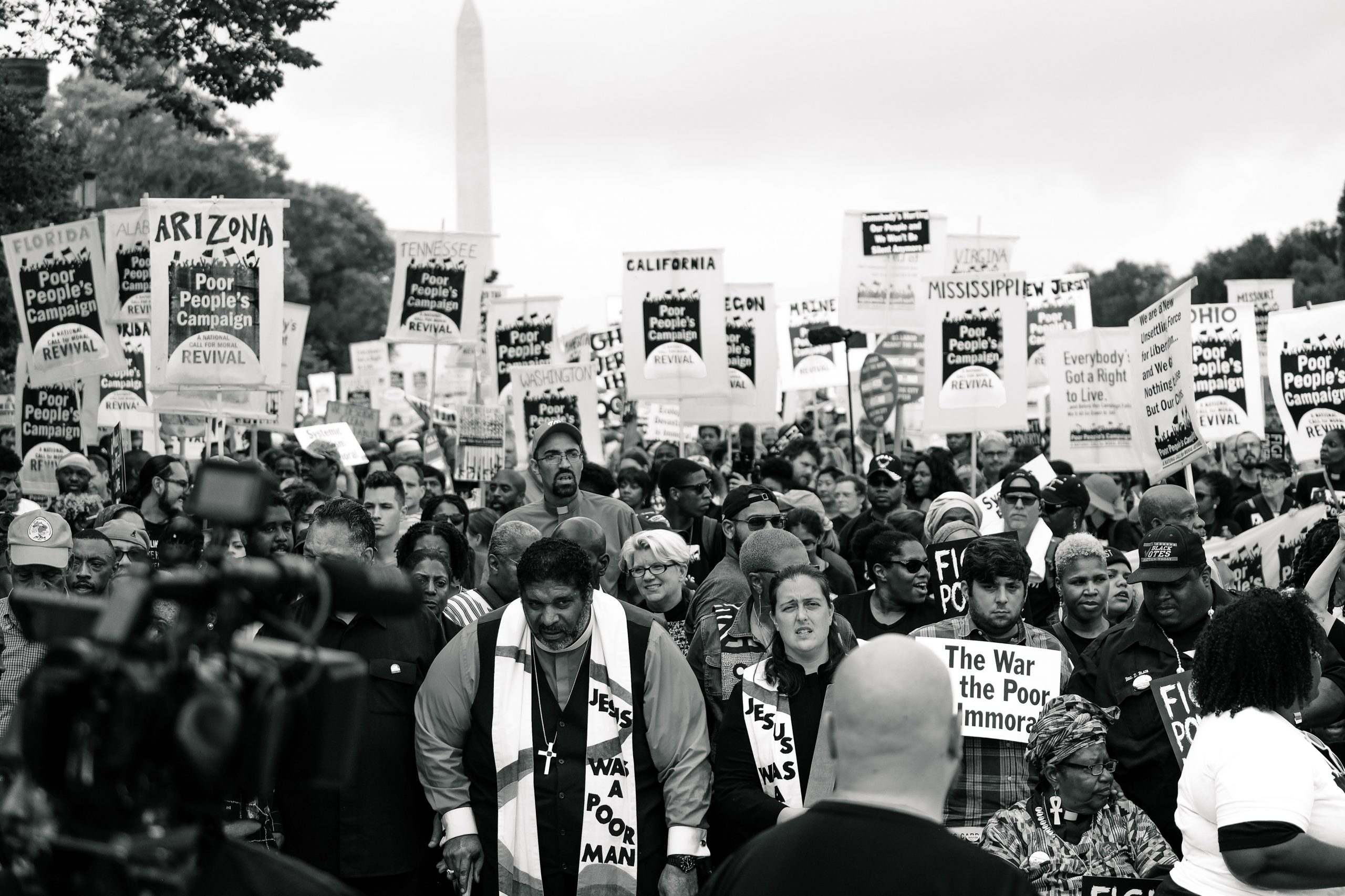
Unlike in the Global North, where life worlds can be easily divided into ‘before’ and ‘after’ the crisis, in the Global South, the everyday reality is not that much more different than the temporary health crisis. As stated in The Pandemic, Southern Urbanisms, and Collective Life, urbanism of the Global South inherently requires a constant movement and adaptation to micro and macro shifts, such as inconsistent income flow and changing government schemes. This urbanism of endless transformation creates a chronic sense of vulnerability. It means that while the urban majority was not made newly vulnerable, the pandemic and consecutive lockdowns added to the already debilitating vulnerability. The brutality of COVID-19 itself is well-documented but the design of lockdowns misrecognized every aspect of urban life in cities of the South where most inhabitants need to navigate the hustle to arrange water, food, work, waste or childcare on a daily basis. In doing so, lockdowns worsened already existing fault lines of inequality. 

Layered atop pre-existing crises, including but not limited to flooding and excessive rains on both coasts in India, mass farmer dissatisfaction over the three exploitative farm laws, and heightened caste-based discrimination, this ‘new normal’ points to a grim and urgent reality. It reminds us that the time to act radically is now. As Naomi Klein recently said, ‘there is no such thing as a singular disaster anymore—if there ever was; from Covid to climate, every disaster contains every other disaster within it.’ To challenge the ways in which planning knowledge is held, and consequently the ways in which power is exercised and against whom, is an especially critical task in contemporary times of interrelated disasters. 

Transforming urban planning 

The inherent failure of planning to respond to the needs of the majority, aka the urban poor, necessitates a fundamental revisioning of what planning is, who it is controlled by, and how it is understood. Over the years, attempts have been made to reform planning in India, largely fostered by political action and technical interventions of civil society organizations and resident associations seeking rights to and in the city. Higher judicial courts increasingly intervene into urban governance by condemning unannounced and forced evictions without rehabilitation plans. The emergence of new forms of public-private partnerships in urban reforms have also, in certain cases, provided access to resources such as drinkable water or services and infrastructure, to the marginalized. But while these efforts have brought planning closer to democratization, they have not succeeded in diffusing power away from the technical planner/planning agency or in challenging planning’s subordination to the laws and/or the desires of the government.  

To seriously build cities in which all people have equal rights and access to the benefits and opportunities of urbanization, as stated in the New Urban Agenda, there is a need to fundamentally alter how planning is understood, taught, and leveraged. Here, Foucault’s understanding of power as multi-directional and as bottom-up as top-down, helps us rethink planning’s agenda to induce resistance in groups with limited power against the dominance of greater State power. 

To this end, as Urban Fellows at the Indian Institute for Human Settlements (IIHS), we supported anti-eviction housing activists in Indore, Madhya Pradesh by conducting workshops on the technicalities of urban planning. Our pedagogies were designed through an active collaboration between IIHS and activists fighting against illegal and forceful eviction, slum demolition, and caste dynamics in the urban space. We did the direct work of demystifying the Master Plan by deconstructing its statutory importance and introducing the concepts of land-use and zoning to the activists. Yet, the real resistance-building happened through our pedagogical approaches that emerged from two questions: can we view activism as a legitimate form of urban practice and not just a form of reactionary political engagement? Can there be a space for communities, activists, and universities to come together to inform and direct a pedagogical practice that recognizes the agency of learners and practitioners beyond the scope of formal planning education?

These provocations help us decenter the technically trained planner, the academy that produces them, and the institutions that absorb and legitimize them. This decentering—via recognizing basti residents and housing activists’ agency and knowledge—is necessary to transform planning into the broad-based, pluralistic, and democratic process that it should be. 

Our second series of workshops in Indore focused on forms of tenure, government schemes, missions, and policies to support a new generation of activists in struggling against eviction. Through this, we wanted to not only support anti-eviction activists’ participation in discussions with the government on Master Plans, but to also recognize the urban activism of anti-eviction as a distinct mode of urban practice. This was especially critical as ‘public participation, even in the best situations, cannot imply the expansion of power as long as it is subordinate to laws and/or the desire of the government.’

Power relations are not static and symmetric and therefore, my aim is not to suggest universalizing the Global South’s theorization of urban planning. But by illustrating the failures of Global North-informed planning paradigms in India, I wish to challenge the notions of an ‘inadequately’ planned Global South. At a time when the spaces we inhabit determine whether we survive a deadly virus or not, urban planning becomes a critical tool in preparing for and responding to the disasters of the present and the future. For these reasons, by centring the needs of the urban poor, legitimizing activism as a form of urban practice, and demystifying the technicalities of planning, we can transform planning into an evolving and moving discipline instead of static theory. 

Apoorva Dhingra is a writer and researcher based in Delhi, India. They are interested in urbanization, ecology, and climate adaptation and are passionate about building a better world. You can reach out to them at apoorvadhingra[at]pm.me.

July readings

The distribution of concentration of herbicide as it travels westward into Gaza. Source: Forensic Architecture and Dr Salvador Navarro-Martinez

Once a month, we put together a list of stories we’ve been reading: news you might’ve missed or crucial conversations going on around the web. We focus on environmental justice, radical municipalism, new politics, political theory, and resources for action and education.

We try to include articles that have been published recently but will last, that are relatively light and inspiring, and are from corners of the web that don’t always get the light of day. This will also be a space to keep you up to date with news about what’s happening at Uneven Earth.

This month, we were glued to our screen reading about the multiple climate disasters around the world. We also read careful critiques of “green” technology and their social costs, as well as incisive analyses of the problems with air conditioning. Along with that, we read about how we can make our cities more ecologically resilient, and the movements fighting to get us there. Finally, we are featuring several stories on food and water conflicts, from Gaza to South Africa. We’re taking August off, so see you in September!

A small note that the articles linked in this newsletter do not represent the views of Uneven Earth. When reading, please keep in mind that we don’t have capacity to do further research on the authors or publishers!


Uneven Earth updates

We are looking for a treasurer! Uneven Earth is in the process of registering as a non-profit. Incorporating will enable us to develop the project further, and we’re really excited about this. We have everything ready for a constitutional meeting except one thing: we need a volunteer treasurer or accountant. If you or someone you know is interested, contact us for more information at info[at]unevenearth.org.


Top 5 articles to read

Herbicidal warfare in Gaza

AC feels great, but it’s terrible for the planet. Here’s how to fix that. “Ensuring that the most vulnerable among the planet’s human inhabitants can keep cool through better access to public cooling centers, shade-giving trees, safe green spaces, water infrastructure to cool, and smart design will not only enrich our cities overall, it will lower the temperature for everyone. It’s far more efficient this way.” Also: Cruelest summer: What is the cost of comfort? A review of After Cooling: On Freon, Global Warming, and the Terrible Cost of Comfort by Eric Dean Wilson.

Who holds the welding rod? “If we call a global minimum wage – or a global maximum working week, or a global minimum healthcare standard – pie in the sky, we’re saying that the green energy transition is the possible, necessary utopia, and fair pay and conditions the impossible, unnecessary one.”

Broader crises. Indian border-crossers illuminate the interconnectedness of mass migration.

In memory of Richard Lewontin: Profile of a dialectical biologist


News you might’ve missed

Mapuche woman to lead body drafting Chile’s new constitution 

‘Reckless’: G20 states subsidised fossil fuels by $3tn since 2015, says report

Whistleblowers expose corruption in EPA Chemical Safety Office

Berta Cáceres assassination: ex-head of dam company found guilty

Bitcoin power plant making part of glacial lake ‘feel like a hot tub,’ residents say

The smoke comes every year. Sugar companies say the air is safe.

‘The road to freedom lies ahead’. The humanitarian crisis in West Papua as people continue to struggle for self-determination.


Where we’re at: analysis

How the American South is paying the price for Europe’s ‘green’ energy

Britain’s new enclosure. Less than 1% of the population own half of England’s land, and with every passing year public right of access is diminishing – enclosing swathes of green spaces to be enjoyed by the rich alone.

The insect apocalypse: ‘Our world will grind to a halt without them’ 

Climate doom won’t save the planet

Nuclear Stockholm Syndrome and What nuclear waste can teach us about long-term thinking

Why neoliberalism needs neofascists


A summer of climate disasters

The climate connection behind a summer of floods in China, Europe and the US

Worst European floods in 100 years have left 120 dead, 1,300 missing

This year’s summer of climate extremes hits wealthier places 

Death toll rises and thousands flee homes as floods hit China

In flooded Ghatal, residents say ‘nobody cares about our misery

As frozen land burns, Siberia trembles 

Photos: Here are the 6 major regions literally on fire right now


Food politics

Food labels and the lies they tell us about grocery store ‘best before’ expiration dates

Workers transformed a McDonald’s in France into a food bank

Durban food riots turn the wheel of history

Bill Gates should stop telling Africans what kind of agriculture Africans need

‘It’s five years since a white person applied’: the immigrant workforce milking America’s cows 

Lake Mead, crucial water source in West, tips toward crisis. And Severe drought threatens Hoover dam reservoir – and water for US west


Just think about it…

In Indigenous knowledge, innovative solutions

After Tokyo, we should bring the Olympic charade to an end

Loneliness: coping with the gap where friends used to be, and Harare’s park bench grandmas: ‘I speak to them and feel a load is lifted off my heart’

The low-desire life: why people in China are rejecting high-pressure jobs in favour of ‘lying flat’

No, billionaires won’t “escape” to space while the world burns

Ban mansions

The pandemic could put an end to the five-day workweek

Did communism make us human?


Degrowth

Degrowth, explained.

Billionaire space race: the ultimate symbol of capitalism’s flawed obsession with growth

Beyond the growth imperative


Cities and radical municipalism

Public transit is a public good. It’s time to fund it that way.

Poor neighborhoods are up to 7 degrees hotter than rich ones

Uber and Lyft can’t find drivers because gig work sucks

Madrid building a huge urban forest in a bid to combat climate change 

Guerrilla gardening: Taking back the city one seed bomb at a time 

There are trees in the future, or, a case for staying

Death drives. Pedestrian fatalities are rising dramatically in the US, and Angie Schmitt’s Right of Way gives a rare look at why and what might be done about it.          


Resources

A history of the concept of race


Want to receive this as a newsletter in your inbox? Subscribe here.

June readings

Image: A Growing Culture

Once a month, we put together a list of stories we’ve been reading: news you might’ve missed or crucial conversations going on around the web. We focus on environmental justice, radical municipalism, new politics, political theory, and resources for action and education.

We try to include articles that have been published recently but will last, that are relatively light and inspiring, and are from corners of the web that don’t always get the light of day. This will also be a space to keep you up to date with news about what’s happening at Uneven Earth.

Must-reads this June include GRAIN’s investigation into the Bill and Melinda Gates Foundation and their outsized influence over global agriculture, Kai Heron on why ‘socialism or extinction’ isn’t quite accurate, a story on the Landless Workers’ Movement and the LGBTQIA+ community in Brazil, and a critique of the EU’s Green Deal. We also read a lot of articles about wildlife and species justice. Browse the list for more!

A small note that the articles linked in this newsletter do not represent the views of Uneven Earth. When reading, please keep in mind that we don’t have capacity to do further research on the authors or publishers!


Uneven Earth updates

Why the National Páramo Day in Ecuador matters | The páramo is a wetland ecosystem found only in the Andes, but its future well-being has global implications

Discounting | Descriptive discount rates both reflect and sustain a highly unequal and myopic world


Top 5 articles to read

Extinction isn’t the worst that can happen. It’s much more likely that climate chaos will intensify existing processes than bring about the end times.

Pacific plunder: this is who profits from the mass extraction of the region’s natural resources, part of The Pacific project series

Climate colonialism and the EU’s Green Deal

How the Gates Foundation is driving the food system, in the wrong direction

Agrarian reform and queer rights go hand in hand. The Landless Workers’ Movement in Brazil fights for LGBTQIA+ people who are being murdered at an alarming rate in a country besieged by racism, capitalist domination and exploitation.


News you might’ve missed

Reducing poverty can actually lower energy demand, finds research

The push to make ‘ecocide’ an international crime takes a big step forward

Revealed: ExxonMobil’s lobbying war on climate change legislation 

Big oil and gas kept a dirty secret for decades. Now they may pay the price

Hotter than the human body can handle: Pakistan city broils in world’s highest temperatures

‘The next pandemic’: drought is a hidden global crisis, UN says 

Iceland tried a shortened workweek and it was an ‘overwhelming success’ 

America’s continued move toward socialism. Just half of younger Americans now hold a positive view of capitalism — and socialism’s appeal in the U.S. continues to grow, driven by Black Americans and women, according to a new Axios/Momentive poll. 


Where we’re at: analysis

What exactly is the “system” that we are fighting?

If we can vaccinate the world, we can beat the climate crisis

Dust storms, green waves. A lattice of violent, global relations sustains China’s colonization of ‘Xinjiang’.

The WWF’s poaching war is killing innocent people

The connection between clearcut logging and Canada’s hottest day on record. With temperatures set to soar to 47 C in B.C., forests provide a cool, wet place for animals and people alike to seek shelter.

The rush to ‘go electric’ comes with a hidden cost: destructive lithium mining

Sixty years of climate change warnings: the signs that were missed (and ignored) 

We are on track for a planet-wide, climate-driven landscape makeover


Food and water politics

Imperial roots of the global food system

Inside the struggle for water sovereignty in Brazil

Oregon’s water crisis could have a quiet solution

What a water shortage is doing to some of America’s best farmland 

A kingdom from dust

A perfect storm: Climate change and overfishing

Farmworkers endure brutal conditions during historic heat wave / As the climate emergency grows, farmworkers lack protection from deadly heat 

How pesticide companies corrupted the EPA and poisoned America


Just think about it…

The case for letting Malibu burn

Mines produce more waste than metal

Modern medicine still has much to learn about women’s bodies

The struggle to be Nadleehi: A Two Spirit person

How to heal in the Anthropocene, part of the Climate emotions series

The problem with reinforced concrete

The tyranny of time


Species justice

Climate change and biodiversity loss must be tackled together – report

Species solidarity: Rediscovering our connection to the web of life

Did the pandemic really help wildlife? 

How fireworks harm nonhuman animals

When the bison come back, will the ecosystem follow? 

There’s a wolverine in my neighborhood. “Often, conservation communicators think in terms of educating around the big, global, complicated issues. But there’s a role for helping people understand and appreciate the local, the small, the overlooked.”


Degrowth

La política anticolonial del decrecimiento

Sozialismus oder Degrowth?

The delusion of infinite economic growth 

The poverty of ‘economic growth’


New politics

It’s time to nationalize Shell. Private oil companies are no longer fit for purpose

Making the world big enough for all of us: A review of Max Ajl’s ‘A People’s Green New Deal’

Building an anti-imperialist climate justice movement

Transformation is not a metaphor 


Cities and radical municipalism

An ambitious, radical Green-Left Coalition has won Zagreb’s elections. Here’s how they did it.

By bringing down Sweden’s government, the Left Party saved rent controls

A municipalist alternative for San Juan and Puerto Rico: An interview with Pablo Benson

If you sell a house these days, the buyer might be a pension fund

What if we designed cities for the safety of people, instead of the convenience of cars? 

Blue-sky thinking: how cities can keep air clean after coronavirus 


Sci-fi

Stories to save the world: the new wave of climate fiction

Solarpunk, climate change and the new thinkable 

Ministry for the Future with Kim Stanley Robinson. The science fiction writer discusses his Modern Monetary Theory-inspired “cli-fi” novel.


Resources

The People vs. Agent Orange. A new documentary that investigates the legacy of one of the most dangerous pollutants on the planet, a cover-up, and the fight for accountability. Read a review here.


Want to receive this as a newsletter in your inbox? Subscribe here.

Why the National Páramo Day in Ecuador matters

The Ecuadorian páramo. Credit: Wikimedia Commons

by Tristan Partridge

In early May, Ecuador’s National Assembly voted to declare June 23rdDía Nacional de los Páramos, or National Páramo Day. This designation at once recognizes the importance of these high mountain grasslands and underscores the need for improved conservation efforts. Indigenous and rural communities across the highlands have long fought to protect the páramo, but for many years such actions were localized and bereft of resources. The institutions may finally be listening.

While the special observance is of national scope, the páramo’s well-being, now and in the future, is a global concern.

High-altitude páramo moorlands comprise a wetland ecosystem that spans over 30,000 km2 of the northern Andes. Its unique soil structure and plant life play vital roles in the hydrological cycle, providing up to 85-90% of all drinking water in Colombia and Ecuador. The páramo functions by gathering rainfall and cloud moisture, which is then filtered through damp soils and slowly released into streams and rivers. Ultimately, it is a source of the greater Amazon watershed.

An estimated 60% of all páramo flora is endemic, meaning that most of these life forms are not found anywhere else on Earth. Ecuador, by virtue, is one of the world’s most megadiverse countries. Healthy páramo lands thrive on biodiversity and feed South American waterways, thereby supporting the vast forest ecosystems that sustain the planetary web of life as we know it. Indeed, the very ecosystems that are increasingly under existential threat from agricultural and industrial activities.

According to Luis Pachala Poma, the Representative who proposed the legislation, National Páramo Day is a time to celebrate the “cultural, ecological, economic, and historical importance” of this biome. June 23rd was selected because, on that date in 1802, the renowned naturalist Alexander von Humboldt and his team set out to climb Ecuador’s Chimborazo summit, at the time thought to be the world’s tallest mountain. The trek informed Humboldt’s “Essay on the Geography of Plants” and the accompanying “Chimborazo Map.” Illustrating the connections between climate conditions and plant distribution, the latter emphasized for his audience the dynamic interconnections that link overlapping natural processes. Humboldt studied the extreme meteorological conditions and physical diversity of tropical mountains, together with the multiple adaptations found in their flora and fauna. Embodying these characteristics, the páramo is now an ideal place for studying climate change

Climate change and the páramo: critically important and critically at risk

The páramo acts as a carbon sink, supremely important in helping to limit global warming. Because páramo lands are found above the tree line, cool and wet climate conditions have allowed their volcanic, water-rich soils to store enormous quantities of organic material. Coupled with tall-growing vegetation, this means the páramo holds more carbon per hectare than tropical lowland forests. 

At the same time, global warming is changing the páramo. Two particular impacts of climate change—increasing average temperatures and changing precipitation patterns—disrupt the páramo’s unique vegetation and soil characteristics. The result presents a grave threat to the ongoing existence of these ecosystems. 

The wider region where the páramo is found is particularly at risk, for the tropical Andes are warming faster than anywhere outside the Arctic Circle. Glaciers are melting; less rainfall is reaching high-altitude areas; wetland plants in the páramo are dying, among other effects. If National Páramo Day can help draw attention to these changes and lead to greater support for community actions that challenge destructive industrial activities, then the event cannot come soon enough.

Representative Pachala also stated that National Páramo Day will reaffirm the need to conserve, restore, and use Ecuador’s páramo in a “sustainable” way. That idea is still deeply contested. 

Ecuador’s economy continues to rely heavily on extractive industries. These industries have devastated Indigenous communities in Amazon regions, damaged biodiverse landscapes, and now, as a result, are facing increasing opposition from the population at large. In a February referendum in Cuenca, the third largest city in Ecuador, over 80% of the electorate voted to ban mining in the area, including in the Quimsacocha páramo. Yet mining companies with interests in the region have said they will not respect the referendum results.

While the newly-elected President of Ecuador, Guillermo Lasso, is associated with pro-mining policies and statements, environmental coalitions plan to keep up the pressure to ensure he honors a pre-election pledge to ban open-pit mining. Further political changes since May similarly suggest that Ecuador is on course to revise its relationship with extractive industries. The President of the National Assembly, Guadalupe Llori, is a member of the Indigenous political party (Pachakutik) and has herself faced persecution for participating in protests against oil companies. It remains to be seen whether and how the new legislature transforms Ecuadorian environmental policy.

While policy decisions are debated, those fighting to protect the páramo are among the first to point out that there is no sustainable mining. Many argue that the only “sustainable” future involves a political-economic system that looks beyond mineral extraction and, instead, protects Indigenous rights and the Rights of Nature, as recognized in the 2008 Constitution of Ecuador—the first in the world to do so. 

Indigenous leader Marisol Copara has worked to protect the páramo as a source of water not only for humans but also for crops and animals. Describing the páramo as a “source of life,” Olmedo Iza Quinatoa of the Kichwa Indigenous nationality emphasizes the spiritual importance of the páramo, alongside its carbon-storing and water-giving properties, and asks, “What would our life be without water, that is, without the páramo?”  The struggle for more equitable futures is ongoing.

Ivan Guamán shepherds his community’s small flock of alpacas in the páramo in Cotopaxi province, Ecuador. Credit: Tristan Partridge

In addition to the effects of climate change and mining, Ecuador’s páramo currently faces a number of other threats. These include industrial forestry, unregulated tourism, and land-use change as people are forced to seek grazing and arable lands at higher altitudes.

Robert Hofstede is an environmental consultant based in the capital city of Quito. For decades, Hofstede has collaborated with a network of regional scholars and activists to document biophysical characteristics of the páramo, as well as potential solutions to the changes that are placing this ‘regional biological corridor’ at risk. They note that positive steps have already been taken. 

Effective measures introduced so far include water funds to recompense good practice among community initiatives and economic support for small-scale production of high-value products linked to the páramo, like alpaca wool, mortiño blueberries, organic potatoes and tubers. According to Hofstede, such programs need to be upscaled together with both a strengthened policy/regulatory framework and an improved communication/education plan. National Páramo Day can play an important part in these processes, so long as it is provided the visibility and support that these one-of-a-kind landscapes deserve.

Like all environmental campaigns, protecting the páramo is a deeply social and political project. Páramo conservation is a (pluri)national and international concern that involves the protection of biodiversity and Indigenous rights as well as efforts to limit global warming. If National Páramo Day can generate increased political and financial backing for the many local conservation efforts currently underway, it will be a success year round, for all the years to come.

Tristan Partridge is an environmental justice researcher based at the University of California, Santa Barbara (USA). His work appears in NACLA; The Revelator; Toward Freedom; and openDemocracy / democraciaAbierta, among others. More information on his academic work is available here. Twitter: @TristanPartridg.

Discounting

Photo: Duncan Rawlinson.

by Paul Robert Gilbert

When we borrow money, interest rates determine how much we will repay, over and above the amount we originally borrowed. Or, for those of us lucky enough to have savings, interest rates determine how much we will ‘earn’ on our deposits. A discount rate performs a similar task but in reverse. Like interest, discounting expresses the preference to have something sooner rather than later. Interest rates are used to estimate how much the value of a sum will be worth in the future, which a debtor would pay on a loan to compensate their creditor (and offset the risk of them defaulting on their loan), or what an investor expects to make on money they tie up in the market. Discount rates invert the calculation, and are used to determine the present value of possible future wealth.

Investors use discount rates to determine what a sum owed to them in the future might be worth today. The process of discounting makes it possible to value a diverse range of ‘things’ – from land to patents – in terms of the cash flows they will produce over their lifetime. The more uncertain you are that those cash flows will materialize, the more you ‘discount’ them, and the lower their worth (or ‘net present value’) is today. The more possibilities there are to ‘de-risk’ an investment through insurance or government guarantees, the higher the likelihood that the cash will arrive in the future – and the lower the discount rate and the higher the net present value.

Policymakers also practice discounting. Borrowing from financial decision-making strategies, cost-benefit analysis attempts to weigh the future benefits against the costs of a project (say, a dam, a nuclear power plant, or an emissions reduction project) before deciding to go ahead. In the process, they usually assign a discount factor that devalues future cash flows, and then see whether the sum of discounted costs and discounted benefits is positive or negative. The project goes ahead if the net present benefits outweigh the net present costs. The ‘social’ discount rate at work here denotes the importance that present generations give to costs and benefits in the future, i.e. to the ‘well-being’ of future generations (though well-being here is usually equated with consumption). If your social discount rate is zero, then you place an equal weight on the fate of future generations and those around today. If you use a positive discount rate, you are effectively placing a greater weight on impacts in the immediate term than those in the more distant future. A high positive discount rate effectively renders future considerations inconsequential. Conversely, a negative discount rate expresses long-term priorities.

There is, however, no consensus among economists on how to determine the social discount rate (or even what sign it should have). The broadest division is perhaps between those who believe the discount rate ought to be determined based on normative or ethical considerations (how much should we care about the future?), and those who believe it should be derived from existing patterns of economic behaviour. Clashes between adherents to these two broad approaches came to the fore in disputes about discounting that followed the publication of the Stern Review in 2006. The Stern Review, a report to the government of the UK in 2006, made the case that investing 1% of global GDP now was required to avoid an enormously costly impact from climate change in the future. Stern and his colleagues used fairly low discount rates (close to 1%), and this meant that impacts of climate change in the distant future registered as fairly ‘costly’ today, underpinning the argument that it was necessary to spend a significant amount today in order to mitigate future harms. Writing in Science in 2007, Yale economist William Nordhaus criticised Stern for being overly ‘prescriptive’ and deriving his discount rate (and hence his policy recommendations) from ethical commitments rather than ‘market data’. Nordhaus advocates more for what he terms a ‘descriptive’ approach, or for at least using discount rates that (seem to) reflect ‘standard returns to capital and savings rates’. We might wonder, of course, whether thinking like a private investor is appropriate to formulating macro-level policy decisions.

We might wonder, of course, whether thinking like a private investor is appropriate to formulating macro-level policy decisions

Advocates of descriptive approaches to discounting tend to treat market interest rates as ‘revealed preferences’ (i.e. the market interest rate is what people are willing to ‘tolerate’ as payment for forgoing consumption today). That is to say, the appropriate social discount rate can be read off market interest rates because this has already captured people’s ethical considerations about the future. This approach would involve arguing that ‘society’ should not invest in a ‘project’ like emissions reduction unless that project can deliver benefits equal to, or worth more than, the gains from investing a sum equivalent to that cost over the project’s proposed lifetime. 

Stern, in his 2007 response to Nordhaus, pushed back on this descriptive approach, and challenged the view that there is any ‘real economic market that reveals our ethical decisions on how we should act together on environmental issues in the very long term’. Given the events of recent decades, like the 2008-2009 financial crisis (the ‘Great Recession’), which brought to light the corruption and instability inherent to a highly financialized economy, it is absurd to suggest that public policy decisions should be premised on the supposed capacity of markets to accurately value preferences and ethical judgements. Rather, descriptive discount rates both reflect and sustain a highly unequal and myopic world. Even as a critic of the ‘market failures’ that he views as driving climate change, Stern’s report is still couched in cost-benefit logic. Stern and many others in the climate policy mainstream maintain that it is worth acting quickly to mitigate climate change and reduce emissions primarily because the monetary benefits will outweigh the costs. That said, even within a cost-benefit framework, defining social discount rates to reflect long-term priorities for a safe and equitable world is a radical departure from and challenge to hegemonic approaches. The neoclassical approach as epitomized by Nordhaus’s descriptive approach to climate policy is idealized as an apolitical and accurate representation of preferences, when in practice it only reflects the financial imperative for short-term profits – a priority just as normative as Stern’s prescriptive policymaking.

Even those committed to the cost-benefit approach to climate policy have criticized Nordhaus’s excessively high discount rate. Recall that any discount rate above zero essentially involves valuing the impacts of climate change on future populations less than the ‘costs’ of mitigation or abatement today. But why, as Adler and colleagues (2007) put it, should ‘harms and benefits to the members of later generations [be] downweighted by virtue of the ethically arbitrary fact that these individuals come into existence later in time’? Equally if not more concerning is the degree to which the ‘globally impartial decisionmaker’ assumed by most discounting models trades off impacts between different parts of the world, where existing inequalities are shaped by entrenched structural inequities in the global economy.

Underpinning contemporary models of the social cost of carbon are discounted measures of the costs and benefits of climate change impacts, which can be used to decide whether measures (like a carbon tax) are ‘worth it’. But how can the impacts of future and present consumption ‘loss’ be measured in an intensely unequal world? When applied uniformly, discounting privileges economies with higher GDPs – comprised of people with higher incomes and real estate with higher asset values – over the livelihoods and homes of the global poor. As ecological economists like Azar and Sterner (1996) have argued for some time, if discounting models are to be used, then the dollar costs of impacts and costs should be weighted higher when they impact upon poorer people in the countries of the Global South, rather than being treated as impacts borne by a ‘representative world consumer’. 

For those in the global North, discounting might be glossed over as a question of whether to ‘enjoy more now or pay for the future’. Yet asking policymakers in the Global South to front-load emissions reduction costs in order to ‘pay for the future’ will likely exacerbate existing international inequities. Financing development continues to place a burden on countries of the Global South, which are increasingly required to ‘de-risk’ private investments coming from the North, even as ‘capital flight’ from many parts of the South outstrips aid and debt inflows. Furthermore, focusing on the consumption choices and preferences of a stylized homo economicus as the basis for wellbeing – rather than, say, focusing on the provisioning of human life within a set of physical and social constraints – itself reflects an extraordinarily narrow set of neoclassical preoccupations, as feminist economists like Julie Nelson have long argued. 

Asking policymakers in the Global South to front-load emissions reduction costs in order to ‘pay for the future’ will likely exacerbate existing international inequities

Some ecological economists are critical of both Nordhaus and the self-identifying ‘normative’ opponents of Nordhaus who take issue with his excessively low choice of discount rate, precisely because both groups often share a neoclassical preoccupation with choice and substitutability. Nordhaus and many others assume that ‘natural capital’ (i.e. ecological systems that furnish commodifiable ‘resources’ and ‘services’) is substitutable for ‘economic capital’. That is, in Neumayer’s terms, the idea that ‘large-scale damage to natural capital caused by global warming can be compensated for by higher consumption levels’. This commitment to the idea that ‘natural capital’ and economic capital are substitutable is increasingly popular among policymakers and business leaders alike. As Stuart Kirsch notes, it is this notion of substitutability that underpins claims to ‘sustainable mining’ by corporations like BHP Billiton and Anglo American, who explicitly frame their contributions to economic capital and consumption as a partial offset to ecologically destructive extraction.

The extent to which discounting reflects the operation of power, entrenches existing inequalities, and relies on the notion that ‘natural capital’ depletion can be offset by increased (marketized) consumption levels is made particularly clear in Leah Temper and Joan Martinez-Alier’s analysis of a long-running dispute in India’s courts over compensation payments for the conversion of forest land. An expert committee tasked with determining the appropriate discount rate for calculating the ‘net present value’ of forests made its report to the courts in 2006, advocating for a discount rate of 5%. Some had, however, advocated a social discount rate of zero ‘so as to give equal weight to the consumption of all generations, including the unborn’ whereas industry representatives ‘employing a paper published by the Asian Development Bank, argued for a social discount rate in India of 12%.’ Through all this, as Temper and Martinez-Alier note, the ‘benefits’ of converting forest land were boosted by wealthy tourists’ willingness to pay for visits, while non-market relations with and uses of the forest disappeared altogether from their net present value. 

Ostensibly ‘value neutral’ tools like cost-benefit analysis and discounting in reality have definite normative implications.  Wedding decision-making tools like cost-benefit analysis to modes of valuation like discounting can privilege the wealthy today over the poor tomorrow, legitimizing decisions that take for granted structural inequalities as ‘natural’ features of a world made up of individuals with different ‘preferences’. Both cost-benefit analysis and discounting involve either implicitly or explicitly comparing outcomes that may not be comparable (what ecological economists flag as value incommensurability) and these outcomes themselves are subject to high levels of uncertainty inherently associated with the complexity of the earth and socioeconomic systems and their nexus.

The tools that we use to calculate value – and, in turn, to make things valuable – ultimately reshape the world in the process. Discounting models that posit representative world consumers, or even ‘globally impartial decision makers’ attentive to global inequalities, remain wedded to neoclassical understandings of economics that reduces human life to a matter of individual consumption choices, and reduces the nonhuman world to substitutable ‘natural capital’. Tethering discounting procedures to such cost-benefit analyses will inevitably steer policymakers towards decisions that reflect and intensify existing inequalities. 


Further resources

Collectif CSI. 2017. Capitalization: A Cultural Guide. Paris: Presses des Mines.
This volume presents a wide-ranging survey of the various arenas in which value has come to be understood in terms of future revenue streams – reliant in part on discounting models. The authors focus on the spread of this ‘cultural syndrome’ of valuation in relation to venture capital, forestry, business models and public budgeting. The book allows us to follow how discounting models have become key to valuation practices and decision-making in both finance and public policy, with a focus on how these models do not just measure, but shape, the world we live in. 

Hanke, Steve H. and Anwyll, James B. (1980) ‘On the discount rate controversy’ Public Policy 28 (2): 171-183.
If you want to go deeper into some of the public policy debates around discounting from the mid-twentieth century, Hankey and Anwyll’s paper analyses an earlier discounting dispute regarding water policy under President Carter. 

Kelleher, J. Paul. 2012. Energy policy and the social discount rate. Ethics, Policy and Environment 15: 45-50.
This is a very accessible and useful introduction to debates underpinning the choice of social discount rate (including the Stern/Nordhaus debates) and Kelleher’s blog is well worth a visit for more on this issue.

Temper, Leah & Martinez-Alier, Joan. 2013. The god of the mountain and Godavarman: Net Present Value, indigenous territorial rights and sacredness in a bauxite mining conflict in India. Ecological Economics 96: 79-87.
This paper by two of the political ecologists behind the Environmental Justice Atlas analyses the role played by disputes over discount rates in the context of forest peoples’ struggles with bauxite mining concerns in India.

Additional resources

Adler, M., Anthoff, D., Bosetti, V. et al. Priority for the worse-off and the social cost of carbon. Nature Clim Change 7, 443–449 (2017). 

Azar, C. and Sterner, T. (1996) Discounting and distributional considerations in the context of global warming. Ecological Economics, 19(2): 169-184.

Kirsch, S. (2010) Sustainable Mining. Dialectical Anthropology 34, 87–93

Neumayer, Eric (2007) A missed opportunity: the Stern review on climate change fails to tackle the issue of non-substitutable loss of natural capital. Global Environmental Change, 17 (3/4). [Available online]

Nordhaus, W. (2007) Critical assumptions in the Stern Review on Climate Change. Science 317 (5835): 201-202Stern, N. (2006) The Economics of Climate Change: The Stern Review [see https://www.lse.ac.uk/GranthamInstitute/publication/the-economics-of-climate-change-the-stern-review/]


Paul Robert Gilbert is a Senior Lecturer in International Development at the School of Global Studies, University of Sussex. His research focuses on environmental defenders, and on aid flows to for-profit development contractors.  

May readings

Palestinian demonstrators burn tires near the Israeli barrier surrounding Gaza in solidarity with Palestinians in occupied Jerusalem on 8 May. Mohammed Zaanoun ActiveStills, via The Electronic Intifada

Once a month, we put together a list of stories we’ve been reading: news you might’ve missed or crucial conversations going on around the web. We focus on environmental justice, radical municipalism, new politics, political theory, and resources for action and education.

We try to include articles that have been published recently but will last, that are relatively light and inspiring, and are from corners of the web that don’t always get the light of day. This will also be a space to keep you up to date with news about what’s happening at Uneven Earth.

This month, Palestine and Israel were all over the news. We collected some useful reading lists, essays and photo stories so you can dig deeper beyond the bite-size tweets and Instagram posts. Photography runs like a thread through our May readings: we featured a photo essay that documents the deep scars mining has left on our planet, and another on China’s ‘Cancer Villages’. We do have reasons to celebrate this month, though: a court in the Netherlands has ruled in a landmark case that the oil giant Shell must reduce its emissions, and Germany has formally recognized the atrocities committed against the Herero and Nama people of what is now Namibia as genocide, paying reparations of €1.1 billion ($1.3 billion). On top of that, we included our editor Aaron Vansintjan’s new piece on the insights on the imagination and the practice of democracy that the late David Graeber has left us with, an explainer on how Nigeria’s forests are being decimated to make charcoal for barbecues in Europe and the United States, and much more.

A small note that the articles linked in this newsletter do not represent the views of Uneven Earth. When reading, please keep in mind that we don’t have capacity to do further research on the authors or publishers!


Uneven Earth updates

GDP | What is GDP, and why should we learn to live without it?

Brave New Normal | Cultivating cooperative, self-sustaining communities can undermine destructive economic systems and offer meaningful responses to social-ecological crises in the wake of the pandemic


Top 5 articles to read

Eye-catching abstract photos reveal mining’s scars on our planet

Do you know where your grilling charcoal comes from?

David Graeber: The power of the imagination. “For many people, Graeber turned the concept of democracy on its head. Rather than a bureaucratic process that must be engaged in every few years, democracy for Graeber was imaginative, active, and intensely personal. There is no inevitable arc of progress towards more or deeper democracy. Rather, democracy must be fought for, actively built into institutions, protected, and constantly renewed.”

Ancient Indigenous forest gardens still yield bounty 150 years later: study

COVID-19 could end our dependence on cars — if we ‘build back better’


News you might’ve missed

Rich countries drained $152tn from the global South since 1960

Germany will pay Namibia $1.3bn as it formally recognizes colonial-era genocide 

Shell: Netherlands court orders oil giant to cut emissions / Shell loses climate case that may set precedent for Big Oil 

Climate tipping points could topple like dominoes, warn scientists 

Four-day working week would slash UK carbon footprint, report says 

Cali takes on mantle of Colombia’s ‘capital of resistance’


Justice for Palestine

Resources

Decolonize Palestine reading list 

Palestine: Sheikh Jarrah, expulsion, occupation, and settler colonialism

The Fire These Times reading list on Israel-Palestine

Visualizing Palestine

Discard Studies reading list on waste colonialism and Palestine

Stories and explainers

Palestine in pictures: May 2021

Peaceful coexistence in Israel hasn’t been shattered – it’s always been a myth

‘To say goodbye is to die a little’: Palestinian farmers struggle for survival

Human waste spills on to Gaza’s blacked-out streets as crisis looms

The architecture of violence. A short film on architecture’s key role in the Israeli occupation of Palestine and the evolution of urban warfare.

The power of the cultural boycott of Israel 


Where we’re at: analysis

How Senegal fought Covid-19 with lessons learned from Ebola and HIV/AIDS prevention

A climate dystopia in Northern California

When climate disaster and mass incarceration collide

We still blow up mountains to mine coal: Time to end the war on Appalachia

The curse of white gold? An interview with political ecologists Francisco Venes and Stefania Barca explores debates around lithium mining in Portugal.

Brazil aerial photos show miners’ devastation of Indigenous people’s land

The brutal reality of life in China’s most polluted cities. A photographer documents China’s ‘Cancer Villages,’ telling the human story of pollution.

Johan Rockström: ‘We need bankers as well as activists… we have 10 years to cut emissions by half’ 


Food politics

Why aren’t we talking about farmers in India? They are fighting in a global war over the future of agriculture.

Regenerative agriculture needs a reckoning

Between promise and peril: Can fake meat save the planet? 


Just think about it…

Cottagecore, colonialism and the far-right

Naomi Klein on climate change and family life. Here she shares her ideas on the big question of whether to have children and how we might begin the monumental work of saving the planet—and maybe even one another.

Civilizations don’t really die. They just take new forms. 

For peat’s sake: How saving Scotland’s peatlands could be the key to saving the planet

The intellectual labour of social movements


Degrowth

Giving up on economic growth could make us cooler and happier

Global climate change cannot be tackled without addressing economic inequality 

There’s a simple answer to climate change. But will capitalism allow it? 

The climate crisis requires a new culture and politics, not just new tech 

Degrowth and the pluriverse: continued coloniality or intercultural revolution?

How we end consumerism. A video that looks at how degrowth and ecosocialism can work in tandem to stop consumerism and overconsumption.

The only way to hit net zero by 2050 is to stop flying


New politics

A People’s Green New Deal. Max Ajl’s new book is an overview of the various mainstream Green New Deals, and a vision of a radical alternative: a ‘People’s Green New Deal’ committed to degrowth, anti-imperialism and agro-ecology.


Cities and radical municipalism

New municipalism, property and freedom: The battle for rent regulation in Spain 

The New Isaan Movement in Thailand is igniting protests and change in the poorest region of the country 

Driving cars out of our cities. The Car Free Megacities campaign sets out to transform London, Paris and New York.

To save the planet, kill minimum parking mandates. California was a pioneer in minimum parking mandates, which drive up housing costs and climate emissions. Now the state is ready to lead the nation in reclaiming our cities from parking lots.

How ‘gendered’ city budgets aim to boost equality 

How Vienna built a gender equal city. “In practice, gender mainstreaming takes many forms, such as ensuring government bodies use gender-sensitive language to communicate, or that public transportation includes illustrations of men with children to signal seats reserved for parents. A visitor to the capital might also notice the wide pavements for mothers navigating the city with prams or children, or the fact that a large proportion of the city, including the whole public transportation network, is wheelchair accessible.” 

Wetter the better: Gothenburg’s bold plan to be world’s best rainy city

The race to reinvent cement. What if we could transform the material that built the modern world from a climate wrecker into a carbon sponge?


Resources

Feminist resources on the pandemic

The pedagogy of transition: Educating for the future we want

Midnight Sun. A new online magazine of socialist strategy, analysis and culture.

EARTHRISE Spring 2021 issue 

Open-access Funambulist issues on Reparations and Futurisms

20 quotes from “How Europe Underdeveloped Africa”


Want to receive this as a newsletter in your inbox? Subscribe here.

GDP

by Doug Banks

What is GDP?

Gross Domestic Product, or GDP, measures economic activity. Technically speaking, it equals the sum of all goods and services produced within an economy over a certain period. To oversimplify it, we could think of GDP as the sum total of all the price tags within a country’s borders. Metaphorically speaking, GDP is the only universally-recognised heart-rate monitor for determining the health of capitalist economies. Capitalism operates on economic growth, and GDP measures growth. 

Because of this, GDP has become the most influential political and economic metric in the modern world. Governments, corporations and institutions use it to direct resources, frame discussions, and inform crucial decision-making. 

And ever since GDP became our universal stand-in for social progress, it has had the effect of reshaping entire societies in its own image—which is problematic, as GDP is a very sexist, western-centric, careless, ecologically-destructive, and altogether bad image.

Where did GDP come from?

Before the 1930s, to paraphrase the sociologist Daniel Hirschman, the economy as we currently know it ‘did not exist.’ But that’s not to say that our ancestors didn’t act economically. People have been making, buying, and trading things basically forever. But it was only in the decade before World War II that our current understanding of the economy—as something that can be examined, diagnosed, prescribed and intervened upon—was conceived.

It was only in the decade before World War II that our current understanding of the economy—as something that can be examined, diagnosed, prescribed and intervened upon—was conceived

Gross National Product, the precursor to GDP, was invented by the economist Simon Kuznets to help the U.S. recover from The Great Depression. His logic was simple: their economy was obviously broken, but before they could fix it they needed to figure out how to measure it. GNP became the first widely-adopted method of measuring an economy, until the U.S. replaced it with GDP in 1988. (GNP measured all economic activity by a country’s citizens, regardless of where they were in the world. GDP measures all economic activity within a country’s borders, regardless of the nationalities of the people involved.)

How did GDP become important?

In 1944, as World War II was winding down, the leaders of the Allied Nations met in Bretton Woods, New Hampshire, to decide how the world would be rebuilt. They set in motion a few things that would change the course of history forever. First, they cemented GNP (and then GDP) growth as their standard tool for measuring economic progress and development. 

Then, to help reinforce this emerging world order, they established intergovernmental institutions such as the International Monetary Fund (IMF) and the World Bank, and later the Organization for Economic Co-operation and Development (OECD) and the World Trade Organization (WTO). Promoted as the flag-bearers of international development, many of the programmes these institutions have overseen dismantled national sovereignty in the Global South to install Western-friendly and GDP-centric policies. 

Capitalism, by definition, must expand. For half a millennium private firms and individuals have been finding new ways to grow their wealth. But it’s only since the Bretton Woods Conference that pursuing a single, standardised metric of economic growth has become the primary public objective of almost all of the world’s most influential governments and institutions. From that moment onward, we have lived in a world religiously devoted to the pursuit of GDP growth—often at the expense of everything else.

Why is GDP a problem?

GDP was designed to measure an economy getting ready for war, but now it’s used to measure social progress in general. This mutation was already obvious during the Cold War, when GDP became the ideological benchmark for comparing the relative success of capitalism and state socialism. 

Today it’s no different. If a country grows its GDP faster than others, they can claim they’re ‘winning’ at the game of international development, and it’s implied that this will automatically improve the quality of life of its citizens. 

GDP serves as a ‘scorecard’ for political success, which means policymakers will generally favour and implement the policies that will increase it

GDP serves as a ‘scorecard’ for political success, which means policymakers will generally favour and implement the policies that will increase it. As time passes, societies transform to resemble GDP—which is a problem, because GDP resembles a very sexist, western-centric, careless, ecologically-destructive, and altogether bad way for a society to be structured. 

Sexist. By only counting activities that have a price tag, GDP completely ignores all manner of unpaid labour—like having and raising children, elderly care, housekeeping, etc.—that is traditionally undertaken by women. In this way, GDP has a sexist bias implying, mistakenly, that these essential services are less ‘productive’ than what is traditionally men’s work, and should therefore be less respected. 

Western-centric. GDP is, and always has been, rooted in the deeply colonial notion that Western nations have it all figured out, and everyone else would be much better off if they just followed in their footsteps. More often than not, they haven’t been given a choice. 

For example, during the debt crisis of the 1980s, many nations of the Global South were struggling to repay mounting debts to Western banks. In response, the IMF and World Bank forcibly imposed ‘structural adjustment programmes’ on their economies. In short, this meant their governments had no choice but to cut social spending, privatise public assets, dissolve labour and environmental protections, and focus single-mindedly on increasing GDP to repay their creditors in the Global North.

Careless. The rules of a game dictate how its players behave. If GDP is our social ‘scorecard,’ then the ways it measures success will, on an aggregate scale, have an effect on how people and organisations behave. Any brief examination of the activities that GDP registers as ‘good’ for an economy reveal it to be highly problematic and careless toward human wellbeing. As the Dutch historian Rutger Bregman noted, ‘If you were the GDP, your ideal citizen would be a compulsive gambler with cancer who’s going through a drawn-out divorce that he copes with by popping fistfuls of Prozac and going berserk on Black Friday.’

Ecologically-destructive. GDP has always been inseparable from resource consumption, emissions, and environmental degradation. Proponents of ‘green’ GDP growth maintain that with enough engineering, innovation and entrepreneurial flair, we’ll soon be able to ‘decouple’ economic growth from environmental pressures and keep growing happily forever. 

However, as seductive as it is, there’s a problem with decoupling: it has barely any empirical grounding in current or projected technologies. On concluding a series of highly optimistic decoupling models in 2016, the Australian scientist James Ward remarked that ‘growth in GDP ultimately cannot be decoupled from growth in material and energy use,’ and that it is ‘misleading to develop growth-oriented policy around the expectation that decoupling is possible.’
Altogether bad. Despite all of the above, one must assume that maximising GDP growth is, overall, necessary to produce good outcomes for people—otherwise why would governments pursue it so furiously? However, there is a strong scientific consensus that this simply not the case. 

According to the economic anthropologist Jason Hickel, ‘there are many countries that manage to achieve strikingly high levels of human welfare with relatively little GDP per capita.’ What’s more, research has found that above a certain level—a level which all nations in the Global North have long since passed—increasing GDP can actually cause human well-being to decrease.

Mounting evidence suggests that there is no automatic relationship between rising GDP and rising welfare. When it comes to improving citizens’ quality of life, the most important factor is not pursuing the maximum levels of GDP growth or wealth, but instead implementing policies that more justly distribute the benefits of new and existing wealth.

What alternatives exist?

GDP’s most enthusiastic critics typically fall into one of two broad categories (or both): those pushing to replace GDP as our metric for growth and progress in particular, and those advocating to abandon economic growth as humanity’s central goal altogether. 

For almost as long as it has existed, some economists have argued that GDP cannot, and should not, be used as a proxy for human progress. They’ve been mostly ignored. But as focus this century sharpens on social and ecological issues, mainstream appetites are increasing for ‘Beyond GDP’ alternatives such as the Better Life Index or Genuine Progress Indicator. Recently, in rapid succession, the governments of New Zealand, Scotland, and Iceland—all led by women—committed to exchange well-being for GDP as their main policy objective. 

While most agree that moving beyond GDP is essential, some economists, researchers, and activists believe it’s only the beginning of the change we need if we want to avert full-blown climate catastrophe and create a more egalitarian society. Because ‘green growth’ is empirically unrealistic—a fantasy, some would call it—many maintain that we should begin transitioning toward an economy capable of thriving without needing any more economic growth at all.

This philosophy takes form under the banner of ‘degrowth,’ a constellated, rapidly-growing movement advocating for the reduction of humanity’s overall resource and energy consumption, as well as the redistribution of income and resources. ‘In short,’ the organiser and activist Jamie Tyberg writes, ‘degrowth tells us to care for the earth’s systems, to care for the people, and to redistribute any surpluses back to the land and the people,’ with the ultimate goal of ending ‘capitalism-colonialism on a global level.’

Rethinking progress

In the span of less than a century, our search for social progress has been all but completely outsourced to an abstract measurement of ‘the economy’—which is itself a relatively recent abstraction of life itself. Leaning on metrics and abstractions isn’t necessarily a bad thing. Coordinating complex, interconnected societies would be unthinkable without them. But it becomes an issue when ever-expanding domains of human activity become folded into the pursuit of a problematic and inhumane conception of life. 

Perhaps it’s time to stop trying to sculpt our societies into an image of the economy from a bygone era. Maybe we should rethink our metrics, measurements, and very meanings of progress, and start reorganising our economies in ways that celebrate human and non-human nature, rather than constrict it. 


Further resources

Clifford Cobb, Ted Halstead, and Jonathan Rowe, ‘If the GDP is Up, Why is America Down?’ The Atlantic (October 1995).
Although it’s pretty dated, this 1995 Atlantic article is still a great introductory critique of GDP. 

Daniel Abramson Hirschmanm, Inventing the Economy Or: How We Learned to Stop Worrying and Love the GDP (PhD diss., University of Michigan, 2016).
A deeper exploration into the conception of our modern-day fetishism for GDP and the economy-at-large. Go here if you’re interested in how a vague idea became a world-swallowing reality. 

Maristella Svampa, Development in Latin America: Toward a New Future (Nova Scotia: Fernwood, 2019).
A thorough account of how contemporary narratives of economic development via GDP have enabled countries in the Global North to extract land, resources, and cheap labour from Latin America.

Arturo Escobar, Federico Demaria, Ashish Kothari, Ariel Salleh, and Alberto Acosta, Pluriverse: A Post-Development Dictionary (New Delhi: Tulika Books, 2019).
A beautiful compilation of cultural visions, life philosophies and alternatives to GDP-centric development from across the globe that growth-based economics has either repressed or actively oppressed. 

Jason Hickel, Less Is More: How Degrowth Will Save The World (London: Penguin Random House, 2020).
An accessible introduction to degrowth, with some really useful sections on the past and present of GDP growthism and how it incentivises human exploitation and ecological devastation on a mass scale.


Doug Banks is an Australian researcher, strategist, and writer exploring language, economics, culture, and the places they intersect. He is currently head of research & narrative at ArtRebels, a Copenhagen-based collective of cultural researchers and designers.

Brave New Normal

The Poor People’s Campaign rallies in Washington D.C., continuing the work undertaken 50 years earlier. Photo credit to Steve Pavey.

by Tomasz Falkowski

As upwards of ten million Texans faced a utilities crisis caused by record-low temperatures, Joe Biden signed the Paris Climate Agreement, reversing Trump’s abandonment of the same amid what was the most destructive wildfire season on record in California. While many applauded the retournement, others regarded the move as merely symbolic given the treaty’s shortcomings. These gestures of political theatre have typified Biden’s first months in office. It seems that peeling back the genteel veneer of a return to normal where “science is real…[and] kindness is everything” reveals an unwillingness to seriously consider the sweeping changes required this decade to avert global climate catastrophe. 

Biden’s embrace of the status quo is as disappointing as it was predictable. U.S. politicians serve primarily at the pleasure of America’s capitalist class rather than advocate for the common good of the populace and the planet we all inhabit. Although popular support is rising for bold climate action, the corporations disproportionately responsible for the majority of anthropogenic greenhouse gas emissions have wielded their economic power to stymie regulation and spread misinformation. Their noncompliance overshadows the individual actions we take to reduce our personal carbon footprints. 

Environmental destruction is not an unfortunate side-effect of mismanagement but an inherent manifestation of an economic system operating by design. Capitalism’s internal logic demands infinite growth, and the neoliberal tendency toward deregulation and privatization makes averting climate change in a capitalist context impossible. Most governments, however, remain undeterred and continue implementing watered-down, market-driven half-measures. Such “eco-capitalism” provides the illusion of restraining capitalism’s destructive tendencies without confronting any of its structural failures. 

Proponents argue this approach is more reasonable than severe regulation because it requires only limited economic changes. Cultural hegemony—a process by which those in power shape social norms and values to impose a particular mode of production—presents capitalism as the most practical and effective way to address the problems we face rather than one of their ultimate causes. Even worse, it is painted as inevitable, as opposed to the human construct that it is. Like fish unaware they swim in water, capitalism has become a hyperobject that pervades our lives and subsumes threats to its primacy. Its boundlessness seems to exceed our capacity to conceptualize what it is and precludes us from reasonably considering alterations to its fundamental structures. For many, it seems easier to imagine a future devoid of either a functioning ecology or human society than one free of capitalism. 

However, the milquetoast incrementalism of eco-capitalist reforms also renders them impotent. The old adage, “the master’s tools will never dismantle the master’s house,” resonates with the inability of moderate measures to avert the present crisis. Eco-capitalism’s primary directive remains maximizing profits for shareholders, which fundamentally conflicts with our finite world’s limits to growth. Presuming that small tweaks to the existing system will suffice only serves to overestimate their potential impact and underestimate the scale of the problem they purport to address. At present, we face ecological tipping points that are unavoidable without a wholesale shift in our society’s use and sourcing of energy—a solution that is utterly incompatible with market mechanisms. 

No wonder then that, in devouring ever more of Earth’s gifts to fuel the engines of economic growth, the Moloch of globalized capitalism has helped create the conditions to unleash and exacerbate pandemics. Governments have concentrated on regulating wet markets and providing public money to fund private ventures’ vaccine and testing development. By contrast, calls from the scientific community to curb deforestation and biodiversity loss, and to regulate transnational, monocultural, industrial agriculture in the hopes of preventing the emergence of zoonotic diseases have largely gone unheeded. In March 2020, however, the consequences of avoiding these vital changes became apparent.

It’s life, that’s all

In the wake of COVID-19, immutable givens seemed to waver. In the early days of the pandemic, our expectations had to adjust to a sobering new reality. Lockdowns limited travel and social encounters. Teachers, children, and their parents adapted to online learning. Non-essential businesses closed. Millions were furloughed or lost their jobs. Even seemingly inexorable institutions faltered. Contrasting the very tangible dangers of a global pandemic with the illusory exigence and false promises of capitalism encouraged us to let the gears of economic engines grind to a halt to protect ourselves and others from the virus. 

Like all crises, the pandemic has been revelatory, exacerbating pre-existing cracks in the fragile systems we had accidentally overlooked or willfully ignored. COVID-19 has illuminated the inefficiency and indignity of for-profit healthcare; the precarity of pauperized social safety nets; the suicidality of environmental management that values profitability over sustainability; the indecency of wasteful food systems amid commonplace hunger; the cruel inequity of social systems that value some lives over others by race, class, gender, and sexual identity; the villainy of economic systems that facilitate 1% of the world’s population to acquire almost 50% of humanity’s wealth and produce 15% of global carbon emissions. 

Initially, this international health emergency appeared to be the catalyst for implementing popular changes to the entrenched status quo. The pandemic had already shifted our lives in ways that were previously unimaginable. If ever there was an opportunity to begin living a prefigurative future, this was it. Death’s caprices jolted us from our slumber, reminding us that the question of being and not-being is far more fickle than we would like to imagine. Whiplashed by the change of pace after so many years of doing more and moving faster, some deeply ingrained inertia turned us toward the steadying constancy of what we needed most: the comforting embrace of the human and ecological communities upon which we depend. 

After rousing us, however, the pandemic has begun to wear us down. The preposterous has become mundane. The political, economic, and social ramifications of the pandemic will continue even as the pandemic eventually winds down. Eager to remain dominant, big businesses have lobbied for generous corporate bailouts. Faustian governments have devoted $12 trillion to stimulate economies, yet they have not allocated a fraction of that to redesign low-carbon energy systems. Betrayed by austerity-tattered social safety nets and forced to choose between their health and livelihoods, millions of people have been coerced to return to work. 

Even so, many employers have not provided adequate personal protective equipment, healthcare, or paid sick leave for workers, while others have rejected COVID-related benefit claims. Working from home has converted every waking hour into potential work time, allowing employers to appropriate even more labor value from their employees. Disjointed from any pretext of realism, the stock market is once again operating in the black. Health insurance companies have raked in record profits, and as more middle- and lower-income families teeter on bankruptcy or eviction, the wealthiest individuals’ net worth continues its unfettered rise. Even as farmers dumped food that they could not sell while store shelves lay bare, suggestions to promote local foodways and curb the waste of globalized food systems have been disparaged as “the worst possible response.” Beguiled by a return to some semblance of normalcy, we show signs of once again willing to believe that capitalism, despite its flaws, is actually our best defense. After all we have gone through, the new normal does not appear all that different from the old. 

Perhaps we can be forgiven for capitulating to capitalism’s sweet nothings. Capitalism’s legacy is sold as one of freedom, wealth and comfort, while its less glamorous products, like rampant poverty, inequality and environmental destruction, are conveniently ignored. Critiques of capitalism are repressed or misrepresented as totalitarian, regimented, and austere, despite the many alternatives to capitalism which are not inherently authoritarian. After being hit incessantly over the head with this false dilemma in our schools, advertising, news, and entertainment, a collective cultural amnesia has developed that prevents us from imagining different futures. By finding new narratives into which many stories fit, we can expand our perspective of the possible.

Invincible dreamers

The Zapatistas of Chiapas, Mexico have been cultivating a truly “new normal” for the better part of three decades. Their philosophy of Neozapatismo is rooted in the traditional lifeways of Indigenous Maya peoples, interwoven with anarchism and Marxism. It is a modern manifestation of the resilience they have honed over centuries of colonization, dispossession, and marginalization. For the Zapatistas, socioecological crises have never been some vague, future threat, but a present, brutal reality. Climate change and neoliberal markets have undermined the viability of the agricultural systems they adapted over centuries. Megaprojects funded by international capital like hydroelectric dams and intercity railways threaten to forcibly displace dozens of communities and devastate the ecosystems upon which they depend. Lacking the political or financial means to defend their communal interests thousands of Maya—pushed to the brink—occupied government buildings, freed Indigenous prisoners, and destroyed land records, declaring “Ya basta!” (Enough!) on the day NAFTA went into force in 1994. Systemic change, sowed and reaped by their own hands, was imperative for safeguarding their culture and supporting both their human and non-human neighbors alike.
Zapatistas celebrating in one of their caracoles. Photo credit to Dawson Weehunt.
Hagiography is not my intention. Like all messengers, the Zapatistas are imperfect. Inequality and poverty are still rampant. Some compañer@s are content to accept government aid, reflecting an economic pragmatism that tempers their political idealism. Smallholder farmers have contributed to deforestation, though less than other forms of land management, including large-scale agriculture. Despite attempts at participatory democracy, patriarchal structures prove difficult to dismantle. These contradictions do not necessarily belie the value of this vanguard’s unique vision for “a revolution that makes possible the Revolution.” The Zapatistas’ struggle against the power of global capital still serves as a vital and vitalizing inspiration for creating parallel lifeways in the cracks and along the margins. 
From the onset of the pandemic, the Zapatistas distributed thousands of reusable masks, initiated a program for sewing additional face coverings, and provided hygiene products among their communities. Meanwhile, many in the U.S. hoarded basic household items, betraying a lack of trust either in our communities’ capacity for cooperation or our government’s willingness to serve its citizens. Then, when U.S. states rushed to open commercial spaces and beckoned their citizens to return to business as more-or-less usual, the Zapatistas instead closed their caracoles—centers of resistance and rebellion that organize collectivist programs—and continue to avoid urban areas as much as possible. Furthermore, a common practice amongst Zapatistas has been to quarantine anyone who has had contact with sick individuals. Such people are ensured food and resources are delivered to them so that the farms and forests upon which all depend are not compromised. By contrast, workers throughout the U.S. often face the Sophie’s choice of defaulting on bills or risking infection. 
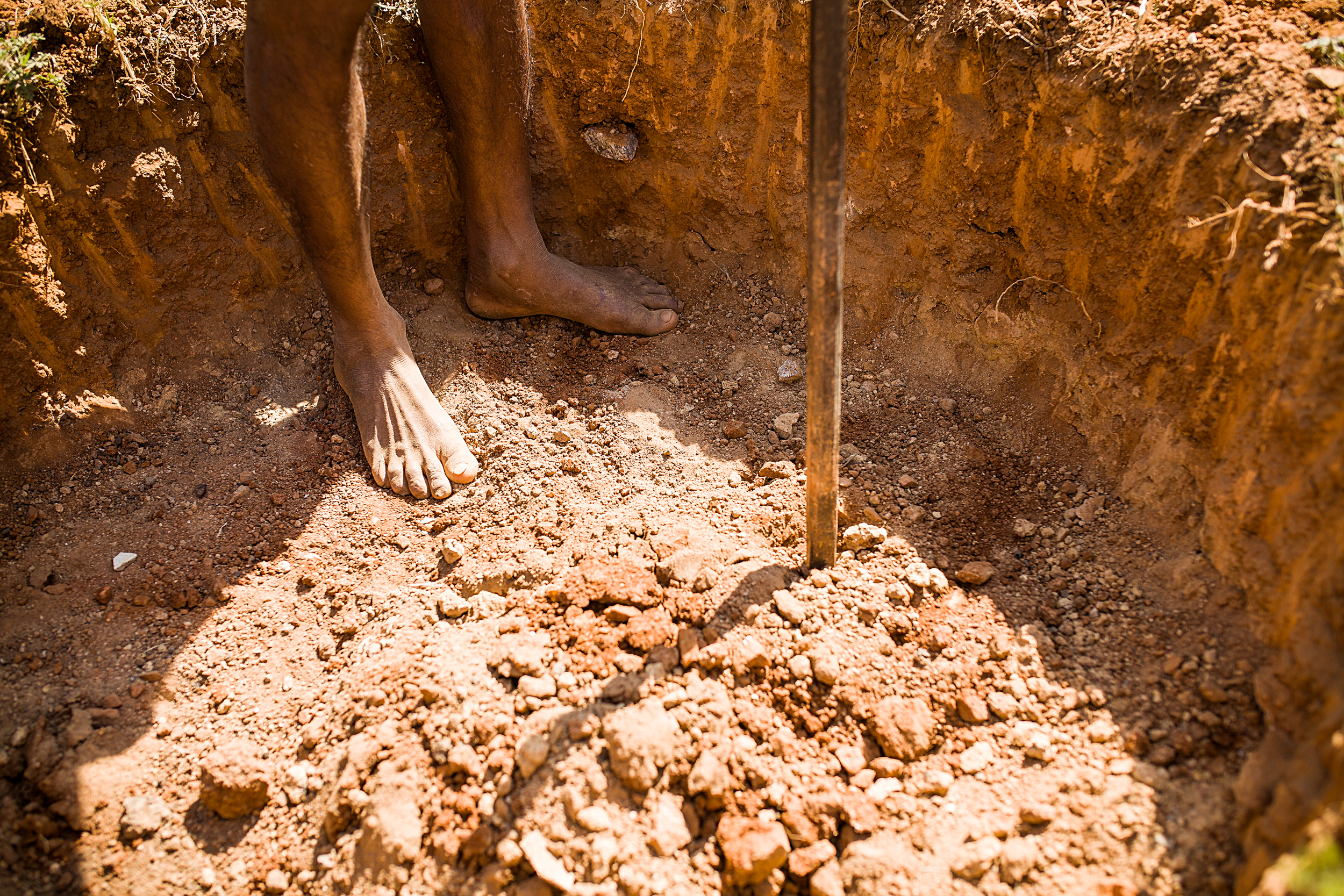
Despite a lack of government resources or support, such as access to any testing whatsoever, as few as 12 compañer@s died of symptoms related to COVID-19 during the first six months of the pandemic. Ultimately, the Zapatistas attribute their rapid response and caregiving capacity not to any medical technology, but to their unity. In refusing to be divided (at a healthy distance), they are coping with the pandemic not as individuals but as a collective

The Neozapatismo maxims of “para todos todo, para nosotros nada [everything for everyone, nothing for ourselves]” and “un mundo donde quepan muchos mundos [a world where many worlds fit]” also infuse the Zapatistas’ environmental philosophy and practices. Ever since the initial uprising, direct actions have been coordinated to highlight how top-down economic development—even when it is greenwashed as “sustainable”—invariably leads to environmental devastation. Any attempts to promote “development” or address ecological degradation must be framed in opposition to the annihilatory regimes of capitalism, racism, patriarchy, militarism, and colonialism. Maya do not consider themselves parasitic or passive towards nature, but as an enlivening, life-giving force. Fostering ecological growth and diversity through regular and respectful interactions, including use and ceremony, they defend against attempts to privatize their communal lands, maintain traditional agroecosystems honed over centuries of sustainable management, and cultivate culturally-important food and medicinal plants in cooperative tree nurseries for grassroots restoration efforts. 

Such “glocal” responses highlight one of the paradoxes at the heart of Zapatismo. On the one hand, Zapatista communities celebrate their autonomy and self-sufficiency, ensuring they can remain independent from the hegemony of globalized economies and western culture. However, they also acknowledge a direct dependency on networks of immediate relationships in the human and non-human world. Their revolution is largely centered on building community, well aware that their social cohesion and rich cultural knowledge compensates for what they lack in political or financial capital. 

By contrast, environmental discourse in the U.S. has historically been dominated by a mild misanthropy, articulated in Pogo’s aphorism: “We have met the enemy, and he is us.” We attempt to buffer the environment from humans’ polluting influence by separating the two. E.O. Wilson’s Half-Earth proposal goes so far as to suggest that half the planet be preserved—devoid of humans. Of course, the human species bears a large ecological footprint, and conserving ecological integrity is laudable, but environmental destruction is more a function of a perverse economic system controlled by and benefiting a particular subset of humanity than fundamental human nature writ large. Laying the blame for environmental destruction at the feet of humankind as one unified Anthropos absolves the true culprits and delays the actions necessary to address its ultimate drivers. 

Perhaps the greatest lesson we may learn from the Maya is how to become, as Robin Kimmerer suggests, “Indigenous to place.” To address the epic crises at hand, we need to move beyond simplistic human-nature binaries. Restoring the land requires us to restore our relationship to it, as evidenced by the intimate connection between exposure to nature and stewardship. Sustainability is less a technical question of properly controlling natural processes and resources; rather, it is a collective social responsibility of controlling ourselves. Sustainability is not merely a question of how much we consume; it is about the ways in which we contribute. We must break the cycle of separation, objectification, and exploitation to transcend the false dichotomy that sets human culture at odds with nature. Instead, we must allow our human cultures to be reflections of nature—a part of rather than apart from. When we accept the earth’s gifts with gratitude and reciprocate with our own, we shape the land into cultural landscapes that reflect our nature of restraint and generosity. 

Walking together

Re-learning how to participate as equal members in the gossamer web of life is no easy task. Thankfully, many examples have endured and may show us how to restore these relationships in full. These teachers range from Indigenous communities around the world; to fishers, foresters and farmers who have learned to work with the land, not just on it; as well as the plants and animals with whom we share this planet. 

A primary obstacle hampering many contemporary social movements in the U.S. is their focus on individuals and personal responsibility. While the likes of Rachel Carson, Aldo Leopold, Robert Marshall, and John Muir certainly played a role in catalyzing enviornonmental movements in their times, the nigh-messianic legends enshrouding them too often efface the relationships of everyday people essential to effecting change. Absent mutual struggle, any individual (prophetic though they may be) is an easily-silenced voice in the wilderness.     

Furthermore, while small, personal acts can be noble when facing the seemingly Sisyphean challenge that is climate change, we must also recognize their impact is limited at best. The idea that individual consumer choices can manifest meaningful social change is informed by institutions who would prefer to maintain the present state of affairs (the plastic industry’s ardent support for ineffective recycling programs being a textbook example). Stark inequality alone undermines any consumer power we could wield against financial elites. Buying into the notion that our individual consumer choices can advance social justice merely permits certain businesses a greenwashed façade. These amount to nothing more than veneers of social awareness when, in fact, the companies remain complicit in and benefit from systems of oppression. The scope of capitalism’s institutionalized greed demands a coordinated response at a societal level. Collective action and communal organization are the answer.

The histories of the New Deal and Great Society programs; the Fair Labor Standards and National Labor Relations Acts; the Civil and Voting Rights Acts; and the Clean Water, Clean Air, and Endangered Species Protection Acts have demonstrated that necessary, sweeping changes do not manifest as a result of individual, privately-funded crusades. Progressive legislation is the product of diverse coalitions of environmental, labor, civil rights, and faith organizations sustaining significant pressure on the local and federal governments. Our survival is dependent on community; our strength is forged by our relationships; and our success is predicated on balancing sovereignty with solidarity. 

In the U.S., the Poor People’s Campaign epitomizes these principles. Continuing the work that the Southern Christian Leadership Conference was undertaking before Dr. Martin Luther King Jr.’s assassination, the Campaign is uniting a diverse coalition of disenfranchised communities to “confront the interlocking evils of systemic racism, poverty, ecological devastation, militarism and the war economy, and the distorted moral narrative of religious nationalism.” Noting the immorality of the want of so many amid the abundance for so few, and reflecting the intersectional nature of the ecological and social crises we face, their demands for change are broad and deep, ultimately aiming to restore human dignity.

Foregoing the peculiarly American mythology of rugged individualism, the Campaign reminds us that we are braver and more hopeful when we join together than when we are divided and alone. Our society is only as successful as the least among us, and if we are to rise to meet the challenges we face, then we must do so together. In restoring our faith in the multiplicative power of we, the illusory division between us falls away and reveals, as King so eloquently put it, our “inescapable network of mutuality, tied in a single garment of destiny.”

The 2020 U.S. presidential election reflected a demand for change. However, given the choice between a “neoliberal disaster and a neofascist catastrophe,” our efforts must continue. Participating in protests and boycotts promotes solidarity, but the real challenge is transforming that collective power to subvert capitalism in our daily lives. To cultivate a community garden is to foster food sovereignty and develop social networks. Working with locally-organized food distribution organizations like Food Not Bombs rescues food waste and grants dignity to hungry neighbors in a heathy, fun, and communal manner. Joining or facilitating labor unions helps reduce the gender pay gap, ensure workplace safety, and fight for worker benefits. Frequenting and supporting your local library encourages community cohesion and educational equity. Helping grassroots organizations that promote public investment in mass transit improves air quality and enhances equal access to transportation. 

One year into the pandemic and counting, many of us are attempting at last to make plans for an all too uncertain future. Joe Biden’s administration has named climate change a national security threat and revised national emissions reduction goals. At present, these are toothless and insufficient to avert the 1.5°C of warming expected in the next decade. While the National Security Council sets its aim at climate change, ignoring its own central role in environmental and humanitarian catastrophe, the Zapatistas have set sail to share in the struggles with compañer@s in Europe, and the Poor People’s Campaign continues to mobilize citizen blockades of oil pipelines and virtual mass assemblies of low-wage workers. Which stories will we help write?   

Every day, we choose how we face the coupled menace of climate change and COVID-19. Capital’s champions have rallied to argue that systemic change can wait for a more convenient time after this immediate emergency. But, as James Baldwin asked, “How much time do you want for yourprogress’?” Indeed, how tragic would it be if the world as we know it remained on its slouching course toward a broken normal in the wake of a global event so often described in eschatological terms? Considering the socioeconomic and ecological crises ahead, none of us, least of all the most marginalized, can afford to wait. 

Tomasz Falkowski is an assistant professor in the Department of Forestry at New Mexico Highlands University. Over the past decade, he has collaborated with milperos in Mexico to research traditional agroforestry management and how it could facilitate socioecological restoration. He is also investigating forest restoration in New Mexico and adaptive management of community gardens. When not working, Tomasz escapes to the mountains and cultivates a garden with his partner.

April readings

Source: Grist / Amelia Bates

Once a month, we put together a list of stories we’ve been reading: news you might’ve missed or crucial conversations going on around the web. We focus on environmental justice, radical municipalism, new politics, political theory, and resources for action and education.

We try to include articles that have been published recently but will last, that are relatively light and inspiring, and are from corners of the web that don’t always get the light of day. This will also be a space to keep you up to date with news about what’s happening at Uneven Earth.

This month’s list is a little shorter than usual, but maybe that’s not a bad thing! In April, we read stories about India’s Covid catastrophe, the dangers of the concept of net zero, toxic USA, an Aboriginal family beating back a fossil fuel conglomerate, the death and post-Covid comeback of “third spaces”, as well as a fact-check of the new Netflix documentary Seaspiracy and a general critique of nature documentaries, to name a few. There’s also been quite a bit of discussion around Malmology — a very serious term we coined to describe Andreas Malm’s work. And, as you probably know by now, degrowth, global environmental justice struggles, radical municipalism, and new politics are recurring themes in our readings.

A small note that the articles linked in this newsletter do not represent the views of Uneven Earth. When reading, please keep in mind that we don’t have capacity to do further research on the authors or publishers!


Uneven Earth updates

We hit 5k followers on Twitter this month — join the party!

Is green growth happening? | The answer is no. Decoupling will not be enough to ensure ecological sustainability without a downscaling of production and consumption.

The commons | The commons opposes and transcends the logic of capitalism by building relations based on cooperation, solidarity, mutualism and direct democracy

Review of Resource Radicals: From Petro-Nationalism to Post-Extractivism in Ecuador by Thea Riofrancos | Resource Radicals marks an important contribution to burgeoning literature on resource politics and democratic practice

Well diggers tackling water woes in a megacity: The case of Bangalore, India | The ever-fast growing metropolis Bangalore is running out of groundwater. Yet traditional water practices might be key to a sustainable use of the blue gold below us.


Top 5 articles to read

Did climate change cause societies to collapse? New research upends the old story.

Climate scientists: concept of net zero is a dangerous trap

How an Aboriginal family beat back a fossil fuel conglomerate

How value weaponises the machine. In Breaking Things at Work, Gavin Mueller reminds us that the new antagonism between consumer and platform over data capture is not unlike the struggle between worker and capitalist over wages and the working day.

Arundhati Roy on India’s Covid catastrophe: ‘We are witnessing a crime against humanity’ 


News you might’ve missed

Oxford/AstraZeneca Covid vaccine research ‘was 97% publicly funded’

Rich countries are refusing to waive the rights on Covid vaccines as global cases hit record levels

Environment protest being criminalised around world, say experts 

A top U.S. seller of carbon offsets starts investigating its own projects

French lawmakers approve a ban on short domestic flights 


Toxic USA

‘No community should suffer this’: Florida’s toxic breach was decades in the making

The toxic legacy of the US military in the Pacific

Nuclear colonialism and the Marshall Islands


Global environmental justice struggles

Georgia: guardians of the Rioni Valley face off the dams

Land grabs and other destructive environmental practices in Cambodia test the International Criminal Court

Attacks on forest-dependent communities in Indonesia and resistance stories

Canada: hummingbirds succeed in halting controversial pipeline construction 


Where we’re at: analysis

SILENCE = DEATH, ACTION = LIFE: New relevance of HIV/AIDS organizing in COVID pandemic times

The rise and fall of multilateralism

Revenge of the plans. Why do we keep reviving technocratic climate politics when it has consistently failed?

Digital colonialism: the evolution of American empire 

Joe Biden’s new Climate Pledge isn’t fair or ambitious 


Just think about it…

Deepfake satellite imagery poses a not-so-distant threat, warn geographers

Why bitcoin is bad for the environment 

Learning a new language can help us escape climate catastrophe. Many Indigenous languages have been forcefully wiped out by white people. Turns out, they’re some of our main hopes for beating the climate crisis.

The problem with nature documentaries

What Netflix’s Seaspiracy gets wrong about fishing, explained by a marine biologist

The 7 reasons why nuclear energy is not the answer to solve climate change

To save the Earth, dismantle individuality


Malmology

The kaleidoscope of catastrophe – On the clarities and blind spots of Andreas Malm

Can sabotage stop climate change?

How to blow up a movement: Andreas Malm’s new book dreams of sabotage but ignores consequences

Andreas Malm’s Corona, Climate, Chronic Emergency


Degrowth

Why Malthus’s gospel of growth was, and still is, wrong

Beyond the growth imperative 

Degrowth in demand. Lexie Smith and Jamie Tyberg on degrowth, decolonization, and agriculture.

On sacrifice


New politics

From fossil capitalism to green democracy

Book review: Enlightenment and ecology: The legacy of Murray Bookchin in the 21st century

A youth revolt is under way in South Korea

Farmers are using their stimmys to grow free food for their communities


Sci-fi

Born to rewild: Jeff VanderMeer on what it means to restore your own little part of the world


Cities and radical municipalism

The death and post-Covid rebirth of ‘third places’. “Third spaces” like coffeeshops, gyms and libraries are critical for building community ties and boosting social cohesion. What happens when they almost disappear for more than a year?


Resources

Gender bias in Academe: An annotated bibliography of important recent studies


Want to receive this as a newsletter in your inbox? Subscribe here.

Is green growth happening?

Source: Cabinet Office | Flickr

by Timothée Parrique

If you follow discussions about climate change, you must have heard of decoupling. The term refers to the possibility of detaching Growth Domestic Product (GDP) from environmental pressures. The green growth everyone talks about these days presumes that economic activities can be decoupled from ecological damage. 

Studies on decoupling don’t usually become viral, but one did. In March 2019, Corinne Le Quéré from the Tyndall Centre for Climate Change Research in the UK and nine other scholars published an article in Nature titled “Drivers of declining CO2 emissions in 18 developed economies.” 

This is one among many – 835 to be precise – according to an exhaustive review of the literature. What makes this study special is how often it has been cited online to acclaim green growth. A careful reading of the article, however, gives a more nuanced impression. 

The decoupling rates are minuscule

The study analyses 18 developed economies (Sweden, Romania, France, Ireland, Spain, UK, Bulgaria, The Netherlands, Italy, United States, Germany, Denmark, Portugal, Austria, Hungary, Belgium, Finland, and Croatia) between 2005 and 2015, finding that emissions decreased by a median -2.4% per year during that decade. 

This is tiny – three times smaller than the yearly 7.6% cut of global emissions that would be necessary to meet 1.5°C Paris target (and this number is from 2019; the cuts would need to be even larger today). One striking example is France. The study indicates that France decreased its consumption-based emissions by a yearly -1.9% over the period with barely any GDP growth (+0.9%). Now compare this to the French climate target, which is to reach 80 MtCO2 by 2050, an 80% reduction compared to 2019 levels of emissions.     

The UK is another case in point. The country is often lauded to have achieved the fastest experience of decoupling on Earth. In the Le Quéré study, its consumption-based emissions decreased by -2.1% per year between 2005 and 2015 with positive GDP rates of around 1.1%. This is not much in the way of decoupling; the country has pledged to reduce emissions by twice that amount (5.1% per year). To actually comply with the Paris Agreement, the UK must achieve a yearly 13% cut in emissions, starting now and for the decades to come. This is much – much – more than what green growth can provide.   

The authors themselves err on the side of caution: “as significant as they have been, the emissions reductions observed […] fall a long way short of the deep and rapid global decarbonization of the energy system implied by the Paris Agreement temperature goals, especially given the increases in global CO2 emissions in 2017 and 2018, and the slowdown of decarbonization in Europe since 2014.” Data from this year supports the authors’ precaution: de-carbonisation in many high-income economies has slowed down after 2015.  

The fact that these rates are so small is worrying because we’re dealing here with the supposedly best country cases of decoupling. Assuming these rates can now suddenly accelerate would be like expecting Usain Bolt to triple his running speed. Even more unlikely, we would need all countries in the world to match the triple of these record levels.  

A “sustainable” economy in any meaningful understanding of the term must consider all the complex interactions it has with ecosystems, and not only carbon

Minuscule is a long way from enough   

In March 2021, the authors published a new study showing that 64 countries managed to cut their CO2 emissions by 0.16 GtCO2 every year between 2016 and 2019. This is good, but again, not good enough. And not good enough has dire consequences. To be precise, this is one tenth of what would be needed at the global level to meet the Paris climate goals; and if 64 countries managed to reduce emissions, 150 others did not. The latter increased their emissions by 0.37 GtCO2 each year. Put the two numbers together and you realise that global emissions have actually been growing by 0.21 billion tonnes per year. 

This puts pressure on high-income economies. For developing countries to be able to increase their ecological footprint, affluent nations must reduce theirs as much as possible. Climate-neutrality at the national level by 2050 is not enough if we want today’s poorest to have the option of increasing their material consumption. And rates of reduction in rich nations of 1-3% are far from enough to compensate for the surge in resource use currently taking place in the global South.

This is only fair considering historical emissions. The global North is responsible for 92% of excess global CO2 emissions (the ones past the 350ppm threshold). For example, France has already overshot its fair share of the climate budget by 29.4 GtCO2. The Le Quéré study shows that it has decreased its emissions by 10 MtCO2 every year between 2005 and 2015. At that pace, and assuming carbon neutrality, it would take almost three millennia for France to resorb its climate debt.  

Green growth without growth 

Emissions in the 18 studied countries decreased by -2.4% each year, but how big was GDP growth during that period? The answer: small. These economies grew by a median +1.1%. Denmark, Italy, and Spain are leading the decoupling pack with yearly carbon reductions of -3.7%, -3.3%, and -3.2% respectively. This, however, can hardly be called green growth because these economies barely grew – or actually receded (+0.6% of GDP in the case of Denmark, -3.3% for Italy, and -3.2% for Spain).  

The authors acknowledge that this period is nothing extraordinary: “These reductions in the energy intensity of GDP in 2005-2015 do no stand out compared to similar reductions observed since the 1970s, indicating that decreases in energy use in the peak-and-decline group could be explained at least in part by the lower growth in GDP.” 

So, the paper most popularly cited to assert that carbon-free economic growth is possible also shows that part of the decarbonisation is due to the fact that there was little or no growth. It comes as no surprise then that, using simulations, the authors estimate that “if GDP returns to strong growth in the peak-and-decline group, reductions in energy use may weaken or be reversed unless strong climate and energy policies are implemented.” 

Sustainability is more than just carbon 

The authors’ study is about carbon, but carbon is one environmental problem among many others. Unfortunately, it is the only one that is adequately researched, with 80% of decoupling studies focusing on primary energy and greenhouse gases. This leaves only a few studies that have been conducted on other aspects of ecological breakdown, including material use, water use, land change, water pollution, waste, and biodiversity loss. 

While there are a few inspiring stories of decoupling concerning carbon emissions, studies that track other indicators tell us a different story, one in which the economy is still strongly coupled with biophysical throughput. Materials are a good case in point. If the world economy was gradually de-materializing in the 20th century, this trend has since been reversing in the last two decades. This alone should temper optimism concerning an assumption of endless supplies of renewable energy, which after all, are dependent on the mining of finite quantities of minerals.

My point is that a “sustainable” economy in any meaningful understanding of the term must consider all the complex interactions it has with ecosystems, and not only carbon. A genuinely sustainable economy should not only be carbon neutral, but also remains within the regenerative capacities of all renewable resources, within the acceptable stocks of non-renewable resources, and within the assimilative capacities of ecosystems. Although sustainability ought to be understood as being about much more than only the condition of the biophysical environment, it seems evident that living within planetary boundaries is a minimum, non-negotiable condition for any kind of long-lasting prosperity.  

Since GDP remains significantly coupled with carbon emissions and other environmental pressures, a good way of limiting ecological wreckage is to put limits on the scale of the economy

Temporary decoupling

Mitigating environmental pressures in a growing economy not only implies achieving absolute decoupling from GDP, but also requires maintaining such decoupling in time for as long as the economy grows (recalling that emissions must be reduced by at least 7.6% every year from now on). Said differently, continuous economic growth requires a permanent absolute decoupling between GDP growth and environmental pressures. Yet, in the same way that economic growth and environmental pressures can decouple at one point in time, they can just as easily recouple later on. 

This happens more often than we think. Let’s reflect upon the time when the International Energy Agency declared that decoupling was “confirmed” after observing a levelling of global emissions in 2015 and 2016. Yet, this decoupling was short-lived. In fact, it was mainly due to China moving from coal to oil and gas at the same time that the United States was shifting to shale gas. The shift was temporary. After that, economic growth recoupled with carbon emissions.

Situations of recoupling can also happen with renewables. In the decade between 2005 and 2015, Austria, Finland, and Sweden greened their energy mix and, as a result, lowered their emissions. But once this shift is complete, further growth will require an expansion of the energy infrastructure, which will imply additional environmental pressures. In fact, this is what happened after the studied period. Austria decreased its emissions by -0.6% in 2006-2010 and -1.6% in 2011-2015, but emissions returned  positive by +0.3% in 2016-2019. A similar story took place in Finland and Sweden; the rates of reduction accelerated between 2006 and 2015 but slowed down after that.

Some commentators hypothesized that the return of economic growth after the pandemic would be green, or at least, greener. Yet, global energy-related carbon dioxide emissions are on course to surge by 1.5 billion tons in 2021 – the second-largest increase in history – reversing most of the decline caused by the pandemic. The lesson from the corona crisis is this: slight oscillations from light to heavy ecological beating are not enough – we need to radically and immediately transform the economy.  

Do we need environmental policies? 

Yes, we do and the Le Quéré paper is clear on that. We need energy and climate policies, “particularly if GDP growth increases,” the authors write. But what if capping GDP was itself considered an acceptable climate policy? This is the idea of degrowth. Since GDP remains significantly coupled with carbon emissions and other environmental pressures, a good way of limiting ecological wreckage is to put limits on the scale of the economy. If carbon emissions decreased by -2.4% with a +1.1% rise in GDP growth, imagine how faster they could be reduced if economic growth was not prioritised above the unthinkable risks of runaway ecological breakdown. 

We know that stopping the growth machine leads to drastic emissions cuts because it happened during the pandemic. The slowdown of economic activity led to a historical reduction of global emissions: -7% compared to 2019. What happened through crisis could also take place in a more managed fashion in the form of a prosperity without growth in countries consuming more than their fair share of the global carbon budget. Of course, GDP is an indicator, not a policy button. There is thus a need for a diversity of sufficiency-oriented policies that will limit production and consumption, and speculative finance, especially in natural resource intensive sectors. 

We should target emissions where they currently are, while ensuring that efficiency gains are not cancelled by more demand through rebound effects. For example, we could degrow aviation by setting airport quotas on the number of flights per day, restricting the construction of new airports and runways, and introducing a Frequent Flyer Levy (i.e. you get one levy-free first flight every three or four years, but the second flight bears a levy, with its amount doubling for each additional flight). Instead of hoping that the expansion of the aviation sector decouples from planetary damage, we could limit the scale of that sector to directly lower its emissions.  

Decoupling is not enough

In sum, Le Quéré et al. (2020) report an observed decoupling in 18 developed countries between 2005 and 2015. But there are a few caveats. First, the rates of decoupling are a long way short of reaching even the most modest of national climate targets. Second, they are even more insufficient considering redistributive efforts required to achieve climate justice. Third, part of that decoupling is explained by low rates of economic growth. Fourth, the study period is limited and there is little to guarantee that what decoupling may have occurred will not recouple later on. And finally, the analysis is only about carbon and does not account for other environmental pressures.

So, is green growth happening? The answer is no, not really. As of today, economic growth is still a vector of resource use and environmental degradation. In high-income countries, the pursuit of additional growth might not even be socially beneficial, and particularly so if accompanied by widening inequality. Considering the increasing demand for resources in the most disadvantaged regions of the world, the continued obsession with growth in already affluent nations is becoming untenable. 

Decoupling is simply not enough. Instead of struggling to “green” expanding economies, we should reroute the task by mobilizing sufficiency-oriented strategies like degrowth and post-growth. Eventually, both efficiency and sufficiency are dearly needed. One thing is resoundingly clear, what we need to do away with is the growth-at-all-cost mentality that sacrifices social-ecological health to prioritize GDP above all else.

Timothée Parrique holds a PhD in economics from the Centre d’Études et de Recherches sur le Développement (University of Clermont Auvergne, France) and the Stockholm Resilience Centre (Stockholm University, Sweden). Titled “The political economy of degrowth” (2020), his dissertation explores the economic implications of the ideas of degrowth and post-growth. Tim is also the lead author of “Decoupling debunked – Evidence and arguments against green growth” (2019), a report published by the European Environmental Bureau (EEB).

The commons

by Sergio Ruiz Cayuela 

The commons is a concept originally used in England during the Middle Ages to designate shared areas (mostly woods and pasture lands) that peasants collectively managed to access basic resources such as firewood, foraged food or grazing for their cattle. In a mostly rural society, peasants relied on the commons for survival. In fact, the appropriation and plunder of the commons by the nobility starting in the 12th century—a process known as enclosure—marked the beginning of a transition to capitalism. Common people were excluded from using the land, and were forced to either move to towns and become waged workers or establish serfdom relationships with landowners. 

The concept of the commons was popularised in academia in the late 20th century by a group of scholars (that we will call the ‘institutionalists’) who saw many similarities between the commons from feudal England and the ways in which communities all over the world interacted with their environment. The institutionalists aimed to find efficient and sustainable ways of managing natural resources. Elinor Ostrom, who was the most prominent figure of this current, dismantled liberal myths and prejudices against communal land tenure by presenting commons as a viable property regime. According to Ostrom, common property regimes were especially suited for resources with specific economic features: low rivalry and easy accessibility. She believed that the main drivers of success for commons were their internal design principles, namely the set of relations and strategies adopted by a community that would lead to the sustainable management of a specific resource. 

Elinor Ostrom dismantled liberal myths and prejudices against communal land tenure by presenting commons as a viable property regime

The turn of the 21st century saw an upsurge of the alter-globalisation movement, which opposed globalized trade and its social and environmental consequences. ‘Alter-globalizationist’ scholars and activists took an interest in the commons, but they were critical of the limitations of the ‘institutionalist’ perspective. George Caffentzis, for example, pointed toward the influence that the outside world has on the success of commons. Specifically, he argued that the ability of a commons to sustain itself is determined heavily by the distribution of power in a given society and the relationship that a commons has with external actors, such as private companies or public institutions. During this time, the work of Peter Linebaugh brilliantly captured a feature of the ‘alter-globalisationist’ understanding of the commons: a shift from commons as resources to ‘commoning’ as a practice. More than just an efficient way to manage resources, the commons became a political antagonist to the logic of capital. In the last few years, authors like Massimo de Angelis and Amanda Huron have suggested that the tension between the ‘institutionalist’ and the ‘alter-globalisationist’ approaches needs a productive articulation in order to generate a better understanding of the survival and expansion of the commons. The internal management of particular commons and how it relates to the structure of the outside world are factors that affect and modify one another.

Commons can be crucial tools in imagining a world after capitalism, but in order to do so, they need to be devised as forms of social organisation opposed to capitalism and the state. Under capitalism, the propertied class reproduces its wealth by exploiting nature, Indigenous people, women, workers, and landless people around the world but especially in the Global South. This exploitation is legitimised by the laws of the market, which understand the maximisation of economic profit as the motivating force behind human life, and normalise values such as individualism, competition and greed. The commons oppose this logic and mobilise cooperation, solidarity and mutualism as core values, which in turn affect the way people relate to each other and to the environment. 

The commons mobilise cooperation, solidarity and mutualism as core values, which in turn affect the way people relate to each other and to the environment

The development of capitalism advanced in parallel with the creation of a new institutional arrangement, that of the nation-state: a centralised accumulation of political power which has complete sovereignty and the monopoly of violence over a territory. The state is supposed to protect its citizens and act in their interests, but the last centuries have shown us that, whether in liberal democracies or in authoritarian political settings, it often ends up defending the interests of the elites and oppressing the majority of the population. The commons provide an alternative to centralization, the accumulation of power, and representative democracy. Regardless of the specific arrangements of particular commons, power always flows from the bottom up, which means that all commoners are entitled to directly affect the management of a commons. In short, the commons is based on practices of direct democracy, the horizontal distribution of power, and collective decision-making.

Although their core values are in direct opposition, commons currently exist alongside capital and the state. In fact, the three forms are codependent. Let’s take the example of a community garden organised as a commons. Commoners will need tools to work the soil. Those tools have probably been produced in capitalist factories, and they need to be purchased according to their exchange value (an arbitrary quantification based on the maximisation of price according to market laws). Also, even if things go well and the garden is productive, it might not be enough to fulfill the basic needs of the commoners involved (their social reproduction). They will probably need to complement their commoning activities with waged work for a capitalist enterprise. Moreover, the land where the community garden is sited might be public, or in other words, managed and owned by the state. Therefore, commoners can either squat (risking eviction which would undermine their garden), or negotiate the use of the land, accepting the regulations and rules imposed by the state (or its representative institutions). Deciding how to interact with external actors (in this case, the state) will be crucial to determining the longevity of the community garden. It is important to keep in mind, though, that commons are also threatened by their internal politics. What if members decide to divide the land into individual plots and reduce cooperation? In that case, we could claim that the garden is not a commons any more, since inherent commoning values such as collective management and mutualism would not be enacted.

The commons is based on practices of direct democracy, the horizontal distribution of power, and collective decision-making

Relationships of dependency between the commons and capitalism can lead to cooptation by the state or private actors, who may instrumentalise the commons in order to reproduce themselves. Going back to the case of the community garden, landowners and developers could see its pull as an opportunity to raise the rents of surrounding properties, develop new commercial ventures and, in short, make profit. This would in turn spark a process of gentrification, displacing the commoners who were involved in the garden. Cooptation can also be exercised by the state. For example, the austerity policies implemented by many countries since the 1970s, which were intensified after the 2008 crisis, instigated a gradual retreat of the state from the provision of basic social services. In many cases such as healthcare or education, this void is impossible to fill through community-based response in the short term, so communities suffer an immediate impoverishment of their well-being. In others, state functions are replaced by volunteer labour. In the UK, for example, it has become commonplace to see public libraries run by volunteers. However, we should be wary of celebrating these examples, as they emerge out of need, are imposed by urgency, and are usually closely monitored by institutions. Under the argument that they are using public buildings, communities usually need to follow strict rules and protocols imposed by the government. Lacking autonomy and decision-making power, these volunteer efforts fail to become emancipatory post-capitalist alternatives.

Autonomy refers to the capacity of a given system to self-manage. In other words, the more autonomy that a commons has, the less dependent it will be on external inputs. The issue of autonomy opens up another important discussion: that of scale. As we have seen in the case of the community garden, it is almost impossible for a specific commons to have a high degree of autonomy (commoners need tools, land, wages, etc). However, if several commons form what Massimo De Angelis calls a ‘commons ecology,’ it is much easier for them to collectively gain a certain degree of autonomy. What if the members of the community garden decide to expand their project and include a community kitchen? The kitchen will be able to use the produce from the garden, and gardeners will be able to get their food from the community kitchen, thus reducing their dependency on capitalist supermarkets and restaurants, or social services managed by the state. And what if they decided to add a tool recycling workshop and other projects to the newly formed commons ecology? They would be able to gradually reduce their dependence on capital, and therefore, their self-management capacity would expand. In conclusion, for the commons to become a viable alternative that can resist cooptation and offer a path to communities’ emancipation from capital and the state, they need to avoid isolation and come together in collaborative networks that allow for greater commons’ autonomy.


Further resources

George Caffentzis and Silvia Federici, Commons against and beyond capitalism (2014)
In this article, the authors encapsulate the discussion of how commons interact with capitalism. They also list the features that characterize the anticapitalist—and potentially emancipatory—commons.

Massimo de Angelis, Omnia sunt communia: on the commons and the transformation to postcapitalism (2017)
This book is probably the greatest effort in trying to articulate both commoning perspectives to date. It deals extensively with autonomy and social reproduction, and introduces the idea of commons ecologies. 

Elinor Ostrom, Governing the commons (1990)
This is Ostrom’s most popular book, in which she distilled her decades of research about common property regimes. It inspired a new generation of commons scholars, who continue to develop the topic into the present day.


Sergio Ruiz Cayuela is a member of Cooperation Birmingham, Plan C, and other self-organised community groups and organisations. Sergio is also a militant researcher interested in the expansion of the commons as a post-capitalist form of social organisation.

Review of Resource Radicals: From Petro-Nationalism to Post-Extractivism in Ecuador by Thea Riofrancos

Photographer: Ivan Castaneira

by Benjamin Brown

What does Left radicalism look like in an age of climate breakdown? Should the state assume control of subsoil resources to fund social spending and reduce inequality, or oppose extractive development at all costs? Such questions are interrogated in Resource Radicals: From Petro-Nationalism to Post-Extractivism in Ecuador by Thea Riofrancos, where we are invited to contemplate the tensions emerging between the ‘left-in-power’ and the ‘left-in-resistance’ through the lens of Ecuador’s recent political history. 

The triumphant election of socialist president Rafael Correa in 2006, on a promise to end the ‘long night of neoliberalism’ and reverse regressive structural reforms with support from the country’s powerful social movements, turned sour after the new government abandoned proposals to leave oil in the ground and accelerated mining projects. A discourse of radical resource nationalism, which decried US imperialism and the control of oil, gas and minerals by foreign corporations, previously united social and political movements and helped propel the Left to power. However, new cleavages opened up between a state seeking revenue to fund spending on infrastructure, public services, and cash transfers to the poor, and erstwhile indigenous and environmentalist allies who opposed the deepening structural dependency on ‘extractivism’ as a betrayal of their cause. Riofrancos, a political scientist at Providence College, draws on ethnographic and archival data to illuminate the ways in which these struggles unfolded, with lessons that hold relevance across Latin America and for the world at large. 

A discourse of radical resource nationalism, which decried US imperialism and the control of oil, gas and minerals by foreign corporations, previously united social and political movements and helped propel the Left to power

Departing from conventional state-centric analyses of resource governance, Resource Radicals foregrounds the collective agency of grassroots actors, pointedly rejecting an image of the state as a ‘monolithic dispenser of public policy’, unencumbered by internal division or broader popular support. The book also challenges the ‘resource curse’ thesis which has dominated scholarship, in which the revenues accrued from abundant resource wealth allows corruption and mismanagement to flourish, with detrimental effects for democracy and broader societal wellbeing. Instead, the book investigates how successive waves of social mobilisation and protest, spearheaded by Ecuador’s powerful indigenous movement, sought to challenge oil, gas and mining projects. Rather than transcending extractive capitalism, critics accused Correa of perpetuating Ecuador’s colonial status as an exporter of raw materials and its subordinate position within the world system, delivering ‘redistribution without structural change’. Resistance from indigenous communities, environmentalists, labour and anti-mining activists coalesced around an emergent discourse of anti-extractivism, juxtaposing the government’s radical rhetoric with its insistence on the development of indigenous territories, disregard for ecosystems, and repression of dissent. Drawing on indigenous philosophies of Sumak Kawsay or Buen Vivir (living well), activists rejected intensive exploitation of natural resources in favour of a radical, post-extractive civilisational model: ‘a total reordering of the relationship between individuals, communities, and nature, based on the principles of reciprocal collaboration’ (p.30). 

At the centre of contestations was the status of Ecuador’s 2008 constitution, an ‘ambivalent document’ that both included provisions for citizen participation, Buen Vivir and the ‘rights of nature’, and simultaneously asserted the ultimate authority of the state over subsoil resources. Despite such tensions, it was subsequently embraced by anti-mining activists as a tool to legitimate their claims. Riofrancos provides a vivid account of how the constitution was invoked at key moments of political struggle, including the ten day long ‘March for Water, Life and the Dignity of Peoples’ that brought thousands to the streets for a 700km march from the Mirador copper mine in the Amazon to the Andean capital city of Quito. This discursive struggle to legitimate or contest extractive development elevated local communities as central protagonists through their constitutional right to prior consultation and consent, referencing Ecuador’s status as a multi-ethnic ‘pluri-nation’, and catapulting resource conflicts to the heart of political debate.

Riofrancos provides a vivid account of how the constitution was invoked at key moments of political struggle, including the ten day long ‘March for Water, Life and the Dignity of Peoples’ that brought thousands to the streets for a 700km march from the Mirador copper mine in the Amazon to the Andean capital city of Quito

The latter half of the book discusses how the process of community consultation was gradually diluted, as accusations and counter accusations erupted between the government accusing foreign NGOs of manipulating communities on the one hand, and critics accusing the government of violating collective rights on the other. The Correa administration embraced the language of technocracy, mirroring the discourse of mining companies by discussing conflicts over resource extraction as a ‘technical’ matter that could be solved by supplying the ‘correct information’ to ‘misinformed’ communities. The authority of the state was itself contested by indigenous communities, who rejected the image of passive compliance and contrasted their own intimate knowledge of their territories as ‘a living ecological and cultural landscape’ (p.140) with the unreliability of official data, which was ‘systematically biased’ and reliant on corporate estimations of mineral reserves. Riofrancos offers important insight into internal conflicts that beset the state itself, with Correa’s vociferous pro-mining position moderated by critical bureaucrats more sympathetic to the anti-extractivist cause. Ecuador’s development trajectory was thus moulded by both external constraints, internal state dynamics, and pressure from below. 

As Ecuador elects a new president, there is much to be learned from Riofrancos’ account of how these events unfolded, which sheds light on the tense relationship between the state, social movements, and diverse political constituencies that all claim the mantle of the Left while offering starkly different visions of the future. Riofrancos avoids the pitfalls of binary thinking, providing an honest assessment of strengths and weaknesses of both state policies and social movement strategy. The book recognises the significance of rapid drops in poverty and inequality that occurred under the Correa administration while remaining alert to its failures, as it pursued development ‘without transforming the model of accumulation or the class relations that it generates’ (p.182). The vulnerabilities of this model – oil financed approximately one third of the state budget – were exposed with the abrupt end of the commodities boom that had generated resource rents, and contributed to the justification for austerity measures imposed under Correa’s successor Lenin Moreno. Yet as demand for metals and minerals intensifies to drive the renewable energy transition, mining remains an enticing prospect for future governments.

There is much to be learned from Riofrancos’ account of how these events unfolded, which sheds light on the tense relationship between the state, social movements, and diverse political constituencies that all claim the mantle of the Left while offering starkly different visions of the future

Resource Radicals marks an important contribution to burgeoning literature on resource politics and democratic practice, interrogating how ideological fragmentation exposed underlying ecological contradictions, evolving relationships between the state and citizens, and limits of prevailing development models. Despite the fallout between them, Riofrancos ultimately concludes that both ‘left-in-power’, and ‘left-in-resistance’ are essential to address the current planetary crisis in all its ecological and political dimensions.  Rather than view ‘socialism’ and ‘anti-extractivism’ as two irreconcilable political projects, the book gestures to another possibility: ‘a political programme that demanded both the redistribution of oil and mining revenues and a transition away from the extractive model of accumulation that generates those revenues.’ In doing so, it offers lessons on how to navigate politically difficult terrain as resource struggles intensify, bringing nuance and insight to debates that will shape the world to come.


Benjamin Brown is a researcher and activist based in Edinburgh, Scotland, with an interest in land rights, extractivism, and climate justice. He tweets at @_dead_reckoning.

Well diggers tackling water woes in a megacity: The case of Bangalore, India

by Dennis Schüpf

Bangalore was once called the city of lakes. In recent years not only has it been called the city of burning lakes due to dumping of toxic waste in the lakes, but also predictions show that severe water crisis will turn the city uninhabitable by 2025. Despite this, the overexploitation of groundwater and its socio-ecological consequences are overlooked by policy makers and users alike. The Mannu Vaddar community, with their traditional well-digging skills, can improve the urban resilience against water scarcity and offer a solution towards the shrinking groundwater levels of the booming city. 

This essay presents a glimpse into the water woes of one of Asia’s fastest growing cities, dubbed as India’s Silicon Valley, with a perspective on groundwater. It thereby seeks to highlight the interconnectedness of the urban and rural space by addressing traditional well-digging in the context of sustainable water management. A photographic documentary is added to witness the work of the Mannu Vaddar. Even though Bangalore might seem to be an isolated case, it is only one tiny piece of the whole struggle to cope with an exploitation driven growth agenda, demographically as well as economically, incompatible with finite resources. 

Historically, Bangalore was once considered a city of lakes with 285 lakes until hit by reckless urbanization fueled by the ever-growing IT industry. In comparison to the Bangalore of ten years ago, almost half of the lakes have dried up and been taken over as new spaces for modern settlements. The lakes which were originally made for irrigation helped to recharge groundwater levels. The metropolis does not lack rainfall at all, with about 972mm of average annual precipitation during April and November and around 60 rainy days in a year. The crucial point here is the city’s inability to make the rainwater percolate back into the ground. Unfortunately, an immense amount of rainwater that could recharge the aquifers, instead flows down the buildings and roads of Bangalore, which became a concrete jungle over the years. It is estimated that 93% of the city has been paved.

Bangalore’s water lifeline is the Cauvery river located 100km south of the city. The river supplies nearly 1,900 million liters of water on a daily basis for a growing population of around 13 million citizens. Nevertheless, about 3 million people struggle to access the municipal water supply especially during the severe dry months. As construction continues at an alarming pace, there is no assurance of either drinking water provision or other basic amenities in new building complexes. Consequently, the number of private borewells increased especially in the more populous periphery of the city, which is mainly suspended from the municipal water supply system. Groundwater, accessed through the digging of borewells, became the primary source of water for rapidly growing districts in the periphery and some parts completely depend on it already. At least 40% of the current total water demand of Bangalore is met by groundwater resources. But as the demand for groundwater increases borewells must dig deeper, since the water levels shrink to zero. In addition, there is no data to keep track of the number of borewells. It is estimated that the amount of borewells lies above 400 000 with a lot of wells that have already dried out. 

At the moment, Bangalore tackles its water scarcity with (private) tankers that supply water often at a high price and with a questionable water quality. In many areas of Bangalore groundwater is contaminated by industrial pollution, sewage, and high nitrate levels. But millions of citizens heavily rely on the truck delivered water. In conclusion, the mentioned dynamics contribute to a large extent to the depletion of groundwater and easily result in political conflicts with residents competing over access to the dwindling resource.

In this context where the (ground)water crisis makes the social consequences exceed the environmental costs; it is time to shift the focus from the urban to the rural landscape. Not even 50km away from Bangalore, quite on the outskirts of the megacity, live the Mannu Vaddar, a community of well-diggers, that traditionally provided people with the access to groundwater. For generations, the Mannu Vaddar are the keepers of the knowledge of how and where to dig wells. The tradition of well-digger communities in India, as well as the cultural well heritage, can be traced back more than 1000 years. Back then the first open wells allowed humans to explore inland away from the dependency on rivers and other water resources. However, in the early 1980s Cauvery water supply along with borewells replaced the culture of open wells in Bangalore, which at that time had been the main source of drinking water. 

This shift towards modern water management allowed the city to expand geographically, as well as economically, since more water was pumped. But the dramatic drop of overall water levels in the region in the past years has led to a corresponding decline in the demand for well-digging. In the current situation people are in a rush to dig deeper borewells to extract the last bits of water from the aquifers with mechanic pumps. The human-environmental gap widens and the disconnect between urban spaces and their water flows intensifies.

How could the revival of traditional well-digging contribute to solve Bangalore’s water woes?

The ability of the Mannu Vaddar comes into play exactly where Bangalore’s capacity to store rainwater ends. The low water levels correlate with too much concrete jungle, hence the fact that there is not enough rainwater percolating back into the ground. This is where the well-diggers enter the arena of urban water management. Wells, dug in the right location, can recharge the groundwater levels by connecting them to the shallow aquifers. These aquifers are an underground layer of water-bearing permeable rock through which water can be stored in the ground. Hence, the Mannu Vaddar help to make water move through these different types of rocks and soil, which is crucial to tackle the depletion of groundwater resources.

Therefore, the Mannu Vaddar’s skill comprises more than mere physical labor. It includes the crucial knowledge on soil types, rocky layers, and other traits of the region’s aquifers to successfully strike water. ‘We feel and smell it in the soil’, says Venkatesh a 23 years old well-digger, who belongs to the Mannu Vaddar community. Mannu literally means soil. There is no doubt that their craft requires a deep knowledge and sensitivity to work the natural element. It is physical work combined with the human senses that make them reach the natural source of water under the surface. The technique and knowledge are passed on across generations when the young well-diggers work alongside with skilled elders. 

Pedhanna (52), an experienced member of the Mannu Vaddar, has been digging more than 3000 wells in his life. His son, Venkatesh (23), surpassed the sheer number of 1000 by the age of 23. Many young well-diggers do not seek for labor or a career in the metropolis, even though the constant fear for jobs is present. During the week, the Mannu Vaddar migrate from the rural outskirts to the city to look for work by knocking at the doors from house to house. Although the job opportunities today lie within Bangalore many young men still appreciate the natural surroundings of the village and prefer this way of life from the urban hustle.  

Their work is done by hand and with simple tools. With nothing but shovels and metal skewers the well is dug deep into the earth by one Mannu Vaddar. When the soil is softened by the skewer, two well-diggers pull it up with a bucket attached to two thick ropes. This process takes place even under hot climatic conditions. The Mannu Vaddar know very well when they are about to strike water. The smell of the soil and its consistency changes and when it lumps, the well-diggers can be sure that they reached for the edge of a shallow aquifer. Just a few centimeters deeper and water will fill up the dug pit. However, the security and the insurance of the well-diggers is poor, regarding the risk climbing up and down inside the wells. 

Unlike the extractive borewells, the wells of the Mannu Vaddar are not narrow, but open with the ability to recharge and access the higher aquifers. The aquifers in turn can fill up rapidly under Bangalore’s rich precipitation. The so-called recharge wells, typically 20ft. deep with 3 diameters, collect rainwater and revive the shallow aquifer. Apart from well-digging the Mannu Vaddar community is cleaning and  maintaining all types of wells across Bangalore. The input of the well-diggers supports the creation of a river below us in areas with aquifers in the city.

Coming back to the bigger picture the linkage between the overexploitation of groundwater and the recharge of the aquifers is fundamental to cope with Bangalore’s water woes. By law groundwater rights are attached to the land, so that the owners can extract as much water as desired without limitations. Apart from the right institutional response, wells, not borewells, can play a crucial role in the rejuvenation process of groundwater. An interview with a young well-digger makes it clear how the change in demand of work goes hand in hand with the water crisis in Bangalore. As the demand for typical open wells declined over the past years, recharge wells became increasingly important, since its owners want to recharge the borewells that already ran dry. 

In this context the Mannu Vaddar can play a crucial role towards rainwater harvesting and water self-sufficiency. The city’s capability to make the water percolate to the ground is crucial for a sustainable water management in the long run and the Mannu Vaddar bear the ancient knowledge to move towards this goal. 

Dennis Schüpf is a Master student in International Development studies with a focus on socio-environmental conflicts related to water resources. Based in Germany, his work as a documentary photographer spans from urban to rural perspectives on environmental and social issues with an emphasis on the stories of people. 

March readings

Phoebe Johnson for Noema Magazine

Once a month, we put together a list of stories we’ve been reading: news you might’ve missed or crucial conversations going on around the web. We focus on environmental justice, radical municipalism, new politics, political theory, and resources for action and education.

We try to include articles that have been published recently but will last, that are relatively light and inspiring, and are from corners of the web that don’t always get the light of day. This will also be a space to keep you up to date with news about what’s happening at Uneven Earth.

Our March reading list is ready for you to enjoy, be inspired by, learn from, and use in your teaching and activism! This month, we’re featuring a call by the late David Graeber for a better post-pandemic future, evidence that reducing inequality and solving our ecological crisis go hand in hand, and a beautiful multimedia piece on the ecological imagination of Hayao Miyazaki. We also collected quite a few articles rethinking and offering different insights or perspectives on science from various angles. And, as usual, you’ll find quite a bit of material on radical municipalism and cities, Indigenous struggles, food politics, and COVID-19.

A small note that the articles linked in this newsletter do not represent the views of Uneven Earth. When reading, please keep in mind that we don’t have capacity to do further research on the authors or publishers!


Uneven Earth updates

Slow violence | This harm is slow, ill-defined, and often perceptible only in retrospect, when its perpetrators are long gone, if they were ever physically present at all

Permaculture | A design system that offers a radical reimagination of the possible


Top 5 articles to read

After the pandemic, we can’t go back to sleep. In an essay penned shortly before his death, David Graeber argued that post-pandemic, we can’t slip back into a reality where the way our society is organized — to serve every whim of a small handful of rich people while debasing and degrading the vast majority of us — is seen as sensible or reasonable.

Why a more equal world would be easier to decarbonise

Urban fish ponds: Low-tech sewage treatment for towns and cities

Apocalyptic infrastructures

The ecological imagination of Hayao Miyazaki


News you might’ve missed

Global heating pushes tropical regions towards limits of human livability

New study says Earth could see six-month summers 

Record heat, dust, and locusts are plaguing Kuwait

Gridlock at sea and chaos ashore as pandemic snarls trade network

Oil firms knew decades ago fossil fuels posed grave health risks, files reveal

Mining magnets: Arctic island finds green power can be a curse

Why ‘rebound effects’ may cut energy savings in half

Elite minority of frequent flyers ’cause most of aviation’s climate damage’ 

France tested nuclear weapons in Africa. Now radioactive dust is drifting back into France.

Garment workers win historic victory in effort to transform fashion industry

Sweden rejects pioneering solar geoengineering test, under pressure from Indigenous people and environmental groups

Lula is back — and he can save Brazil from Bolsonaro


Where we’re at: analysis

Exposed: The network of polluters funding international climate policy 

Extraction-driven devastation: an interview with Nnimmo Bassey

The victims of Agent Orange the U.S. has never acknowledged

Will the race for electric vehicles endanger the earth’s most sensitive ecosystem?

Is this the end of forests as we’ve known them?

This tiny fishing town was poisoned by a coal plant. The government is trying to replace it with a mine 

De Beers: Destruction is forever

In Suez Canal, stuck ship is a warning about excessive globalization

Want not, waste not. To save the biosphere, Vaclav Smil argues we should curb upstream consumption — not just downstream emissions.

Why more people than ever are living alone – and what this means for the environment


COVID-19

From the Anthropocene to the Microbiocene. The novel coronavirus compels us to rethink the modern concept of the political.

Sea of resilience: how the Pacific fought against Covid

Vaccine nationalism is patently unjust 


Just think about it…

Pablo Escobar’s hippos might be filling an ancient ecological niche

This TikTok star makes foraging a fun — and revolutionary — practice

Climate anxiety is an overwhelmingly White phenomenon

Bill Gates is the biggest private owner of farmland in the United States. Why?

Green investing ‘is definitely not going to work’, says ex-BlackRock executive

How economic behaviour drove witch hunts in pre-modern Germany

Bitcoin is a mouth hungry for fossil fuels

AI: Ghost workers demand to be seen and heard

What if…we banned the intensive farming of animals?


Science, epistemology, and (post-)colonialism

The long shadow of colonial science

How scientific taxonomy constructed the myth of race

Scientists need to face both facts and feelings when dealing with the climate crisis

Decolonizing the hunt for dinosaurs and other fossils

Half-Earth: A biodiversity ‘solution’ that solves nothing

The future of postcolonial thought

Rethinking the social sciences with Sam Moyo


Degrowth

Stimulus is an environmental disaster waiting to happen

We’re hurtling toward global suicide


New politics

Why the environmental justice movement should think locally

A nearly true story: The tale of the Hamlet

Queer and feminist militants are shaping Tunisia’s protests

Building alternative futures in the present: the case of Syria’s communes


(Green) fascism

When futurism led to fascism—and why it could happen again

Ideology and far right ecologism. An episode of the Right Rising podcast in which Balsa Lubarda discusses the history and connections between environmentalism and Far Right ideology.


Indigenous struggles

LandBack: The Indigenous liberation movement. A video explainer.

The Indigenous Kinggo’s struggle to defend Papua’s customary forest

Biodiversity highest on Indigenous-managed lands

Pollution and patriarchy in tribal India


Cities and radical municipalism

US city of Evanston to pay reparation to Black residents

The secret ingredient in Paris’ green public housing 

Cycling is ten times more important than electric cars for reaching net-zero cities

High ground, high prices

Wildfires, housing crisis, fascist street violence, and an uprising: this municipalist organization in Portland, Oregon was in the middle of it all

All power to the neighborhoods: Greece rises against police barbarity

The coronavirus and a summer of mutual aid in Chicago


Food politics

Agroecology vs. climate chaos: Farmers leading the battle in Asia

Popular peasant feminism

After the flood, the forest. On planting bananas in the warming Gulf Coast.

Resistance against industrial oil palm plantations in West and Central Africa

In King Leopold’s steps: The investors bankrolling the PHC oil palm plantations in the Democratic Republic of Congo 

Pigeon towers: A low-tech alternative to synthetic fertilizers


Resources

Zero Covid networks from around the world working for a solidarian politics of COVID-19 elimination

1M Experiments. A place to browse community-based safety projects for inspiration.

Global Oneness Project. A library of multimedia stories and curricula about cultural, environmental and social issues.

Exploring economics. An open access e-learning platform on pluralist economics.

A material transition. A report by War On Want that sets out a pathway for a globally just energy future.

A blog that deals with decolonising global health


Want to receive this as a newsletter in your inbox? Subscribe here.

Slow violence

by Ben Shread-Hewitt

Slow violence: Suffering, degradation, and pain inflicted upon people and communities by impersonal, dispersed forces; spread across time and space, with no defined point of impact, but nevertheless the result of a perpetrator/s’ actions.

In the Niger delta, the glowing flames of oil refineries rob the people of night. In northern Thailand, months of endless smoke seep silently through lungs and into bloodstreams. On the island of Tuvalu, the gentle waves creep implacably up the shoreline, set to consume it into the ceaseless ocean.

These are all forms of slow violence: induced environmental conditions that cause active harm to the people they affect. But this harm is slow, ill-defined, and often perceptible only in retrospect, when its perpetrators are long gone, if they were ever physically present at all.

There is a difficulty in conceptualizing, or locating, slow violence when compared to its ‘fast’ counterpart, and one of its most insidious aspects is that it is often not recognized as violence at all. When oil companies create populations so heavily poisoned their home becomes known as ‘Cancer Alley’, it is violence. But legally, if recognized at all, the act is not seen as an assault on the health of its victims, nor do those that suffer often perceive it as such. Even if the perpetrators come to justice, it will be for their negligent industrial practices, not for carcinogens they put into living bodies.

There is a difficulty in conceptualizing, or locating, slow violence when compared to its ‘fast’ counterpart, and one of its most insidious aspects is that it is often not recognized as violence at all

For the victims of slow violence, there is no punctual moment of disaster, there is no discernable beginning to their suffering and there is no end to hope for. The harm is environmental, their lifeworld becomes a weapon inflicted upon them. Furthermore, like the steady accumulations of poison in bloodstreams, slow violence is “not just attritional but also exponential” as Rob Nixon – the originator of the term – points out. It acts as “a major threat multiplier; it can fuel long-term, proliferating conflicts in situations where the conditions for sustaining life become increasingly but gradually degraded.”

Rob Nixon is a professor of English, and the importance of this becomes clear as one explores slow violence. It is ultimately a concept of narratives: what is harm? Who decides if it is or not? And who gets to claim it? In the neoliberal world, the story of progress is all pervasive, environmental issues are side effects to be managed, fixed, or superseded by innovation and entrepreneurship. This is a specific narrative at play, a framework which we use to piece the facts of reality into a coherent story. Silicone Valley and Peruvian lithium mines are both facts of global capitalism, but which one is the focus of the narrative? The poisoned waters and collapsing communities, or the shiny Tesla’s cruising financial district streets?

Nixon’s book Slow Violence and the Environmentalism of the Poor is constructed on a series of mediations on different books or literary genres all focused on environmental degradation and the people caught in its wake. Whilst covering real world examples at points, it is largely a discussion of fictional – though by no means unrealistic – literature. At first glance, this focus on the narration of environmental disaster, rather than its empirical basis, might discourage us from its usage as a tool of political ecology. But as Erik Swyngedouw points out, environmental policy requires the choice of one narrative over another; so, to be acquainted with the narratives of slow violence, how they are constructed, viewed, or ignored, is one of the most integral lessons to be learned from Nixon’s work.

This narrative understanding is important because slow violence defies most conventional understandings of harm. Whilst its victims and perpetrators may be human, the way it plays out is environmental, it does not neatly fit into news cycles, election seasons, or economic quarters. Environments act on many timescales: seasonal, biological, hydrological, or geological, they are often connected, but not synchronized. Environmental phenomena rarely occur at ‘humans speeds’, and causes may not render their effects for decades; or they may manifest themselves slowly and unevenly, an imperceptible drip of the past into the present. Neither do they follow the pathways we are accustomed to. Ecological materials do not transmit through markets or cultural exchange, they dissolve through webs of interconnections until they appear hidden, only to rejoin and accumulate again far from their source in both space and time. When applied to environmental pollutants, the difficulty of connecting the human scale of polluters and polluted with the twisting ecological pathways that connect the two becomes plain to see.

Slow violence defies most conventional understandings of harm. Whilst its victims and perpetrators may be human, the way it plays out is environmental, it does not neatly fit into news cycles, election seasons, or economic quarters.

The last military spraying of Agent Orange in Vietnam, for example, was in 1971, yet its poisonous effects persist half a century later, killing, maiming, and deforming thousands. It lingers, percolating, pooling, and welling in muds, soils, and water, biomagnifying through food chains and into populations. The cancers it inflicts can be as deadly and debilitating as any instantaneous bomb or bullet, but they act slowly and implacably, when the aggressions have long since disengaged, and (for some, at least) the political story has moved on. Agent Orange is a pertinent example of slow violence, but it is amongst the easiest to recognize. From the poisoned waters of Flint to Pacific Islanders living in the wake of nuclear testing, long-term, proliferating violence constructs and blights their futures in hidden and pervasive ways.

Narratively novel it may be, we must be careful not to depoliticize slow violence as some ethereal, inexplicable force. Rob Nixon often speaks about the ‘out of site’ character of slow violence, but as has been pointed out by Thom Davies, ‘out of sight’ is a relative term; to those afflicted by slow violence it is rarely unnoticed. What consigns it to the category of ‘out of sight’ is its lack of political recognition in the mainstream narrative; whether implicit or purposeful. News cycles come and go, but the poisons, cancers, and broken socioecological systems remain, as do the communities that bear them witness.

‘Out of sight’ is a relative term; to those afflicted by slow violence it is rarely unnoticed. What consigns it to the category of ‘out of sight’ is its lack of political recognition in the mainstream narrative; whether implicit or purposeful.

Nor, for that matter, should we take ‘out of sight’ to mean perpetrators of slow violence are only ever guilty of ignorance. When, in a confidential memo from the then-president of the World Bank Lawrence Summers, he describes the ‘impeccable… economic logic’ of “dumping toxic waste in lower wage countries”, there is not ignorance at play. When Summers described higher wage nations as ‘over-polluted’, he was implicitly acknowledging the negativity of pollution, but the narrative constraints of his worldview did not permit him to rally against it, but simply to manage it. The harm was acknowledged, but it was going to be put out of sight, rather than simply find its way there. The reason Summers could propose inflicting toxic waste upon faraway communities, even when all agreed upon its danger, was the narrative. In this way, it is not violence, but simply rational decision making; whether inflicting a substance that can harm, main, or even kill someone is construe as ‘violent’ all depends on who is telling the story.

Slow violence is a tool for overcoming these long-imposed barriers on what we can claim to be right or wrong, violence or not. It is a particularly important device for political ecologists in the era of the ‘Anthropocene’, where the seeming abstractness of global issues like climate change, biodiversity loss, and pollution can be used by the biggest perpetrators to forgo responsibility for the harm they inflict. If we are to strive for a more just ecological future, then recognizing what is to be overcome is one of the first challenges.


Further resources

Slow Violence and the Environmentalism of the Poor by Rob Nixon (2011)
The original source of the term, it explores examples, both real and fictional, to help the reader understand the concept and its implications for environmental justice in the globalized world.

The Environmentalism of the Poor by Joan Martinez Alier (2002)
Exploring the parallel, but initially unconnected environmental justice movements of the Global South and how they differed from those the North.

Promises of the Political: Insurgent Cities in a Post-Political Environment by Erik Swyngedouw (2018)
Environmental questions are inherently political, but increasingly they are consigned to technocratic decision making. This book looks at how to overcome this thinking and bring back the democratic voice to our shared environmental futures.

The Political Ecology of the State: The Basis and the Evolution of Environmental Statehood by Antonio Ioris (2014)
This book is dense and philosophical, but if you want to understand why and how states theorize environmental issues (and those affected by them) in the way they do, then it’s worth the effort.

Green Politics for a Divided Planet: Toward a Postcolonial Environmentalism by Douglas Torgerson (2005)
A good introductory paper to postcolonial environmentalism to those with no background in it.


Ben Shread-Hewitt is a masters student at Cardiff University, studying Sustainability, Planning and Environmental Policy. Find him on Twitter.

Permaculture

by Rebecca Ellis

Permaculture is a design system that mimics the patterns of flourishing ecosystems to create ecologically regenerative human societies.  First developed by Australians Bill Mollison and David Holmgren in the 1970s, permaculture takes inspiration from Indigenous and ‘traditional’ agrarian practices. Mollison and Holmgren created a philosophy and a set of principles for producing diverse and dynamic ecosystems in which humans play a positive role. 

Permaculture is strongly associated with specific practices, such as planting perennial polycultures. However, its most distinctive aspect is a focus on ecological design that is based on careful observation and deep interconnection. Through this design process, permaculturalists co-create, with non-human nature, spaces and lives that restore soil, build biodiversity, and allow for the flourishing of multiple species, including humans.

Permaculture emphasises that the Earth is full of abundance, not in commodities, but in energy from the sun, wind, water, food, and life itself. According to permaculture ethics, this abundance should be shared with other people, non-human animals, and the Earth. Permaculturalists do not view humans as inherently destructive or greedy. Within healthy ecosystems, animals, plants, fungi, and bacteria form cooperative, rather than competitive relationships, and humans can be an integral part of these ecosystems. As a system based on cooperation and solidarity among humans and non-human nature, permaculture offers a radical reimagination of the possible.

As a system based on cooperation and solidarity among humans and non-human nature, permaculture offers a radical reimagination of the possible

Permaculture has spread from Australia throughout the world and been interpreted in a variety of ways. This has led to some important debates within the international permaculture movement. Some proponents of permaculture aim to keep it de-politicized and professionalized as a system of ecological design only, while others seek to align with other social justice movements. The established way to become a permaculture practitioner is to attend a Permaculture Design Course (PDC). PDCs in North America are typically $800-1500 16-day immersive programs. People usually travel to attend PDCs and often live on-site for the duration. This limits PDCs to people who can afford the fee, the travel costs, and to be away from family or work for more than two weeks. After passing the course, one of the ways to be a permaculture practitioner, strongly emphasized in PDCs, is to start an ecological design business or farm. 

Some argue that permaculture should be professionalized in this way to establish mainstream legitimacy, respectability, and influence for a movement which has often been on the fringes of society. However, if only those with the time and money to obtain PDCs can practise, promote, or teach permaculture, then the transformative potential of the movement is greatly limited. Most working-class people do not have the capital to start small businesses or buy increasingly expensive farmland. Permaculture has thus been criticized for excluding racialized people, the poor, and the working class, as well as for the presence of sexism, especially since permaculture certification relies heavily on a teacher/student model with potential for serious abuses of power.

Lack of access to land can be a barrier to participation in permaculture. Land ownership in many parts of the world—both rural and urban—is prohibitively expensive.  Creating perennial gardens, food forests, major earth works such as berms, swales, and cob structures, all require land ownership or, at least, long-term land access. In urban centres, where public land can be sparse and highly contested, the creation of such projects necessitates sustained activist campaigns grounded in the complex connections between urban land, race, class, and gender. There is also the danger that such permaculture projects could displace long-term residents from their neighbourhoods. 

Permaculture has also been criticized for playing a role in continued colonialism toward Indigenous people and the Global South. Mollison and Holmgren, by their own admission, gleaned knowledge and skills from Indigenous and ‘traditional’ communities to create the principles of permaculture. Some of the knowledge and skills they gathered were developed by specific, identifiable communities and people, who are rarely acknowledged by practitioners. Practices and ideas associated with permaculture can then become commodities that are sometimes sold back to the Indigenous groups they were borrowed from. And when White permaculture practitioners from the Global North set up businesses and farms in poorer countries of the Global South, there is a danger that these initiatives will contribute to the dispossession of local people, a very similar danger to the urban projects discussed above. It is essential that permaculturalists acknowledge the origin of practices associated with permaculture, and support struggles for Indigenous land rights, globally and within their own region.

Permaculture has transformative potential when practitioners move away from promoting it as a depoliticized set of ecological design practices and principles. It should, instead, be viewed as a dynamic social movement that can provide a vision for radical transformation of human societies. The permaculture movement must explicitly concern itself with social and environmental justice, actively confronting racism, colonialism, classism and sexism within dominant society and within permaculture communities. The permaculture movement must find ways to become accessible and participatory. This entails decreasing the emphasis on land ownership and entrepreneurship. 

Permaculture should be viewed as a dynamic social movement that can provide a vision for radical transformation of human societies

There are already many initiatives that attempt to do this. Some of the most promising involve attempts to reclaim the commons, spaces governed collectively and democratically for the use and benefit of all. These include community food forests, community gardens and urban farms, reclaiming abandoned buildings as solidarity spaces, neighbourhood-based mutual aid and sharing initiatives, and worker-owned and neighbourhood-based cooperatives. These projects and initiatives can complement and strengthen activist organizing, creating what Adrienne Maree Brown describes as communities that are ‘miles deep and inches wide.’

A useful permaculture principle for understanding social change and transformation is ‘use edges and value the marginal.’ When applied to ecosystems, this principle reminds us that marginal life such as ‘weeds’ can play a role in healing soil and nurturing our bodies. It also highlights how ecological change often happens in the spaces in which two ecosystems meet and overlap. Within human societies, ways of living and organizing that have transformative potential are often marginalized when they threaten dominant power structures. These marginal spaces, the edges of capitalist society, are often where activists organize against capitalism, white supremacy, and patriarchy. It is scary to be at the edges of society, risking or facing marginalization. It seems safer to be viewed as respectable and unthreatening by the status quo. Yet it is at the edges that the permaculture movement can have the most impact, joining with other social and ecological movements to create joyful and vibrant spaces in which people experience what it feels, sounds, smells, and tastes like to live differently with one another and the Earth. It is in these spaces that people can collectively imagine radical possibilities beyond capitalism, an essential step in allowing other worlds to take root and flourish. 


Further resources

The Earth Path: Grounding Your Spirit in the Rhythms of Nature by Starhawk (HarperOne, 2005).
This is the book that introduced me to the concept of permaculture. Starhawk gives a description of permaculture philosophies and principles that is grounded in activism and feminist spirituality. 

Gaia’s Garden: A Guide to Home-Scale Permaculture by Toby Hemenway (Chelsea Green Publishing, 2009).
One of the most useful and practical books for designing permaculture spaces in urban and suburban areas.

Farming while Black: Soul Fire Farm’s Practical Guide to Liberation on the Land by Leah Penniman (Chelsea Press, 2019)
An essential resource for anyone interested in socially just farming as well as a much-needed correction to attempts to ignore the contributions of Black farmers and farm workers in the creation of agricultural knowledge and innovation. Penniman makes very important critiques of racism and colonialism within permaculture. 

Embers of Hope: Embracing Life in an Age of Ecological Destruction and Climate Chaos by Bonita Ford (LivingEARTH, 2020)
A meditative book that gives guidance for creating a permaculture life within the uncertainty of ecological destruction and climate breakdown. 

The Re-enchantment (formerly Permaculture for the People)
This is my podcast and blog, where I present permaculture as part of a larger political project.


Rebecca Ellis is a permaculture practitioner, community activist, and beekeeper in London, Ontario, Canada. She is currently completing her PhD dissertation in Geography at Western University and working on a book about capitalist agriculture and pollinator health. In her spare time she likes to play the banjo, ride her bicycle and commune with bees.

January & February readings

A woman gets the coronavirus vaccine, at a vaccination centre in Westfield Stratford City shopping centre, amid the outbreak of COVID-19, in London, UK [File: Henry Nicholls/Reuters], via Al Jazeera

Once a month, we put together a list of stories we’ve been reading: news you might’ve missed or crucial conversations going on around the web. We focus on environmental justice, radical municipalism, new politics, political theory, and resources for action and education.

We try to include articles that have been published recently but will last, that are relatively light and inspiring, and are from corners of the web that don’t always get the light of day. This will also be a space to keep you up to date with news about what’s happening at Uneven Earth.

Welcome to our first newsletter in 2021! It has been a slow few months here at Uneven Earth, but we’re back with a fresh list of environmental justice readings and resources for you that we’ve collected in the new year. Highlights include stories on extractive tourism, global vaccine justice, and the power of mutual aid, as well as a brilliant podcast series on social ecology.

A small note that the articles linked in this newsletter do not represent the views of Uneven Earth. When reading, please keep in mind that we don’t have capacity to do further research on the authors or publishers!


Uneven Earth updates

A new book tells us what is really behind the ‘K-shaped recovery’ | A review of The Asset Economy by Lisa Adkins, Martijn Konigs, and Melinda Cooper

Rewilding | A growing movement repurposes the term rewilding to be a political and cultural project that is more than merely conservation biology

Blue neocolonialism | The Nature Conservancy is promoting “Blue bonds”—a market-based solution to fund conservation—as a new wave of neocolonialism in the Seychelles

Who owns the city? Cars and COVID-19 | Car-centred urbanisation is tied to the growing threat of deadly epidemics. Solutions lie beyond technocratic policy, instead we must look to the soul of the city.


Top 5 articles to read

A call for global vaccine justice

Texans were casualties in Republicans’ war on green energy. “Against an elemental force and a state that failed them, they recognized that the best way to survive was to band together, and practice mutual aid — supporting one another with what little they had.”

It is time to end extractive tourism

On social ecology. A Srsly Wrong podcast series that explores what a post-capitalist future might look like from a social ecology perspective, and how we might get there. Check out part 1, part 2, and part 3.

“The world has become weird”: crisis, natures and radical re-enchantment


News you might’ve missed

Residents of Jackson are nearing two weeks with no running water

Mexican feminists raise their voices against patriarchy

Argentina’s decades-long fight to legalize abortion ends in victory  

Sex trafficking sting nets Enbridge pipeline workers

Community in Trinidad says ‘No’ to quarry operator targeting area’s last untouched watershed

Nevada lithium mine kicks off a new era of Western extraction

Inuit hunters braved -30 C weather to block an iron mine 

Rio Tinto in Serbia: privatization of natural resources, obstruction of sustainable development 

A victory for farmers in a David-and-Goliath environmental case 

Sámi reindeer herders file lawsuit against Norway windfarm 


Where we’re at: analysis

How extractive industries manage to carry on harming the planet

Private planes, mansions and superyachts: What gives billionaires like Musk and Abramovich such a massive carbon footprint 

India’s farmers’ protests: “This is history in the making” 

Anti-extractivism and radical politics in Ecuador 

The Deep South has a rich history of resistance, as Amazon is learning

Child labour, toxic leaks: the price we could pay for a greener future 

Electricity needed to mine bitcoin is more than used by ‘entire countries’

The poison found in everyone, even unborn babies – and who is responsible for it

People buying SUVs are cancelling out climate gains from electric cars 

The Paris Agreement is already outdated


COVID-19

Cape Town’s response to COVID-19 shows that another kind of society is possible

Why I’m an invisible man in the global vaccine campaign

Despair and disparity: The uneven burdens of COVID-19. A Truthout series on the disparate impact and deep injustices that the crisis has wrought in the United States.

10 ways corporations have exploited COVID-19


Just think about it…

The climate crisis shows how rich people blow through their “fair share” of carbon emissions

Is thrift shopping good for the environment?

Humans may not be able to reproduce naturally much longer, scientist warns

Billionaires want to be the gatekeepers of the solar system

Mars is a hellhole

How to write about pipelines


Degrowth

Current L’Internationale issue on degrowth and progress

The urgent case for shrinking the economy 

Degrowth: Pushing social wellbeing and climate over economic growth 

Giving up capitalism doesn’t mean giving up pleasure

Socialism without growth. “People appear to understand the abstract concept of “limitless”, but it is more difficult to understand that the concept cannot and should not be applied to growth. Even socialists must shake off the idea that quantity can improve, when only quality counts.”

Ecosocialism is the horizon, degrowth is the way

Is the world poor, or unjust?


New politics

Anarchism in practice is often radically boring democracy

Mutual aid: Kropotkin’s theory of human capacity

Hiding in plain sight. Democracy’s Indigenous origins in the Americas.

Building power in a crisis of social reproduction 

The lockdown showed how the economy exploits women. She already knew. Silvia Federici on how strengthening the commons can revolutionize care work.

Current YES! Magazine issue on what an ecological civilization looks like 


Cities and radical municipalism

The city where cars are not welcome. As automakers promise to get rid of internal combustion engines, Heidelberg is trying to get rid of autos.

Two-way street: how Barcelona is democratising public space 

Squatting, rebellion, movement: An interview with Philadelphia Housing Action 

How ’15-minute cities’ will change the way we socialise 

The ‘revolutionary’ fight over California’s hidden oil and gas wells 


Food politics

Planet farm

The agrarian question in the 21st century 

Agrarian change and peasant struggles in colonial Pakistan


Resources

Introduction to political economy. A podcast hosted by Noaman G. Ali that looks at how politics and economics interrelate, but also how political economy can encompass a lot more than just politics and economics.

No job, no rent. A 30-page report by the Stomp Out Slumlords tenants rights project on 10 months of organizing the tenant struggle during a pandemic.

Books: 14 wellbeing books for a common good and good life, D-Econ’s 2020 alternative reading list, and What to read in the environmental humanities now 

The top 100 documentaries we can use to change the world

PLN. A monthly show on YouTube covering positive Leftist news stories. 

A Twitter thread exploring what meaningful work in a degrowth world might look like


Want to receive this as a newsletter in your inbox? Subscribe here.

A new book tells us what is really behind the ‘K-shaped recovery’

West Lodge Towers in Toronto, owned by Hazelview, formerly known as Timber Creek Asset Management. The financialization of the rental market in real estate is a key component of the asset economy. Photo: Neal Rockwell.

by Neal Rockwell

Earlier on in the pandemic there was a good deal of talk about what letter best represents the economic crisis that resulted from the COVID-19 virus. The first (and overly optimistic) suggestion was the letter V – that is to say a rapid decline of the economy followed by a rapid rebound. Other suggestions were a U (like the V, but a little more drawn out), the W (two back to back Vs) and an L (steep drop off, slow recovery). 

None of these seemed, however, to accurately explain what was going on, so finally pundits and commentators introduced the idea of the K shaped recovery. This one is somewhat more difficult to understand than the others, partly because only the two diagonal strokes play into the visual metaphor, with the vertical stem being extraneous, but more importantly because it stretches the meaning of the word recovery itself. 

Essentially, it divides the economy into two portions, one which has seen its fortunes dramatically increased, the other which continues to slide further into poverty. For the former category there has effectively been a boom without crisis, for the latter there has been an ongoing crisis without recovery. The stock market and home prices are increasing rapidly, while many people watch their financial troubles multiply with alarming speed. It seems obvious that this should not qualify as a recovery at all, but what then is taking place?

The Asset Economy, a new monograph published by Polity Books may help shed some light on the economic structures that could provoke this unusual K-shaped economic phenomenon. This slim volume, written by three Australian sociologists, Lisa Adkins and Martijn Konigs of the University of Sydney and Melinda Cooper of the Australian National University,  focuses on the way asset ownership—primarily stocks and property—has become central to our economic system, but also to the ordering of social relations within our society. 

The central argument of the book is that asset price inflation (especially property) has been the main driver of wealth since about the beginning of the 1980s. As wages have stagnated, rising stock, property, and notably home equity has allowed net worth to increase, at least for those who have access to asset ownership. That idea by itself is not novel, nor even controversial. Since the election of Margaret Thatcher all governments in the English-speaking world (and many others) have pursued this policy of ‘asset based welfare’. 

In essence, this is a very individualistic strategy where social welfare programs are cut, unions are broken and people’s needs are met either by owning a stock portfolio or a home whose value increases over time, providing funds for retirement as well as life’s other needs. 

The downside to this welfare strategy, of course, is that it requires the constant inflation of asset prices in order to remain viable. Its value creation strategy is entirely dependent on inflating asset prices specifically in relation to the prices of consumer goods overall, and more importantly in relation to wages. That means that as time progresses this form of “welfare” becomes more and more unattainable to larger and larger numbers of people, increasing the poverty of non-asset owning people, and making cities ever more unliveable. 

Class is just not the same as it used to be

What is novel about the authors’ approach is the level of detail and attention they lend to this subject. One of the authors’ main ideas is that since the 1970s there has been a shift, where the main class antagonism in society is no longer centred around employment, i.e.: between people who labour and those who own the means of production, but instead between those who own assets and those who do not. As they state “[t]he key element shaping inequality is no longer the employment relationship, but rather whether one is able to buy assets that appreciate at a faster rate than both inflation and wages.” 

The main class antagonism in society is no longer centred around employment but instead between those who own assets and those who do not.

This may seem a little like Thomas Piketty’s now famous r > g (return on investments is greater than GDP growth). Piketty’s formula suggests that if return on investments is higher than growth, then investment incomes for the wealthiest are based on syphoning money from the rest of the population, more than they are grounded in actual new wealth creation. This necessitates widening income inequality.  

The authors explain, however, that Piketty tends to focus mainly on the very top of the economic hierarchy—those most heavily invested in the stock market, whereas their asset economy is more insidiously distributed throughout the upper and middle classes. Home ownership is particularly vital for entry into the asset economy by people below the very top of the wealth spread and as such “housing has become a significant generator of inequality.” The authors therefore argue that asset ownership is the primary engine of class distinction and inequality in the 21st century. 

The authors  also take care to distinguish the asset economy from rentier capitalism (which they claim focuses too much on the very top) and financialization (which they think focuses too heavily on making assets liquid, when a large part of the asset economy involves taking on large amounts of debt to buy illiquid housing assets). 

Rentier capitalism, for quick clarification, is the idea that as the economy becomes more monopolistic, the owning class makes more if its income from parasitically charging rents and fees for access to services, rather than producing actually valuable goods and services. A good example of this would be increasing bank service fees – they do not actually improve a customer’s experience, but act like a kind of private tax. 

Financialization refers to the growing way that financial activities and speculation have come to dominate the economy since the 1970s, replacing industrial production as the central driver of capitalism. In short this means that much more energy is devoted to playing the stock market, and loan markets in relation to investing in producing and selling products. A good example of this is how in the last ten years companies have invested profits into buying back their own stocks to drive up their prices, rather than investing in other more concrete, productive aspects of their businesses.

The authors also downplay the worker / boss relationship in relation to contemporary capitalist exploitation, in favour of the asset / no-asset dichotomy, partly because they believe the role of commodity production is now less important to the economy than long-term asset speculation, and also because class identity is now confused. There are white collar workers like journalists, magazine editors, NGO employees, etc… who are precarious and own no assets, while at the same time there are working class people who have managed to ascend on the asset-owning ladder (though they point out that this is rarer and rarer). 

Inflation is sneaky

For some time I have been puzzling over the way economic and business people tend to talk about inflation. Analysts and commentators frequently explain that we live in a period of very low inflation. 

This has always seemed somewhat absurd to me because the biggest expense in almost everyone’s life—the cost of housing—has seen prices skyrocket stratospherically in the past several decades. The authors make the same observation, noting that asset price inflation should today be considered part of inflation. As they state:

[T]he official story is that we live in a world without inflation… But this obscures the fact that inflation elsewhere has been central to the making of the neoliberal asset economy. Of course, we tend not to think of asset price inflation as inflation, but that is itself the product of a particular historical conjuncture and discursive configuration. It is therefore important to understand the transition from the Keynesian to the neoliberal era as a shift from price inflation towards asset inflation. 

The authors observe that in the 1970s there was an opposite dynamic at play: wage and price inflation was high and asset prices were stagnating. As they explain “[t]he wage and consumer price spiral of the 1970s was the symptom of an undecided struggle between different social groups who sought to maintain their respective shares of the national income.” 

What is most illuminating here is the idea that inflation is not simply a blunt process which either is or is not happening. On the contrary, as the authors show, it is a strategic battle between different actors in society. Different types of inflation benefit different portions of the population. Inflating asset prices is an indirect form of appropriation from those who do not hold assets because it erodes the value of their earnings, while increasing the value of asset owners’ holdings. 

Inflation is not simply a blunt process which either is or is not happening, but a strategic battle between different actors in society. Different types of inflation benefit different portions of the population.

In a crude sense this inflationary process is like printing money out of nothing. While overall it diminishes the value of everybody’s individual dollars it transfers a greater and greater portion of those dollars into the hands of the asset owning minority. The value that asset holders create for themselves outpaces whatever debasement of buying power this process may engender. 

The authors of the book are therefore at pains to show how asset wealth is different in character from other kinds of wealth. Key to this insight is the fact that assets don’t produce goods and services or surplus themselves. Rather, when the value of assets experience inflation, those who own assets are able to capitalise on them, while those who don’t see their buying power eroded. 

It’s in this sense that finance, banking, and the asset economy are actually part of a privatized system for creating money. This affords the asset-owning minority a greater and greater ability to leverage this ‘money creation’ power over the structure and direction of the real economy—the actions people perform and things people make, that are the actual measure of wealth. People who hold assets then have a unique kind of power over others, because they are able to capitalise on this specific form of inflation (which is at odds with traditional wage and price inflation), while the rest of the population is excluded from the means for a stable and secure future. The book is extremely useful in clarifying this dynamic. 

Overstating assets 

One of the weaker aspects of the book is to perhaps overstate the role of what the authors term the asset economy somewhat to the exclusion of the other frames that they outline their position against: rentier capitalism, financialization, and labour relations. 

To take one example, one of the major drivers of financialization is cheap debt. Loading up on low interest loans is one of the drivers of asset price inflation as the authors observe, but it also allows real estate to arguably become much more liquid. These loans help make ever more expensive housing accessible to investors, fast growing equity makes it easy to sell these properties quickly and painlessly. Stories of condos being sold multiple times before they are even built are a testament to this process. 

I would argue, somewhat against the assertions of the authors, that the asset economy is financialization. They are both part of a privatized money creation scheme (money is created in the form of cheap loans, inflating property prices, stocks, etc…), that shifts a greater and greater portion of the money (or if you prefer value) supply into the hands of a select few. 

This is maybe an argument for a basic income of some sort—not that it would not create inflation, in the long term it likely would—but that it would increase inflation in the right direction, away from the hands of the private money creation industry and into the pockets of poor and working people. Since asset inflation, banking and finance are part of a privatized system of money creation—one that benefits mainly the people who own and control it, state monetary policy can act as a counterweight to this process. Similar to the question surrounding inflation, the issue at stake around money creation is not simply how much is too much, but who has the right to do it and for the benefit of whom?  At any rate there is certainly more to consider in how these processes relate to contemporary class struggles.

Work relationships, assets, finance, rentier capitalism and other dynamics, I believe, all exist concurrently in a way that is somewhat more complicated than the vision laid out in this book. That said, the asset economy frame outlined by the authors is nonetheless very timely and does provide necessary clarification that gets missed from some of these other more widely discussed analyses. 

Understating production

This leads me to what I think is perhaps a bigger weakness in The Asset Economy: understating the role of production. The authors quite correctly observe that there is no “natural” way to measure prices—markets are contingent, arbitrary, socially constructed objects. They assert that inequality in society “works less and less through extraction and appropriation, and increasingly through the inflation and deflation of temporally situated claims.” 

This single sentence manages to capture both what I consider the strongest and weakest elements of the book’s argument. Personally I would not set these two dynamics against each other. I would state, to the contrary, that it is inflation and deflation of specific forms of value that drive extraction and appropriation in the 21st century. 

People doing and making things is still the basis of everything we consider valuable. The asset economy, like finance, has not supplanted real wealth. What it does is reorder cash distributions across different populations.

Further, some confusion arises from the way that the authors downplay the real economy and labour. People doing and making things is still the basis of everything we consider valuable. The asset economy, like finance, has not supplanted real wealth. What it does is reorder cash distributions across different populations. 

Organizing against the K-shaped recovery

Recently, housing has grown as a novel site for working class struggles—above and beyond traditional sites like factories or other workplaces. Since the pandemic, we have seen the building of tenants’ unions and neighbourhood groups organizing against evictions and rent increases. These groups themselves explicitly identify housing as a target of working class organizing. This is partly because the precarious, gig and service economies make workplace organizing more challenging versus, say, organizing a centralized factory, but also because rents and housing costs have become a main point of extraction of working people’s wealth. It is a major point of 21st century exploitation. 

This is a testament to the authors’ claim that neoliberalism has reordered traditional class relations. In the neighbourhood where I live, for example, many of the buildings where organizing is taking place are owned by asset management companies. This is not incidental, and it is part of why COVID-19 has been a crisis for some and a boon for others.

It may be worthwhile at this juncture to reiterate that a K-shaped recovery is no recovery at all. The image simply highlights the widening gulf of inequality between people who own assets and those who do not. We could think of the present-day wave of organizing around housing and rent as being a direct challenge to the inequality being wrought by asset price inflation.

A K-shaped recovery is no recovery at all. The image simply highlights the widening gulf of inequality between people who own assets and those who do not.

This transformation in class identity warrants greater consideration. At the same time,  we must be cautious not to overstate this conversion. It’s true that there is significant overlap between people who own assets and own businesses where people work. On the other hand, many non-asset owning people are also low-paid workers. While asset prices have reorganised monetary value and who controls it, the work done by people is still the backbone of our collective wealth.

This book offers an important and timely analytical lens by which we can better theorize the growth of contemporary inequality and exploitation. There is a good deal more work to be done. I think the answer lies not in setting asset price inflation against a labour theory of value and exploitation, but in exploring how these dynamics intersect and work together, which will give us, amongst other things, a deeper understanding of why housing has become so central to 21st century working class struggle.    

Neal Rockwell is a writer, photographer and filmmaker. He is currently completing a masters’ degree in Documentary Media at Ryerson University where he is exploring the effects of financialization on rental housing, as well researching the use of documentary power in the economy and the law, with the goal of strengthening documentary practice as a form of radical truth-telling.

Rewilding

Photo: courtesy of Daniel Horen Greenford

by Joshua Sterlin

Conservation biology: rewilding for landscapes

The origins of the academic use of the term rewilding are in conservation biology. This interdisciplinary field is oriented towards the management of species, habitats, and ecosystems with the aim of protecting them. Current extinction rates are so high that we are likely living through the sixth mass extinction in the history of the planet, rivaling the one that snuffed out the dinosaurs. Rewilding was turned to as a way to mitigate the stunning rates of biodiversity and habitat loss. Fundamentally it seeks to aide and allow natural systems to regenerate their processes through methods novel to conservation paradigms. So, what does rewilding mean to conservation biology?

In conservation biology, rewilding was turned to as a way to mitigate the stunning rates of biodiversity and habitat loss

First, its view is large in scale, to account for the connectivity and size necessary for supposedly intact ecosystems to flourish. Many animals travel thousands of kilometers in their natural rhythms. The fragmentation of the landscape resulting from industrial agricultural, extractive, and settlement activities have radically impacted their lives, cycles, and needs.

Second, this is often coupled with the reintroduction of predators at the top of food chains, and other (keystone) species that structure entire ecosystems. Many of these have been extirpated from their previous range. Often these are predators that have been perceived to compete with, and complicate, settled societies.

Third, sometimes nature cannot ‘auto-rewild’ as quickly or easily as desired, so restoration and engineering projects are used in its aide. The goal is to facilitate conditions which, to the eyes of the conservation biologist, will not require human management so that the environment can eventually return to being self-regulated.

Essentially, the notion is to let, encourage, and help, non-humans to return to living their self-willed lives, in large, and regenerating, ecosystems. This idea might appear to be yet more meddling by human beings in the environment, which has often resulted in degradation. However, rather than engineering or designing the landscape, the central motivation is to aide nature in its own direction towards rejuvenation and resiliency, through specific targeted actions. These kinds of rewilding projects are undertaken not only by scientists and states at large scales. Committed people all over the world, from communities to guerrilla rewilders, use methods like reintroducing native plant species or removing invasive ones to rejuvenate the landscapes they live within, and love best.

Yellowstone

The most cited example in North America is Yellowstone National Park. By 1926, settlers succeeded in exterminating and driving out the wolves from the park. In their absence, the numbers of browsers and grazers like elk reduced the vegetation dramatically, changing the landscape in radical ways that were only revealed again with the reintroduction of wolves in 1995. Their renewed presence in the park led to not only the reduction of elk population, but a shift in their behaviour. They now avoided places where they were most at risk of being predated upon, like valleys. The absence of their sustained feeding led to the regeneration of forests and vegetation. This then welcomed birds, and also beavers who dammed parts of the river, further changing the landscape. The river’s course also shifted because of the recovery of vegetation which stabilized the banks and led to a less meandering watercourse. This is called a trophic cascade, in which changes at the top of a food chain tumble all the way to the bottom.This almost hundred-year ecological saga shows how easily the baseline of what is perceived as ecologically normal, or ‘untouched’, can shift in a short period of time.

Conservation and coloniality

The history of Yellowstone is also deeply colonial. In 1872 President Ulysses S. Grant wrote the park into existence while simultaneously excluding the multiple groups of native peoples living there seasonally, like the Nez Perce, members of the Blackfoot confederacy, the Crow, and the Shoshone. In 1868 the latter negotiated a treaty with the United States government in which they ceded their lands in exchange for hunting rights. However, the government never ratified the treaty, nor formally recognized the Shoshone’s claims, merely taking the land and removing the Shoshone people. This theft was the end of 11,000 years of sustained human inhabitation of the area.

The notion of nature as a separate bounded entity that only flourishes in the absence of human touch prevented settlers from recognizing that what they saw as ‘wilderness’ was actually landscapes deeply shaped by people.

This context of conservation engenders a central criticism of this kind of rewilding. Conservation paradigms generally seek the removal of human impact on nature. This is an extension of an imagined separation of nature and culture within the Western mind that reaches, at least, as far back as the period dubbed the Enlightenment. Its colonial importation to what became the Americas therefore cast human impact on the stunning ‘new wilderness’ as negative. Therefore, the millions of inhabitants were either depicted as not human, or in need of removal, and often both. This deeply colonial and racist ideology led to the removal of both predators and millions of native peoples from their landscapes. The notion that nature is a separate bounded entity that only flourishes in the absence of human touch prevented settlers from recognizing that what they saw as ‘wilderness’ was actually already landscapes that were deeply affected, and shaped, by people. This revelation, that all the living beings that make up the landscape might flourish more because of human involvement is part of why the concept of rewilding has been taken up much more broadly outside of conservation sciences.

Rewilding for humans: what is our niche?

This forces us to ask the question: what is the appropriate place for the human animal in an ecology? We certainly are an ecosystem engineer like a beaver; and at times a top predator, like a wolf; and have cascading effects within any landscape we live in. With the aide of skills like symbolic language and technological capacity, we have been able to live in essentially every region and climate available, and have done so for millennia in sustainable ways. Yet, starting 10,000-12,000 years ago, many of us have lived in comparatively new agricultural civilizations based upon the settlement, and the domestication of animals and plants. That change in trajectory, in which the majority of humans shifted their relationship with nature and each other from a form of relational trust, to one of domination, accumulation, and instrumentalization, has built towards our present planetary crises. In the face of these conflicting histories, what might be the proper ecological role, the appropriate niche for human beings? What qualitatively set apart the way the Shoshone in Yellowstone lived from that of the colonialists and their descendants?

The question of how we might live in a manner that is mutually enhancing with the natural world is not only one of pressing survival, but of justice for humans and the rest of the living world.

These questions open onto long-standing debates about human nature (see the first contribution to this Resources series by Eleanor Finley) that are fraught with histories of colonialism, racism, and dispossession. Debates about human nature are deeply political and have been used as justification for a whole host of contradictory, and often disturbing, projects. However, the questions as to how we might live in a manner that is mutually enhancing with the natural world is not only one of pressing survival, but of justice, for humans, and the rest of the living world.

There is a growing movement, largely allied with anarchist, radical environmentalist, and decolonial practice, repurposing the term rewilding to be a political and cultural project that is more than merely conservation biology, one that thinks about nature with the people in. Many Indigenous peoples have been exemplars of sustainable lifeways, whose relation to nature has achieved durable ecological balance. Settler societies are beginning to glimpse this as they face burning forests and collapsing fisheries. Taking cues from, and in alliance with, Indigenous peoples, political and cultural rewilders are trying to enact decolonial practices by applying the ideas of rewilding to human beings. This is not looking backwards to an essentialized past but to a hybrid and flexible future of self-willed more-than-human communities, outside of, and after anthropocentric systems of domination.

Further resources

Rewilding the World: Dispatches from the Conservation Revolution by Caroline Fraser (2010)
This book gives a broad overview of the work being done all over the world in conservation that is inspired by the rewilding approach.

Feral: Searching for Enchantment on the Frontiers of Rewilding by George Monbiot (2013)
This is a more personal account of what rewilding might mean for the land, and for a modern Western person.

Rewild or Die: Revolution and Renaissance at the End of Civilization by Urban Scout (2008)
This book is a series of essays on the political and theoretical underpinnings of rewilding as a project much beyond merely conservation, expanding on what is written in the second half of this article. You can also visit rewild.com.

The Trouble With Wilderness by William Cronon (1995)
This is a seminal essay on the problematic Western conception of ‘wilderness’ and its implications for how we manage and treat the natural world.

How maverick rewilders are trying to turn back the tide of extinction by Patrick Barkham (2020)
A recent article in The Guardian describing the growing movement of those rewilders who are “secretly breeding endangered species and releasing them into the wild. Many are prepared to break the law and risk the fury of the scientific establishment to save the animals they love.”

This is my message to the western world – your civilisation is killing life on Earth’ by Nemonte Nenquimo
A recent article in The Guardian written by a Waorani woman, one of the many Indigenous groups who inhabit the Amazon rainforest, addressed to the political leaders of the world. The tagline reads: ‘We Indigenous people are fighting to save the Amazon, but the whole planet is in trouble because you do not respect it’.

As We Have Always Done: Indigenous Freedom through Radical Resistance by Leanne Betasamosake Simpson (2017)
Written by Anishinaabe scholar and activist Leanne Simpson, this book details the many Indigenous political resurgences as being rooted in place-based, uniquely Indigenous lifeways, and thinking.

Tending the Wild: Native American Knowledge and the Management of California’s Natural Resources by Kat Anderson (2005)
This is a thorough exploration of the ways that Indigenous peoples interacted with, managed, and lived with, the more-than-human world in what is now called California.

Against the Grain: A Deep History of the Earliest States by James C. Scott (2017)
An excellent, accessible, and engaging summary of what recent research has revealed about the earliest days of our transitions in agricultural states, with a particular focus on Mesopotamia.


Joshua Sterlin is a PhD candidate in the Leadership for the Ecozoic program at McGill University, Montreal, Canada, having been trained previously in environmental anthropology. Visit him at jsterlin.org.

Blue neocolonialism

Photo from the Nature Conservancy

by Kendall Dix

Countries of the Global South are facing a modern form of economic domination from foreign interests. The story of Europeans plundering Black and brown nations to profit from their natural resources is probably a familiar one. But now that nature itself has become commodified through the tourist economy, environmentalism functions as  a justification for replicating the same old colonial power dynamics. 

Under the banner of conservation, green nonprofits in the United States have begun using the government debt of previously colonized nations as a bargaining chip to force governments to create new nature preserves. Just over two years ago, the U.S.’s richest environmental organization, The Nature Conservancy, partnered with big European banks to coerce Seychelles, a small island nation 1,000 miles east of Kenya in the Indian Ocean, to issue “blue bonds.” These bonds are a new debt instrument that are supposed to be good for the environment and attract investors who believe Wall Street can be a driver of public good. 

Blue bonds are modelled on “green bonds,” another market-based climate solution that can enable companies to claim they are engaging in environmentally friendly solutions while actually achieving little positive environmental benefit.

On October 29, 2018, the World Bank and The Nature Conservancy announced that the government of Seychelles would issue $15 million of blue bonds, “a pioneering financial instrument designed to support sustainable marine and fisheries projects.” Blue bonds function just like regular bonds. If a government or company wants to borrow money, it issues bonds that are sold in bond markets. The government gets a lump payment upfront and then pays the money with interest over time to the holders of the bonds, which can then be bought and sold on markets just like stocks are. Bonds are considered safe investments because governments rarely default on their debts. What makes blue bonds “blue” is that the issuer of the bond is supposed to use the money on ocean conservation. In the case of Seychelles, the nation issued the bonds to pay off some of its national debt and turn 30 percent of its coral reefs into marine protected areas (MPAs). 

The Nature Conservancy says blue bonds are “an audacious plan to save the world’s oceans” and “could unlock $1.6 billion for ocean conservation.” Blue bonds are modelled on “green bonds,” another market-based climate solution that can enable companies to claim they are engaging in environmentally friendly solutions while actually achieving little positive environmental benefit. For example, a Spanish oil and gas company sold green bonds to finance upgrades to their oil refineries, a project of dubious environmental benefit given that it facilitates continued greenhouse gas emissions. Yet the project was sold to investors as a “green” project because it promised to marginally reduce emissions within Spain’s existing oil industry.  

While the bulk of media coverage about the blue bonds deal heralded it as a win-win for conservation and Seychelles, nobody seemed to notice that a U.S. nonprofit used a sovereign nation’s foreign debt to leverage the closing of a huge portion of its fishing grounds. We should call the move to deliver conditional aid to Seychelles premised upon reordering its economy what it is: “neocolonialism.” Neocolonialism is the extension of colonial practices through the exertion of economic, political, or cultural pressures to control or influence previously colonized nations. 

No fishing

Fisherfolk tend to have mixed views on MPAs, and many are outright opposed. They argue that MPAs are overly restrictive and economically punish fisherfolk while showing limited conservation benefits. Fisherfolk argue that commercial fishing can be sustainable, and some would prefer limiting their days on the water or restricting certain types of destructive fishing practices.

In the United States, conservation initiatives have targeted small-boat seafood harvesters for decades now. Many of these small-scale harvesters are Indigenous peoples who have fished sustainably for centuries. For instance, in the 1960s, the Nisqually, Puyallup, and Muckleshoot nations had to fight the state of Washington for the right to catch salmon. Washington State’s salmon stocks had been declining since commercial fishing took off after World War II. Tribal communities had been partially blamed for the decline and were beaten and arrested by police for fishing that was guaranteed to them by treaties signed by the state. In the 1980s, environmental activist groups Greenpeace and Seashepherd targeted Indigenous tribes in Alaska and the Soviet Union for the legal harvesting of whales. When environmental groups are looking for easy victories to publicize, nonwhite people and developing nations such as Seychelles, with limited political power, seem to make for easy targets.

For Seychelles, where more than one in six people is employed in the fisheries sector, the potential hamstringing of the country’s second-most important industry could have lasting impacts on the autonomy of small-scale fisheries to determine their livelihoods and futures. It may be that Seychellian fisherfolk and the general public do prefer the creation of MPAs to limit commercial fishing, but there is nothing in the public record to indicate that they were even asked. If the people of Seychelles wanted to create MPAs, the nation already had democratic institutions to work through. Conditioning needed aid on the creation of nature preserves deprives them of their national sovereignty. 

Up to its neck in debt 

In 2008, Seychelles defaulted on its national debt to foreign banks. The nation owed significant amounts of money to banks in the European Union, largely to its former colonizers France and Britain. Seychelles’ debt had reached unsustainable levels due to two major factors. Firstly, the island nation has been on the losing end of uneven foreign trade in which it imports expensive goods such as oil and yachts while exporting relatively inexpensive natural resources such as tuna for canning. Secondly,  Seychelles has been limited in its ability to generate revenue because of overly generous tax breaks offered to foreign investors during its transition to a tourism-based economy and a tax haven. When nations cannot generate revenue through taxation or exports but still must import expensive goods to finance economic development, their governments have little choice but to borrow money from foreign banks. 

When the global economy collapsed in 2008, tourism to the Seychelles slowed down. At the same time, oil prices shot through the roof and further crippled a Seychellian economy reliant on oil imports.

From the EU’s economic perspective, Seychelles’ problems have resulted not from extractive global capitalism and coercive debt relationships but from overly generous domestic programs that support the second-longest living population in sub-Saharan Africa. This sentiment is illustrated by a statement from the International Monetary Fund (IMF) that socialism had “eroded the work ethic” of the Seychelles, a statement that is shocking in its obfuscation of uneven debt relations, its McCarthyite redbaiting, and its placement of value on economic growth above the wellbeing of the people of Seychelles. 

In 2010, France forgave about five percent of Seychelles’ total debt, but the IMF had other plans for the remainder. In a move straight out of a playbook from Naomi Klein’s “Shock Doctrine,” the IMF demanded that Seychelles further liberalize its economy and decrease welfare spending in exchange for restructuring its debt payments through 2017. Liberalization typically involves reducing trade barriers, rolling back financial and environmental regulations, slashing public benefits, and privatizing public resources. European countries and the United States have often strong armed developing nations to liberalize their economies in order to enable multi-national corporations to extract value from a nation’s natural resources.

As the debt restructuring deal expired, The Nature Conservancy (TNC) emerged from the nonprofit sector to leverage the debt to limit Seychelles’s fishing industry. TNC’s CEO at the time was Mark Tercek, a former managing director and partner at investment bank Goldman Sachs. Tercek wrote a book called “Nature’s Fortune: How Business and Society Thrive by Investing in Nature,” detailing how big business could profit off of environmental conservation. Blue bonds are one instance of the realization of Tercek’s vision of banks and environmental groups profiting off conservation. 

The Nature Conservancy: A nonprofit with more money than some nations

TNC was founded in the United States in 1951 and is one of the largest environmental nonprofits in the world. TNC’s mission is to protect nature from human activity, an idea grounded in the belief that humans and nature cannot coexist. Its preferred tool for conservation is easements, which are restrictions on development that can attach to property through private sales contracts. These easements can provide big tax breaks for TNC’s wealthy donors and partners, which include oil companies, Dow chemical, and the charity arm of pharmaceutical giant Eli Lilly and Co. TNC has a presence in 79 countries and an endowment of $6 billion. In contrast, The entire GDP of the Seychelles is less than $1.7 billion. TNC is funded by grants from large foundations and membership dues, but it also generates revenue through investment income and land gifts.

In 2001, TNC expanded its focus to include “debt for nature” swaps, where it used a similar scheme in Southeast Asian and Central American forests as in the Seychelles to buy the debt of struggling nations in exchange for the creation of more nature preserves. In the Seychelles deal, TNC worked directly with the World Bank (the IMF’s sister organization) to buy some of the country’s debt in exchange for the creation of 13 new MPAs. TNC gets to claim credit for protecting coral reefs from fisherfolk, but it’s also receiving 3% interest payments on the debt from the Seychellian government. 

The World Bank says it is backing the blue bonds because a healthier ocean will create a healthier economy. The stated commitment to a healthier ocean is admirable, but the World Bank’s implementation of the goal involves tactics that are paternalistic, coercive, and primarily benefit large corporations. Further, the economic value of MPAs is difficult to quantify. Some studies have found that MPAs don’t deliver environmental benefits, particularly when compared to conventional tools used for fishery management such as catch limits or gear restrictions.

So, if the environmental and economic benefits are dubious, then one has to wonder whether this deal is really supposed to benefit the Seychellian people. The Nature Conservancy and the big European banks holding their debt could simply have forgiven the Seychelles’ debt, but in the words of colonist Winston Churchill, that would have let a good crisis go to waste. With less debt pressure on its economy, Seychelles would have been more free to use its natural and financial resources how it sees fit. 

As the largest environmental nonprofit in the United States, TNC controls large swaths of land and brings in revenue at levels comparable to small nations, in part thanks to interest payments by Seychelles and other nations in the Global South. TNC’s money and its influence give it considerably greater options than other environmental nonprofits to influence the direction of environmental protection. When TNC embraces “market-based solutions,” politicians and other environmental groups begin to see those tactics as appropriate and effective. In other words, TNC’s considerable political and economic clout increases the perceived legitimacy of market-based solutions and directs others to jump onto the bandwagon. 

Again, the effectiveness of MPAs as environmentally beneficial is disputed. But even if MPAs offer the best protection from harms caused by fishing, MPAs still do nothing to protect marine areas from climate change or other environmental stressors on fisheries. MPAs don’t prevent damage to coral reefs caused by pollution that originates on land. Seychelles lost 90 percent of its coral reefs in 1998 not to overfishing but to coral bleaching, which is exacerbated by warming waters and climate change.

If MPAs don’t protect against climate change or development threats and may not even enhance fishery production, then blue bonds start to look a lot like coercive conservation designed to benefit wealthy outsiders. We also know that real estate development damages coral reefs, so it’s safe to assume that the hotels built during the tourism boom also played a role in the destruction of coral reefs that helped create the justification for issuing blue bonds. Ironically, one of the economic selling points of blue bonds is that protecting the reefs will keep the tourist economy afloat, which could create the demand for more hotels that would further damage the reefs. This creates a feedback loop where conservation may actually put more pressure on the environment, as documented in places such as Machu Picchu in Peru and in several U.S. national parks

A history of extraction 

The World Bank’s description of blue bonds as “pioneering” is telling. The word “pioneer” evokes a history of European colonial expansion, resource extraction, and domination of darker skinned people. For several centuries, Seychelles functioned as a European outpost that used the archipelago’s natural resources to benefit Europeans. It was supposedly uninhabited until it was colonized by the French in the 1700s. As first a French and later a British colony, Seychelles was primarily a source of spices, coconuts, and other agricultural products that were produced on plantations with slave labor. Today, most of its people are creole, or of mixed European and African descent.  

The original colonization of Seychelles occurred during the heyday of triangular trade, which was an early economic model of globalization in the 17th and 18th centuries. European and North American slavers extracted people from Africa for the slave market and sent them to the colonies in the so-called New World. The colonists used this forced labor to process the vast natural resources of North America and send value-added products back to Europe where they would command a higher price. European slavers could then trade these manufactured products in Africa for more slaves. The entire system was financed by European banks. It was in this context that Seychelles was colonized. The same model of resource-based extraction and plunder of Africa continues to this day through coercive conservation. 

In 1971, Seychelles was still under direct colonial control. The British constructed an international airport and tourism quickly replaced agriculture and fishing as the number one industry. Hotels sprouted all over the archipelago and soon dominated the local economy. In 1976, a socialist-led independence movement gained popular support, and (with the blessing of the United States government which was building a military base on one of the islands at the time), Seychelles finally broke free politically from the United Kingdom. 

The economy, though, continued to depend on support from foreign tourists and investment. By 2019, services such as tourism and banking accounted for more than 72 percent of Seychelles’ GDP. However, very little of the money stayed in Seychelles. From the beginning of the boom, profits from the tourism sector were captured by foreign hotel companies and booking agencies.

The future of conservation?

The blue bonds model may not be limited to the Seychelles for long. TNC continues to tout the benefits of blue bonds and marine reserves, but blue bonds could also play an increasing role in the climate and oceans policy of the next President of the United States. Heather Zichal, who was the vice president of corporate affairs for The Nature Conservancy when the blue bonds were first issued, advised the Biden campaign on environmental policy. She was also briefly the executive director of Blue Prosperity Coalition, an organization dedicated to limiting fishing to 30 percent of the oceans

The Nature Conservancy’s unholy alliance with fossil fuel companies and big banks represents everything that’s wrong with modern environmentalism.

Previously, Zichal said that she wanted to create an environmental policy that finds “middle ground” with oil and gas companies. It would seem incompatible for someone working on behalf of the ocean to find common cause with the businesses responsible for causing ocean acidification through the release of carbon emissions while actively preventing any meaningful climate action. However, Zichal also has financial connections to the oil and gas industry. She was paid more than $180,000 a year to serve on the board of Cheniere Energy, a natural gas company. She was appointed to Cheniere’s board shortly after leaving the Obama Administration where she served as Deputy Assistant to the President for Energy and Climate Change. Zichal had been identified as a top concern by progressive groups who don’t want Biden to involve her in the new administration.

Now that Biden is President, Zichal has been hired to head a new renewable energy lobbying firm that will seek to use her connections to the new administration to push for more support for wind and solar. Zichal’s career is a perfect example of the “revolving door” of politics, where high level government officials can leave administrative work for prominent positions in the corporate nonprofit/consulting world while also serving on the board of some of the world’s worst polluters.  

The Nature Conservancy’s unholy alliance with fossil fuel companies and big banks represents everything that’s wrong with modern environmentalism. A corporate approach to environmentalism that perpetuates systems of domination is not just flawed; it is doomed to fail in the long term because it continues to empower the very forces that view “nature” as something that can be used up until it’s no longer profitable. 

TNC is certainly not the only nonprofit that helps prop up a global economic system grounded in extraction, but it is one of the system’s largest nonprofit beneficiaries of money and land donations. And while a number of gifted scientists and advocates make up the rank and file of their 3,500 employees, the organization as a whole suffers from a lack of vision. 

Unfortunately there are two major problems with TNC and a large portion of the environmental movement:

  1. Many people within it are unable or unwilling to recognize that unfettered extraction of environmental resources is intrinsic to capitalism.
  2. Many environmentalists still hold Malthusian notions that human beings are incapable of coexisting with nature. 

TNC and similar groups’  missions to protect nature in its “wild” state is itself a problematic notion rooted in indigenous erasure. Prior to the rise of European colonization and triangular trade, hundreds of nations of people lived on the American continent. They lived, hunted, farmed, fished, and built things from the Arctic Circle to Patagonia. 

When we set up a society that says some places are for people and some places are for “nature,” we reinforce the idea that it’s okay to trash the places that are for people. It also justifies the expulsion of the people from spaces set aside for “nature”, and the denial of relatedness and kinship between the two. Instead, we need to recognize that humans and our habitats are inherently a part of nature and rebuild our systems accordingly. 

If the people at TNC and other environmental nonprofits are truly interested in living in harmony with nature, they would have to radically transform their own organizations to focus on disrupting an economic system that relies on exploiting natural resources. After all, it was the global imbalance of power and extractive model that originally generated Seychelles’ dependency on foreign tourists, foreign exports, and foreign fishing interests. 

But until TNC and the World Bank reckon with capitalism itself, blue bonds will just help reinforce the unequal global order that makes Seychelles reliant on foreign aid and debt. Whether the bonds are blue or green, neocolonialism with an environmental justification is still just neocolonialism.

Kendall Dix works on climate policy and lives on a farm outside of Charlottesville, VA.